Vladimir Legoshin
Director
Born: 1904 in Moscow, Russian Empire Died: 1954 Active: 1937-1945
Films
2 films
About Vladimir Legoshin
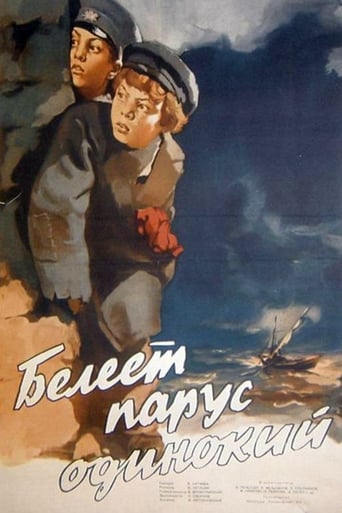
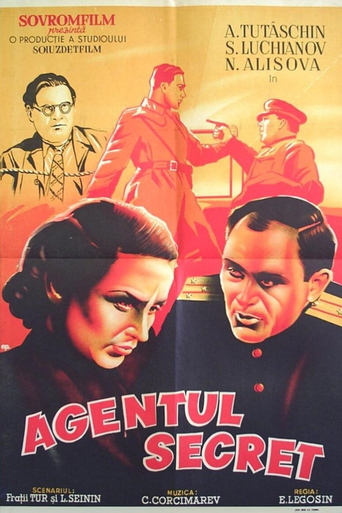
Soviet film director who emerged during the Stalinist era of Soviet cinema, most active in the late 1930s and 1940s. His career coincided with a period of intense state control over artistic expression in the USSR, where filmmakers had to navigate strict ideological requirements while attempting to create meaningful art. Legoshin's most celebrated work, 'The Lonely White Sail' (1937), was based on Valentin Kataev's beloved novel and became one of the notable Soviet films of its decade, showcasing his ability to adapt literary works for the screen while adhering to socialist realist principles. During World War II, like many Soviet filmmakers, he contributed to the war effort by creating films that supported the Soviet cause and morale. His 1945 film 'Agentful Secret' reflected the post-war atmosphere of suspicion and the emerging Cold War tensions. Despite his contributions to Soviet cinema, detailed information about his personal life and complete filmography remains limited in Western sources, reflecting the broader challenges in accessing comprehensive documentation about Soviet artists from this period.
The Craft
Behind the Camera
Legoshin's directing style was characterized by adherence to socialist realist principles, emphasizing collective values and the triumph of the working class. His visual approach incorporated the grand, sweeping cinematography typical of Soviet epic films of the 1930s, with careful attention to composition that reinforced ideological messages. He demonstrated particular skill in adapting literary works to the screen, maintaining the spirit of the original texts while ensuring they aligned with Soviet cultural requirements. His direction of child actors in 'The Lonely White Sail' showed a sensitive approach to working with young performers, capturing the innocence and revolutionary enthusiasm central to the story's themes.
Milestones
- Directed 'The Lonely White Sail' (1937)
- Directed 'Agentful Secret' (1945)
- Worked during Stalin's regime as a state-approved filmmaker
- Adapted literary works for Soviet cinema
- Contributed to wartime propaganda films
Best Known For
Must-See Films
Accolades
Won
- Stalin Prize nomination (1938)
Nominated
- Stalin Prize for 'The Lonely White Sail' (1938)
Special Recognition
- Honored Artist of the RSFSR
Working Relationships
Worked Often With
Studios
Why They Matter
Impact on Culture
Vladimir Legoshin's work represents an important chapter in Soviet cinema history, particularly during the period when socialist realism was the mandated artistic style. His adaptation of 'The Lonely White Sail' contributed to the Soviet tradition of literary adaptations that brought classic Russian and Soviet literature to mass audiences through the medium of film. The film itself became part of the cultural fabric of the USSR, teaching generations of Soviet children about revolutionary values and the importance of standing up for justice. His wartime and post-war films reflected the shifting priorities of Soviet society, from patriotic defense of the motherland to the emerging narrative of vigilance against foreign threats. Though not as internationally renowned as some of his contemporaries like Eisenstein or Pudovkin, Legoshin's work exemplifies how Soviet filmmakers navigated the complex intersection of artistic expression and political ideology during.
Lasting Legacy
Vladimir Legoshin's legacy is primarily preserved through his most famous work, 'The Lonely White Sail,' which remains a significant example of 1930s Soviet cinema and continues to be studied by film historians interested in the socialist realist period. His films serve as important historical documents that reflect the cultural and political values of their time, offering insights into how Soviet cinema was used as a tool for education and ideological reinforcement. While his name may not be widely recognized outside of specialized film scholarship circles, his contribution to the Soviet film tradition of adapting literary works helped establish conventions that would influence subsequent generations of Soviet directors. His career also illustrates the challenges faced by artists working under totalitarian regimes, where creative expression had to be balanced against political survival.
Who They Inspired
Legoshin's influence is most evident in his approach to literary adaptation, which demonstrated how complex narratives could be simplified for film audiences while maintaining their essential ideological messages. His work with child actors in 'The Lonely White Sail' set precedents for how young performers could be directed to convey revolutionary enthusiasm and moral clarity. The visual techniques he employed, particularly in creating sweeping historical tableaus, influenced subsequent Soviet historical films. His career trajectory also serves as a case study for understanding how Soviet directors navigated the political demands of their time, providing a model of how to maintain artistic integrity within strict ideological constraints.
Off Screen
Very little detailed information about Vladimir Legoshin's personal life is available in Western sources, which is common for many Soviet-era filmmakers whose private details were not extensively documented or shared outside the USSR. Like many artists working under Stalin's regime, he would have faced significant pressure to conform to party expectations both professionally and personally. His active years covered.
Education
Graduated from Gerasimov Institute of Cinematography (VGIK) in early 1930s
Did You Know?
- 'The Lonely White Sail' was based on a popular Soviet children's novel by Valentin Kataev
- The film's title in Russian was 'Beloe parusnoe more'
- Legoshin worked during
- His films were produced by Mosfilm, the Soviet Union's largest and most prestigious film studio
- The theme music from 'The Lonely White Sail' became a popular Soviet song
- Child actors in his films often went on to have careers in Soviet cinema
- His 1945 film coincided with the end of World War II and the beginning of the Cold War
- Like many Soviet directors, he had to submit scripts to state committees for approval before filming
- His films emphasized collective values over individual achievement, in line with socialist realism
- The production of 'The Lonely White Sail' involved extensive location shooting in Soviet port cities
In Their Own Words
Cinema must serve the people and the revolution
Every frame must educate as well as entertain
The camera is our weapon in building the new Soviet society
Frequently Asked Questions
Who was Vladimir Legoshin?
Soviet on YTB.my. He worked within the socialist realist tradition and contributed to Soviet cinema during a period of intense state control over artistic expression.
What films is Vladimir Legoshin best known for?
Titles linked here include The Lonely White Sail (1937), Agentful Secret (1945).
When was Vladimir Legoshin born and when did he die?
Born 1904; died 1954.
What awards did Vladimir Legoshin win?
Legoshin received a nomination for the prestigious Stalin Prize in 1938 for 'The Lonely White Sail' and was honored as an Honored Artist of the RSFSR. These recognitions reflected his contributions to Soviet cinema and his adherence to socialist realist principles.
What was Vladimir Legoshin's directing style?
Legoshin's directing style followed socialist realist principles, emphasizing collective values and revolutionary themes. He was skilled at literary adaptations and used sweeping cinematography typical of Soviet epics, while showing particular sensitivity in directing child actors.