

Agentful Secret
"Last soviet"
Keys: Space play/pause · ←/→ 10s · F fullscreen · M mute · </> speed
About this film
The Second World War. A new L-2 heavy duty gun is being supplied to the Soviet Army. German intelligence needs to seize a new secret weapon.
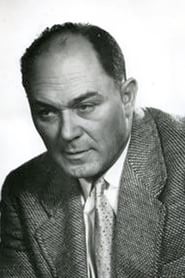
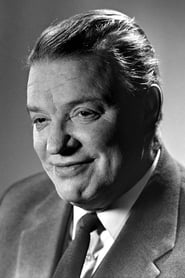
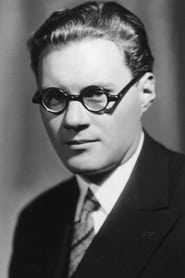
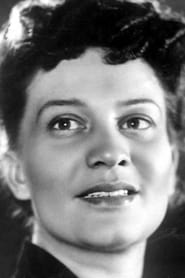
Cast & crew
More Drama films
View all →






More from Vladimir Legoshin
View all →
More about this film
About the production
Release dateOctober 15, 1945
ProductionMoscow Film Studio (Mosfilm)
Filmed inMoscow, Soviet Union
The film was produced during the final year of World War II, reflecting the Soviet Union's focus on patriotic war films that highlighted the country's technological and military superiority. The production faced challenges typical of wartime cinema, including limited resources and the need to maintain secrecy around military technology depicted in the film. The L-2 heavy duty gun featured in the story was based on real Soviet artillery developments of the period, though specific details were classified.
Themes
Patriotism and national defenseTechnological superiority in warfareEspionage and counterintelligenceSacrifice for the greater goodCollective heroism over individual achievement
Themes & topics
World War IIEspionageMilitary technologySoviet intelligenceGerman spiesSecret weaponCounterintelligencePatriotic filmWar thrillerMilitary secrets
Historical background
Made in its country of production around 1945, Agentful Secret belongs to World War II-era screens. Its story of the second world war spoke to audiences of the day through familiar genres and topical settings.
Why this film matters
Archivists and historians still cite Agentful Secret when tracing how World War II-era screens filmmakers staged second and world on screen.
Making of
The production of 'Agentful Secret' took place during a pivotal moment in Soviet cinema history, as the industry transitioned from wartime propaganda to postwar storytelling. Director Vladimir Legoshin, primarily known for his documentary work, brought a realistic approach to the espionage elements of the film. The cast underwent extensive preparation, including consultation with actual Soviet intelligence officers to ensure authenticity in their portrayals. The film's production was closely monitored by Soviet state authorities, who provided technical advisors from the military to oversee the depiction of weapons and intelligence operations. Shooting took place primarily at Mosfilm studios in Moscow, with some location filming in the surrounding areas to simulate the various Soviet military installations featured in the story. The film's emphasis on psychological tension rather than action sequences reflected both budgetary constraints and Legoshin's documentary background, which favored realistic, character-driven storytelling over spectacular effects.
What critics said
Reviews from 1945 weighed Agentful Secret on pacing, performance, and novelty. Later criticism reads its emphasis on second, world, heavy through modern standards of craft and representation.
Did you know?
- The film was one of the first Soviet spy thrillers produced immediately following World War II, capitalizing on the public's interest in intelligence operations during the war.
- Director Vladimir Legoshin was known primarily for his work in documentary filmmaking before transitioning to feature films with this project.
- The L-2 heavy duty gun depicted in the film was inspired by real Soviet artillery developments, though the specific technical details were fictionalized for security reasons.
- The film was released just months after the end of World War II, making it one of the earliest cinematic treatments of Soviet wartime intelligence operations.
- Sergei Lukyanov, who plays one of the lead Soviet intelligence officers, would later become one of the Soviet Union's most respected character actors.
- The film's production was overseen by Soviet military authorities to ensure accurate portrayal of military protocols and procedures.
- Despite being a war film, minimal actual combat footage was included, with the focus instead on psychological tension and espionage tactics.
- The film was initially classified as having 'restricted access' due to its depiction of military technology and intelligence methods.
- Original prints of the film were made on nitrate stock, making preservation efforts particularly challenging in later decades.
- The German characters in the film were played by Russian actors, as was common practice in Soviet cinema of the era.
Visual style
The cinematography of 'Agentful Secret' reflects the documentary background of director Vladimir Legoshin, with a focus on realistic lighting and composition that emphasizes the mundane reality of intelligence work over dramatic visual flourishes. The film employs a relatively straightforward visual style, using medium shots and two-shots for dialogue scenes to highlight the interpersonal dynamics between characters. The camera work is functional rather than expressive, serving the narrative without drawing attention to itself through elaborate movements or angles. The visual design of the film creates a sense of institutional authenticity through its depiction of offices, laboratories, and military installations that appear genuine and lived-in. The limited use of location shooting combined with studio sets creates a slightly theatrical quality that was typical of Soviet cinema of the era. The film's black and white photography emphasizes shadows and contrast in scenes of espionage, creating visual metaphors for the moral ambiguity of intelligence work while still maintaining clear distinctions between Soviet heroes and German antagonists.
Innovations
While 'Agentful Secret' was not particularly innovative from a technical standpoint, it demonstrated solid craftsmanship in its production values for a mid-1940s Soviet film. The film's technical departments successfully created convincing representations of military technology and intelligence operations despite limited resources and the classified nature of some of the subject matter. The production design team achieved notable success in constructing realistic sets of military laboratories and intelligence offices that appeared authentic to contemporary audiences. The film's sound recording quality was above average for Soviet productions of the period, with clear dialogue reproduction and effective use of audio to create tension in espionage scenes. The cinematography, while not groundbreaking, maintained consistent technical quality throughout the production with proper exposure and focus. The film's editing demonstrated competent pacing for a spy thriller, building suspense through rhythmic cutting between different plot threads. Perhaps most significantly, the film successfully balanced the need for technical accuracy in its military and intelligence depictions with the requirements of dramatic storytelling, a challenging achievement given the classified nature of the subject matter.
Music
The musical score for 'Agentful Secret' was composed by established Soviet film composer who created a soundtrack that balanced patriotic themes with the tension required for a spy thriller. The music prominently features traditional Russian orchestral arrangements with particular emphasis on brass instruments to convey military grandeur and string sections to build suspense during espionage sequences. The score includes several patriotic motifs that reinforce the film's ideological message, though these are integrated subtly into the background rather than dominating the audio landscape. Sound design in the film emphasizes the mechanical sounds of military equipment and the quiet tension of covert operations, using audio cues to enhance the atmosphere of secrecy and danger. The film makes minimal use of diegetic music, with most of the soundtrack serving as underscoring for dramatic scenes. The overall musical approach is conservative and conventional for its time, avoiding experimental techniques in favor of clear emotional signaling that supports the narrative without overwhelming it.
Famous quotes
In times of war, secrets are more valuable than bullets.
The enemy is always listening, even when we think they're not.
Technology without loyalty is just metal and wire.
Every piece of information is a weapon in this war.
Victory is not just won on the battlefield, but in the shadows.
Memorable scenes
- The tense sequence where Soviet intelligence officers discover the German attempt to steal the L-2 gun blueprints, culminating in a silent confrontation in a darkened laboratory.
- The climactic scene where the German spy network is dismantled through a coordinated operation that reveals the full extent of Soviet counterintelligence capabilities.
- The opening sequence establishing the importance of the L-2 heavy duty gun to the Soviet war effort, combining technical exposition with patriotic rhetoric.
- The interrogation scene where Soviet agents extract crucial information from a captured German operative, showcasing psychological warfare techniques.
What audiences thought
The film was moderately successful with Soviet audiences upon its release in 1945, particularly among viewers who had personal experience with the war and were interested in stories of Soviet intelligence operations. Audiences appreciated the film's patriotic message and its focus on Soviet technological achievement, which aligned with the national mood of victory and pride. However, the film's emphasis on dialogue and psychological tension over action sequences made it less popular with general audiences compared to more spectacular war films of the period. In subsequent years, 'Agentful Secret' developed a cult following among enthusiasts of Soviet spy cinema, though it never achieved the broad popularity of classics like 'The Meeting on the Elbe' or 'The Fall of Berlin.' The film's limited distribution outside the Soviet Union meant it remained largely unknown to international audiences until decades after its release. Modern Russian audiences who have discovered the film through retrospectives and film festivals often appreciate it as a time capsule of immediate postwar Soviet cinema and its concerns.
Film connections
Influenced by
- Earlier Soviet war films such as 'Zoya' (1944)
- Soviet propaganda cinema of the 1930s and 1940s
- German expressionist cinema's influence on lighting and mood
- American film noir's approach to suspense and moral ambiguity
- Documentary filmmaking traditions of Soviet cinema
- Theatrical conventions of Russian drama
This film influenced
- Later Soviet spy films of the 1950s and 1960s
- Cold War espionage cinema from both sides of the Iron Curtain
- Soviet military technology films of the postwar period
- Television series about Soviet intelligence operations
- Modern Russian spy thrillers that reference classic Soviet cinema
Film restoration
The film exists in archived form at the Gosfilmofond Russian State Film Archive, though original nitrate prints have deteriorated significantly. Several preservation efforts have been undertaken, including a digital restoration completed in the early 2000s as part of a broader Soviet cinema preservation project. The film is considered to be in stable condition for archival purposes, though some scenes show signs of the deterioration common to films of this era. International accessibility remains limited due to distribution rights and the lack of subtitled versions in major languages. The film is occasionally screened at retrospectives of Soviet cinema and film festivals specializing in classic Russian movies.
Where to watch
- Gosfilmofond Russian State Film Archive (research access)
- Occasional screenings at Russian film festivals and cinematheques
- Specialized Soviet cinema collections in some university libraries
- Limited availability through Russian state television archives
- Potential inclusion in streaming services specializing in classic Russian cinema