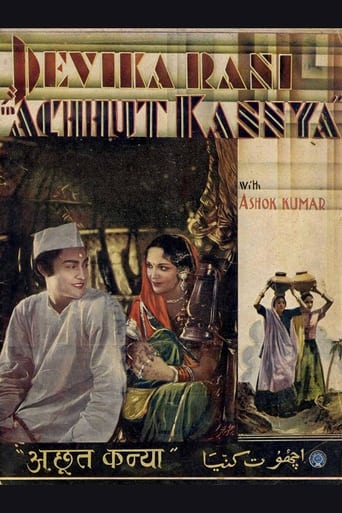
Films
1 film
About Kishori Lal
This archive lists one role for Kishori Lal: Untouchable Girl (1936). His known filmography consists of the 1936 production 'Untouchable Girl,' which was part of the emerging social consciousness movement in Indian filmmaking that addressed pressing societal issues of the time. The film dealt with the sensitive subject of caste discrimination, a topic rarely explored in cinema during this period. Unfortunately, like many actors from this early era of Indian cinema, detailed records of Kishori Lal's career, background, and other potential film appearances remain scarce due to the limited documentation and preservation practices of the time. His brief appearance in the film industry coincided with a transitional period when Indian cinema was moving from silent films to talkies, and the industry was still establishing its infrastructure for record-keeping and artist documentation. The fact that only one film is attributed to him suggests either a very brief career or that other works may be lost to history.
The Craft
Milestones
- Appeared in 'Untouchable Girl' (1936), a socially conscious film addressing caste discrimination
Best Known For
Must-See Films
Why They Matter
Impact on Culture
Kishori Lal's contribution to Indian cinema, while brief, represents the early efforts of filmmakers to address social issues through the medium of film. His participation in 'Untouchable Girl' (1936) placed him among the pioneers who helped bring attention to caste discrimination in Indian society during a time when such topics were considered taboo in mainstream entertainment. This film was part of a small but significant movement in 1930s Indian cinema that used storytelling as a tool for social reform and awareness, laying groundwork for future socially conscious filmmaking in India.
Lasting Legacy
The legacy of Kishori Lal is primarily preserved through his participation in early Indian cinema's social reform movement. While his career appears to have been brief, his contribution to 'Untouchable Girl' represents an important chapter in the history of Indian cinema's engagement with social issues. Like many actors from this era, the lack of comprehensive documentation means his full impact may never be fully understood, but his work stands as proof of the courage of early filmmakers and actors who tackled controversial subjects.
Who They Inspired
Due to the limited documentation of Kishori Lal's career and the apparent brevity of his time in the film industry, there is insufficient information to determine his direct influence on other actors or filmmakers. However, his participation in socially relevant cinema during the 1930s contributed to the broader movement that would eventually influence generations of Indian filmmakers to address social issues through their work.
Off Screen
Very limited information is available about Kishori Lal's personal life, which is typical for actors from this early period of Indian cinema when detailed biographical records were not systematically maintained.
Did You Know?
- Appeared in only one known film during his career
- Worked during the transitional period when Indian cinema was establishing sound technology
- Participated in one of the earliest Indian films to address caste discrimination
- His film career coincided with the early years of Indian talkies
- Like many actors of his era, detailed biographical information remains scarce
- The film 'Untouchable Girl' was part of a small but important movement of socially conscious cinema in 1930s India
Frequently Asked Questions
Who was Kishori Lal?
Screen credits include the film 'Untouchable Girl' (1936), which addressed social issues related to caste discrimination in Indian society.
What films is Kishori Lal best known for?
Titles linked here include Untouchable Girl (1936).
When was Kishori Lal born and when did he die?
Unfortunately, specific birth and death dates for Kishori Lal are not available in historical records, which is common for actors from this early period of Indian cinema.
What awards did Kishori Lal win?
There are no documented awards or nominations for Kishori Lal, which reflects the limited formal recognition systems in place during the early years of Indian cinema.
What was the significance of 'Untouchable Girl' (1936)?
The film was significant as one of the early Indian movies to address caste discrimination, representing the emerging social consciousness movement in Indian cinema during the 1930s.