
Untouchable Girl
"Love across caste lines"
Keys: Space play/pause · ←/→ 10s · F fullscreen · M mute · </> speed
About this film
Tamil romance crosses caste lines when Brahmin boy loves an untouchable girl despite village gossip. An "untouchable" girl and a Brahmin boy fall in love, but the strict caste system and the gossip of the villagers threaten to keep them apart.
Cast & crew
More Drama films
View all →






More from Franz Osten
View all →


More about this film
About the production
Release date1936
Box officeUnknown
ProductionBombay Talkies
Filmed inBombay (now Mumbai), India
Directed by German filmmaker Franz Osten as part of his collaboration with Bombay Talkies. The film was one of the early productions to address the sensitive topic of caste discrimination in Indian society. Shot during the early sound era in Indian cinema, it utilized the new technology to enhance the emotional impact of the narrative through dialogue and music.
Themes
Caste discriminationSocial reformForbidden loveTradition vs. progressSocial justice
Themes & topics
inter-caste romancesocial dramauntouchabilityvillage lifeforbidden lovesocial reformcaste systemfamily oppositionsocial discriminationlove conquers all
Historical background
1936 placed Untouchable Girl within India cinema as Bombay Talkies navigated wartime markets, immigration audiences, and the shift from intertitles to sound.
Why this film matters
Archivists revisit Untouchable Girl (1936) for Franz Osten style, genre norms at Bombay Talkies, and the exhibition context of 140 minutes programming.
Making of
The production of 'Untouchable Girl' took place during a transformative period in Indian cinema when sound technology was still new. Director Franz Osten, working with Bombay Talkies founder Himanshu Rai, sought to create socially relevant cinema that would both entertain and educate audiences. The casting of Devika Rani and Ashok Kumar was significant as they represented the new generation of Indian film stars who could handle both dramatic and musical performances. The film faced considerable challenges during production due to its sensitive subject matter, with some crew members initially hesitant to work on a project that directly criticized the caste system. The outdoor shooting in actual villages added authenticity but also created logistical challenges for the production team.
What critics said
Retrospective writing on Untouchable Girl stresses craft by Franz Osten, print survival, and repertory value rather than opening-week gross alone.
Did you know?
- This was one of the earliest Indian films to directly address the caste system as its central theme
- Franz Osten, a German director, brought European cinematic techniques to Indian storytelling
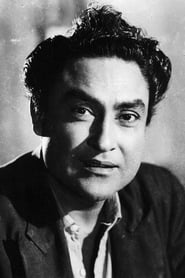
- The film featured Devika Rani and Ashok Kumar, who would become one of Indian cinema's most iconic on-screen pairs
- The controversial subject matter faced censorship challenges in various regions of India
- The film's title was sometimes listed as 'Achhut Kanya' in Hindi, which translates to 'Untouchable Girl'
- This was one of the first films to portray inter-caste romance sympathetically
- The production utilized real village locations to enhance authenticity
- The film's success helped establish Bombay Talkies as a major studio in Indian cinema
- Music was composed by Saraswati Devi, one of India's first female music directors
- The film was released during the height of the Indian independence movement, adding social relevance to its themes
Visual style
The cinematography by Josef Wirsching combined German Expressionist influences with Indian aesthetic sensibilities. The film used natural lighting for outdoor scenes to create a realistic atmosphere, while indoor scenes employed dramatic lighting to enhance emotional moments. The camera work was innovative for its time, featuring tracking shots and close-ups that emphasized the characters' emotional states. The visual contrast between the Brahmin household and the untouchable settlement was carefully composed to highlight social divisions. Wirsching's background in German cinema brought a sophisticated visual style that elevated the film beyond typical productions of the era.
Innovations
The film was notable for its early use of sound technology to enhance dramatic storytelling rather than merely showcasing songs. It employed innovative editing techniques to create emotional impact, particularly in scenes depicting social conflict. The production quality was high by contemporary standards, with clear sound recording and synchronized dialogue that was still challenging in Indian cinema of the 1930s. The film also experimented with location shooting, which was uncommon during this period when most productions were studio-bound. The makeup and costume design were carefully researched to accurately represent different caste groups.
Music
The music was composed by Saraswati Devi, one of India's first female music directors, with lyrics by J.S. Kashyap. The soundtrack featured a blend of classical Indian ragas and folk melodies appropriate to the rural setting. Songs like 'Main Ban Ki Chidiya' became popular and were widely appreciated for their poetic quality and social relevance. The music served not just as entertainment but as a narrative device, advancing the plot and revealing character motivations. The sound design was advanced for its time, with careful attention to ambient sounds that created an authentic village atmosphere.
Famous quotes
Love knows no caste, no creed, no boundaries
We are all children of the same God, then why this division?
True religion teaches love, not hatred
The heart cannot be bound by society's rules
When love is pure, no power can separate two souls
Memorable scenes
- The secret meeting by the village well where the protagonists first confess their love
- The dramatic confrontation scene where the village council condemns their relationship
- The emotional farewell when the lovers are forced to part
- The powerful monologue where the heroine questions the injustice of the caste system
- The final scene suggesting hope for social change
What audiences thought
The film was well-received by urban audiences, particularly among the educated middle class who were already engaged in social reform discussions. However, it faced opposition in more conservative rural areas where the caste system remained strictly enforced. Despite some regional resistance, the film was a commercial success, proving that socially relevant content could attract audiences. The film generated significant discussion in newspapers and social gatherings, with debates about its message continuing long after its theatrical run. Many viewers reported being moved by the film's emotional power and its critique of social injustice.
Film connections
Influenced by
- German social realist cinema
- Indian social reform literature
- Bengali literary traditions
- European melodrama
- Indian folk theater traditions
This film influenced
- Sujata (1959)
- Ankur (1974)
- Sadgati (1981)
- Bandit Queen (1994)
- Lajja (2001)
Film restoration
The film is partially preserved with some reels missing or damaged. The National Film Archive of India holds incomplete copies of the film. Some portions have been restored, but the complete version is not available in its original form. Several song sequences and key dramatic scenes survive and are occasionally screened at film festivals and retrospectives.
Where to watch
- National Film Archive of India (for research purposes)
- Film festivals featuring classic Indian cinema
- Occasional screenings at film societies and cultural institutions
- Not commercially available on streaming platforms due to preservation status