
Sidney Blackmer
Actor
Born: July 13, 1895 in Salisbury, North Carolina, USA Died: October 6, 1973 Active: 1914-1971 Birth Name: Sidney Alderman Blackmer
Films
1 film
About Sidney Blackmer
American actor: over five decades, transitioning seamlessly from the silent era to the Golden Age of Hollywood and into modern cinema. Born in Salisbury, North Carolina, he initially pursued a career in finance before a chance encounter with a film set inspired him to move to New York to study acting. He made his Broadway debut in 1917, though his early career was briefly interrupted by military service during World War I. Blackmer became a prolific character actor, appearing in more than 120 films and dozens of stage productions, often portraying authoritative or sophisticated figures. He gained significant acclaim for his recurring portrayals of U.S. President Theodore Roosevelt, whom he played in over a dozen different productions. In 1950, he reached a career pinnacle by winning the Tony Award for Best Actor for his role in 'Come Back, Little Sheba.' Late in his career, he achieved a new level of fame for his chilling performance as the solicitous neighbor Roman Castevet in Roman Polanski's 'Rosemary's Baby' (1968).
The Craft
On Screen
Blackmer was known for his versatile and commanding presence, often utilizing a sophisticated, articulate delivery that made him ideal for playing politicians, lawyers, and upper-class professionals. He possessed a unique ability to project both warmth and a subtle, underlying menace, a trait most famously exploited in his later role in 'Rosemary's Baby.' His stage-trained background provided him with a disciplined approach to character work, allowing him to inhabit historical figures like Theodore Roosevelt with remarkable physical and vocal accuracy.
Milestones
- Won the Tony Award for Best Actor in a Play for 'Come Back, Little Sheba' (1950)
- Portrayed U.S. President Theodore Roosevelt in more than a dozen films and shorts
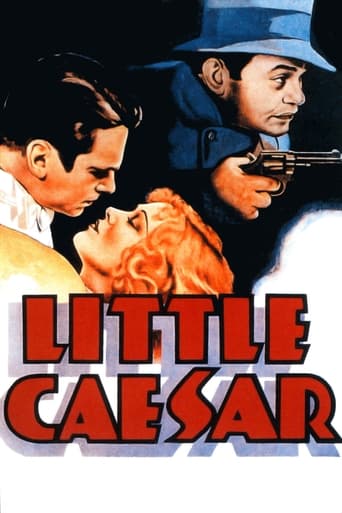
- Played the pivotal role of 'Big Boy' in the gangster film 'Little Caesar' (1931)
- Received a star on the Hollywood Walk of Fame in 1960
- Co-founded the Actors' Equity Association and participated in the 1919 strike
- Received the North Carolina Award in Fine Arts (1972), the state's highest civilian honor
Best Known For
Iconic Roles
Must-See Films
Accolades
Won
- Tony Award for Best Actor in a Play (1950)
- Kansas City Film Critics Circle Award for Best Supporting Actor (1969)
- North Carolina Award for Fine Arts (1972)
Nominated
- Donaldson Award for Best Actor (1950)
Special Recognition
- Hollywood Walk of Fame Star (1625 Vine Street, 1960)
- Founder of the North Carolina School of the Arts
- National Vice President of the Muscular Dystrophy Association
Working Relationships
Worked Often With
Studios
Why They Matter
Impact on Culture
Sidney Blackmer's impact on cinema is multifaceted, ranging from his role as a pioneer in the labor movement for actors to his definitive portrayals of historical figures. By helping to found the Actors' Equity Association, he played a crucial role in establishing the rights and working conditions for generations of performers. In the realm of performance, his frequent portrayals of Theodore Roosevelt helped shape the public's visual and auditory memory of the president during the mid-20th century. His transition from a leading man on Broadway to a respected character actor in Hollywood demonstrated the longevity possible for dedicated craftsmen in the industry.
Lasting Legacy
Blackmer's legacy is preserved through his extensive filmography and his contributions to the arts in his home state of North Carolina, where he helped establish the North Carolina School of the Arts. He is remembered as. His performance in 'Rosemary's Baby' remains a benchmark for the 'polite villain' archetype in horror cinema. Furthermore, his star on the Hollywood Walk of Fame serves as a permanent testament to his contributions to the motion picture industry.
Who They Inspired
He influenced the industry not just through his acting, but through his advocacy for actors' rights, which paved the way for the modern unionized environment of Hollywood. His ability to maintain a successful career in theater, film, and television simultaneously served as a model for versatile actors who followed. Younger actors often looked to his disciplined stage technique as a standard for character development in film.
Off Screen
Blackmer was deeply connected to his North Carolina roots, maintaining his family home in Salisbury throughout his life despite his success in New York and Hollywood. He was known for his humanitarian efforts, particularly his long-standing service to the Muscular Dystrophy Association. He was married twice, both times to actresses, and was a prominent figure in the labor movements for actors during the early 20th century.
Education
University of North Carolina at Chapel Hill
Family
- Lenore Ulric (1928-1939)
- Suzanne Kaaren (1943-1973)
Did You Know?
- He was a star football player during his time at the University of North Carolina.
- He saw a Pearl White serial being filmed while working as a construction laborer, which prompted his career change.
- Blackmer played Theodore Roosevelt in at least seven different feature films and several shorts.
- He was a lieutenant in the field artillery during World War I.
- His family home in Salisbury, the Fulton-Mock-Blackmer House, is a historic landmark.
- He was the national vice president of the Muscular Dystrophy Association for many years.
- He appeared in the very first 'Perils of Pauline' serial in 1914 as an extra.
- He won his Tony Award the same year his co-star Shirley Booth won hers for the same play.
In Their Own Words
Satan lives! The child is alive! (As Roman Castevet in Rosemary's Baby, 1968)
I've always felt that the theater is the actor's medium, while the film is the director's. (Reflecting on his dual career)
Frequently Asked Questions
Who was Sidney Blackmer?
Prolific American character with credits in this catalog.' He was also a major figure in the creation of the Actors' Equity Association.
What films is Sidney Blackmer best known for?
Titles linked here include Little Caesar (1931), The Count of Monte Cristo (1934).
When was Sidney Blackmer born and when did they die?
Born July 13, 1895; died October 6, 1973.
What awards did Sidney Blackmer win?
His most prestigious award was the 1950 Tony Award for Best Actor in a Play. He also received the North Carolina Award for Fine Arts and has a star on the Hollywood Walk of Fame.
What was Sidney Blackmer's acting style?
He was known for a sophisticated and authoritative style, often playing dignified professionals or historical figures with a blend of charm and gravitas.
Did Sidney Blackmer serve in the military?
Yes, he served as a lieutenant in the United States military during World War I, which briefly paused his burgeoning acting career.