


Little Caesar
"Power has a short fuse"
Keys: Space play/pause · ←/→ 10s · F fullscreen · M mute · </> speed
About this film
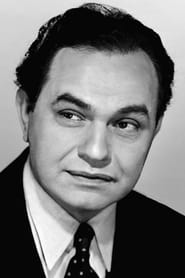
American pre-Code gangster film directed by Mervyn LeRoy and distributed by Warner Bros. Pictures. It stars Edward G.
Cast & crew
More Drama films
View all →






More from Mervyn LeRoy
View all →
More about this film
About the production
Release dateJanuary 9, 1931
Budget$281,000
Box office$752,000
ProductionFirst National Pictures, Warner Bros. Pictures
Filmed inWarner Brothers Burbank Studios, Burbank, California, USA
The film was based on the 1929 novel by W.R. Burnett, who wrote it after witnessing the rise of Al Capone in Chicago. Director Mervyn LeRoy was known for his 'punchy' and 'relentlessly paced' style, which became a hallmark of Warner Bros. Productions during the early 1930s. The production faced significant pressure from the Studio Relations Committee regarding the depiction of violence and the potential glorification of a criminal protagonist.
Themes
The Perversion of the American DreamRuthless Ambition vs. Social ConformityThe Inevitability of FateLoyalty and BetrayalMasculinity and Insecurity
Themes & topics
Historical background
Made in 1931, Little Caesar reflects production norms of the studio-system peak and early sound decades—shorter runtimes, regional audiences, and limited preservation infrastructure.
Why this film matters
Historians reference Little Caesar (1931) when discussing 1931 film.
Making of
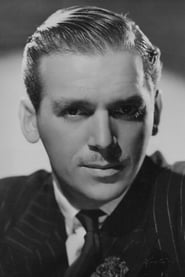
Production began in late 1930 under the working titles 'The Enemy' and 'Stranger in the House'. Mervyn LeRoy wanted to create a 'gutter Macbeth,' a tragic figure whose ambition was his undoing. The film utilized actual machine guns on set, which was a relatively new and startling sound for early 'talkie' audiences. Casting Douglas Fairbanks Jr. As the 'soft' Joe Massara was a deliberate choice to provide a visual and temperamental contrast to Robinson's volcanic, squat Rico. The film was shot quickly and efficiently, reflecting the 'factory' style of Warner Bros. During the Great Depression.
What critics said
Trade and revival screenings have kept Little Caesar (1931) on the map for collectors and scholars rather than mass first-run promotion.
Did you know?
- Edward G. Robinson was not the first choice for Rico; Jack Warner originally wanted Clark Gable for the role, but Mervyn LeRoy insisted on Robinson.
- The film is credited with starting the 'gangster craze' of the 1930s, preceding 'The Public Enemy' and 'Scarface'.
- Rico's famous final line was originally scripted as 'Mother of God, is this the end of Rico?', but was changed to 'Mother of Mercy' to satisfy religious censors.
- The character of Joe Massara was reportedly based on actor George Raft, who had real-life ties to the New York underworld.
- Edward G. Robinson had a persistent habit of blinking whenever he fired a gun, so the crew had to tape his eyelids open for certain close-up shooting scenes.
- The film broke the all-time attendance record for Warner Bros.' Strand Theater in New York during its opening weekend.
- The character of Rico is widely believed to be a thinly veiled allegory for Al Capone, though the filmmakers never officially confirmed this.
- Little Caesar is one of the few films from the era that entered the public domain on January 1, 2026, due to its 1930 copyright registration.
Awards & recognition
- National Film Registry (Inducted 2000)
Visual style
Tony Gaudio utilized high-contrast lighting and deep shadows to create a proto-noir atmosphere. The film features what is considered one of the first 'drive-by' shootings ever depicted on screen. The visual style emphasizes Rico's isolation, often framing him in tight spaces or against large, imposing backgrounds to highlight his 'Little' stature compared to his 'Caesar' ambitions.
Innovations
The film was a pioneer in the use of synchronized sound for action sequences, particularly the integration of loud, realistic sound effects with dialogue. It also refined the 'Warner Bros. Style' of editing—fast-paced and economical—which helped move the medium away from the slower, more theatrical pacing of early talkies.
Music
The score by Ernö Rapée is minimal, as was common in early sound films, with much of the 'music' being diegetic—coming from the nightclub scenes where Joe and Olga perform. The sound design focused heavily on the mechanical sounds of the city and the jarring, percussive noise of gunfire, which served to heighten the realism for 1931 audiences.
Famous quotes
Mother of Mercy, is this the end of Rico?
I'm not through yet. You can't get me! I'm Rico!
You're getting soft, Joe. You're through. You're yellow.
There's Tony Passa. Can drive a car better than any mug in town.
I want to be somebody!
Memorable scenes
- The opening robbery where Rico shoots the crime commissioner, establishing his ruthless nature.
- The banquet scene where Rico is presented with a gold watch, showing him at the peak of his power.
- The final shootout behind the billboard where a weakened Rico is gunned down by Sergeant Flaherty.
- The scene where Rico tries to force Joe back into the gang, highlighting the conflict between their two worlds.
What audiences thought
Audiences in 1931 were electrified by the film's violence and the novelty of hearing machine-gun fire in a theater. It was a massive commercial success, grossing nearly three times its budget and turning Edward G. Robinson into an overnight superstar. The public's appetite for these 'ripped from the headlines' stories led to a decade-long dominance of the gangster genre at Warner Bros.
Film connections
Influenced by
- The novel 'Little Caesar' by W.R. Burnett
- The real-life rise of Al Capone
- Shakespearean tragedies (specifically Macbeth)
This film influenced
- The Public Enemy (1931)
- Scarface (1932)
- White Heat (1949)
- The Godfather (1972)
- Scarface (1983)
- Goodfellas (1990)
Film restoration
The film is fully preserved. A print is maintained by the Library of Congress, and it was selected for the National Film Registry in 2000. It has been digitally restored and is available in high definition.
Where to watch
- Max (formerly HBO Max)
- The Roku Channel
- Apple TV (Rent/Buy)
- Amazon Prime Video (Rent/Buy)
- Criterion Channel (occasionally)