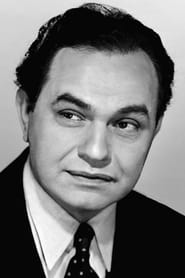
Edward G. Robinson
Actor
Born: December 12, 1893 in Bucharest, Romania Died: January 26, 1973 Active: 1923-1973 Birth Name: Emanuel Goldenberg
Films
7 films
About Edward G. Robinson
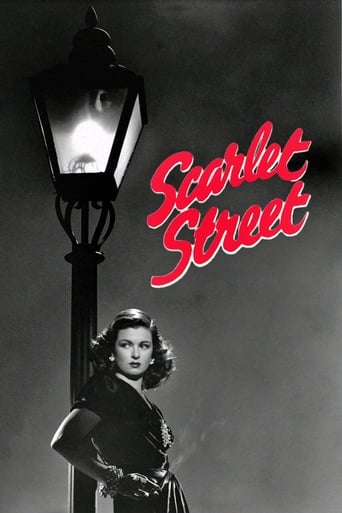
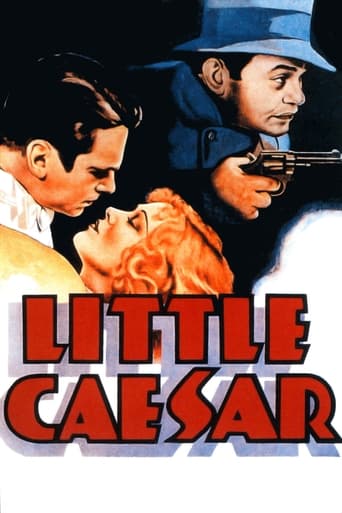
Edward G. Robinson, born Emanuel Goldenberg, was a Romanian-American actor who became one of Hollywood's most gangster portrayals during the Golden Age. After immigrating to New York City as a child, he studied at the American Academy of Dramatic Arts and began his career on Broadway before transitioning to films. His breakthrough came with the landmark gangster film 'Little Caesar' (1931), which established his screen persona as a tough, fast-talking criminal and made him a major star. Throughout the 1930s and 1940s, he alternated between gangster roles and more complex character performances, showcasing his remarkable range in films like 'Scarlet Street' and 'Double Indemnity'. Despite being typecast early in his career, Robinson continually sought diverse roles, playing everything from sympathetic everymen to ruthless villains. His career was temporarily derailed during the Red Scare when he was wrongfully blacklisted, but he eventually returned to prominence. Robinson continued working prolifically until his death in 1973, leaving behind a legacy of over 100 films and one of cinema's most distinctive screen presences.
The Craft
On Screen
Robinson was known for his intense, explosive acting style characterized by rapid-fire delivery, distinctive gravelly voice, and expressive hand gestures. His performances often featured a simmering intensity just beneath the surface, capable of erupting into sudden violence or passion. He had a remarkable ability to convey complex emotions through subtle facial expressions and body language, particularly his eyes. Robinson's technique combined method-like preparation with classical theatrical training, allowing him to create fully realized characters whether playing gangsters, businessmen, or sympathetic protagonists. His physical presence, though not traditionally tall or imposing, commanded attention through sheer force of personality and controlled energy.
Milestones
- Breakthrough role in 'Little Caesar' (1931)
- Starred in film noir classic 'Double Indemnity' (1944)
- Academy Award nomination for 'Double Indemnity'
- Honorary Academy Award recipient (1973)
- Over 100 film appearances spanning five decades
- Successful transition from silent films to talkies
- Broadway career before Hollywood success
- Testified before HUAC during Red Scare era
Best Known For
Iconic Roles
Must-See Films
Accolades
Won
- Honorary Academy Award (1973)
- Cannes Film Festival Best Actor (1949) for 'House of Strangers'
- New York Film Critics Circle Award for Best Actor (1949) for 'House of Strangers'
Nominated
- Academy Award nomination for Best Actor for 'Double Indemnity' (1944)
- Golden Globe nomination for Best Supporting Actor for 'The Cincinnati Kid' (1965)
- BAFTA nomination for Best Foreign Actor for 'House of Strangers' (1949)
Special Recognition
- Hollywood Walk of Fame star (6233 Hollywood Blvd)
- American Film Institute's 25 Greatest Male Screen Legends (ranked #24)
- Posthumous induction into the National Museum of American Jewish History
- Featured on US postage stamp in the Legends of Hollywood series
Working Relationships
Worked Often With
Studios
Why They Matter
Impact on Culture
Edward G. Robinson fundamentally shaped the gangster film genre and established archetypes that would influence cinema for decades. His portrayal of Rico Bandello in 'Little Caesar' created the template for the ambitious, ruthless gangster character that would be emulated by countless actors. Robinson's distinctive speech patterns and mannerisms became so iconic that they were frequently parodied and referenced in popular culture, from cartoons to other films. His work in film noir classics like 'Double Indemnity' and 'Scarlet Street' helped define the visual and narrative style of the genre. Beyond his specific roles, Robinson demonstrated that actors with unconventional looks could become major stars, challenging Hollywood's traditional leading man standards. His performances also explored complex themes of morality, ambition, and the American Dream, adding depth to what could have been one-dimensional characters.
Lasting Legacy
Edward G. Robinson's legacy endures through his extensive filmography and the lasting impact of his distinctive acting style. He is remembered as one of cinema's greatest character actors, capable of transforming himself completely for each role while maintaining a unique screen presence. His contributions to film noir and gangster films continue to be studied by film scholars and admired by cinephiles. Robinson's career demonstrated remarkable longevity, spanning from the silent era through the New Hollywood of the 1970s. His final performance in 'Soylent Green' provided a poignant bookend to his career, with his death scene occurring just days before his real-life passing. The honorary Academy Award he received shortly before his death recognized not just his individual performances but his overall contribution to American cinema. Today, Robinson is celebrated as an actor who brought depth, intelligence, and humanity to even his most villainous roles.
Who They Inspired
Robinson's influence on acting technique and film performance is profound and far-reaching. His method of creating fully realized characters through subtle gestures and vocal inflections influenced generations of actors, particularly those specializing in character roles. The intensity and psychological depth he brought to gangster characters elevated the genre from simple crime stories to complex moral dramas. Actors like Robert De Niro, Al Pacino, and Joe Pesci have cited Robinson's work as inspiration for their own portrayals of gangster characters. His ability to balance toughness with vulnerability created a template for the modern anti-hero. Robinson's success as a character actor rather than a traditional leading man paved the way for other actors with unconventional looks to achieve stardom based on talent rather than appearance. His work in film noir particularly influenced directors like Martin Scorsese and Roman Polanski in their approach to crime and psychological thrillers.
Off Screen
Edward G. Robinson was married twice and had one son. His first marriage to actress Gladys Lloyd lasted from 1927 to 1956 and ended in divorce. In 1958, he married Jane Arden, a dress designer, who remained his wife until his death. Robinson — avid art collector, amassing. He was known for his intellectual pursuits and was fluent in multiple languages. Despite his tough-guy screen image, friends described him as gentle, cultured, and generous. He was a staunch anti-fascist and supported various political causes, which contributed to his temporary blacklisting during the McCarthy era.
Education
American Academy of Dramatic Arts, Townsend Harris High School, City College of New York (attended)
Family
- Gladys Lloyd (1927-1956)
- Jane Arden (1958-1973)
Did You Know?
- His famous line 'Mother of mercy, is this the end of Rico?' was ad-libbed during filming of 'Little Caesar'
- Was a passionate art collector whose collection included works by Picasso, Renoir, and Van Gogh
- Spoke seven languages fluently including Yiddish, Romanian, German, and French
- His son Edward Jr. Appeared with him in 'Some Like It Hot' (1959)
- Was offered the role of Dracula in 1931 but turned it down
- Testified as a friendly witness before the House Un-American Activities Committee in 1950
- His final film 'Soylent Green' (1973) was released two months after his death
- Never won a competitive Academy Award despite multiple acclaimed performances
- Was a close friend of fellow gangster film icon James Cagney
- His distinctive voice made him a popular choice for radio dramas and narration work
- Sold his art collection for $2.5 million in 1956 due to financial difficulties
- Was known on set for his generosity and often helped struggling actors financially
In Their Own Words
In this business, you get a lot of rejection, and you have to have the confidence to go on.
I'm not a gangster. I'm an actor. I've been an actor all my life.
The only thing I ever sold was my soul, and I sold it cheap.
I don't play a tough guy. I play a guy who's in trouble.
Acting is like a Halloween mask that you put on. You're not yourself when you're acting.
I have earned millions, but I have given away millions as well.
Frequently Asked Questions
Who was Edward G. Robinson?
Romanian-American with credits in this catalog. Born Emanuel Goldenberg, he starred in over 100 films spanning five decades, with his breakthrough performance in 'Little Caesar' (1931) establishing him as a major star and defining the gangster film genre.
What films is Edward G. Robinson best known for?
Titles linked here include Little Caesar (1931), Double Indemnity (1944).
When was Edward G. Robinson born and when did he die?
Born December 12, 1893; died January 26, 1973.
What awards did Edward G. Robinson win?
Despite never winning a competitive Academy Award, Robinson received an honorary Oscar in 1973 shortly before his death. He won the Cannes Film Festival Best Actor award and New York Film Critics Circle Award for 'House of Strangers' (1949), and was nominated for an Oscar for 'Double Indemnity' (1944).
What was Edward G. Robinson's acting style?
Robinson was known for his intense, explosive acting style featuring rapid-fire dialogue delivery, a distinctive gravelly voice, and expressive hand gestures. His performances combined simmering intensity with subtle emotional complexity, allowing him to create memorable characters whether playing gangsters or sympathetic protagonists.
Was Edward G. Robinson really a gangster?
No, Robinson was not a real gangster despite his famous portrayals. He — classically trained actor who studied at the American Academy of Dramatic Arts. His convincing gangster performances led to typecasting early in his career, but he was actually known as a gentle, cultured, and intellectual person off-screen.
How did Edward G. Robinson influence cinema?
Robinson fundamentally shaped the gangster film genre and film noir, creating archetypes that influenced countless actors and directors. His distinctive style and approach to character acting elevated crime films from simple entertainment to complex moral dramas, and his success as a character actor challenged Hollywood's traditional leading man standards.