


The Red House
"The House That Screamed!"
Keys: Space play/pause · ←/→ 10s · F fullscreen · M mute · </> speed
About this film
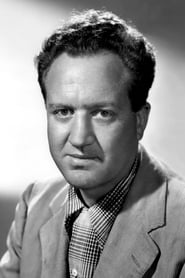
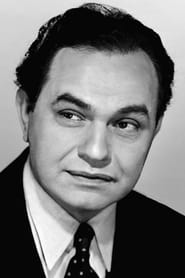
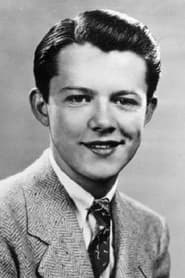
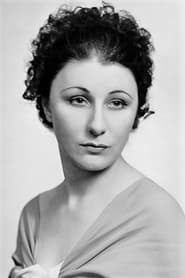
Pete Morgan (Edward G. Robinson) and his sister Ellen (Judith Anderson) live on a remote farm with their adopted daughter Meg (Allene Roberts). When Meg's friend Nath (Lon McCallister) comes to help with chores, Meg becomes fascinated by a mysterious red house in the woods that Pete has forbidden anyone to visit. Pete's increasingly erratic behavior and warnings about the woods only heighten Meg's curiosity, leading her to discover that the red house holds a dark secret from Pete's past. As Meg and Nath investigate further, they uncover a tragic story of murder, guilt, and psychological tormen…
Cast & crew
More Mystery films
View all →
More about this film
About the production
Release dateApril 15, 1947
Budget$600,000
Box officeNot widely reported, but considered a moderate success
ProductionUnited Artists, Enterprise Productions
Filmed inFox Studio Lot, Century City, Los Angeles, California, Malibu Creek State Park, California (for forest scenes)
The film was shot in just 29 days on a relatively modest budget. Director Delmer Daves used innovative camera techniques including subjective camera angles and deep focus to enhance the psychological tension. The red house itself was a specially constructed set that could be lit to appear increasingly ominous as the story progressed. The forest scenes were filmed using infrared film to create an otherworldly, dreamlike atmosphere.
Themes
Repressed memory and traumaThe darkness beneath rural innocenceFamily secrets and their psychological tollObsession and curiosityGuilt and redemption
Themes & topics
psychological thrillerfamily secretforbidden housewoodsadopted daughtermurder mysteryrepressed memoriesobsessionguiltrural isolationcoming of age
Historical background
Released in 1947, 'The Red House' emerged during Hollywood's post-war transition period when psychological themes became more prevalent in American cinema. The film reflected growing interest in Freudian psychology and the exploration of repressed trauma, themes that resonated with audiences processing the psychological aftermath of World War II. This was also a period when film noir was flourishing, and 'The Red House' incorporated many noir elements while pushing into psychological horror territory. The film's focus on rural isolation and family secrets tapped into contemporary anxieties about the dark undercurrents beneath seemingly normal American life.
Why this film matters
'The Red House' occupies an important place in cinema history as a bridge between classic film noir and the psychological horror films of the 1950s and 60s. Its exploration of repressed memory and family trauma anticipated many later psychological thrillers, including Alfred Hitchcock's work. The film's use of subjective camera techniques and its focus on psychological rather than physical horror influenced the development of the psychological horror genre. Its success proved that audiences were ready for more complex, psychologically-driven narratives, paving the way for films like 'Psycho' and 'The Night of the Hunter.'
Making of
Director Delmer Daves, who had previously worked as a screenwriter, was passionate about adapting Chamberlain's novel. He fought to cast Edward G. Robinson against the studio's initial preference for a more conventional leading man. Robinson was initially hesitant about playing such a psychologically complex role but was convinced by Daves' vision. The production faced challenges creating the right balance between psychological horror and mystery, with several scenes reshot to adjust the tone. The forest sequences were particularly difficult to film, requiring custom lighting rigs and careful choreography to maintain the sense of disorientation. Judith Anderson, known for her stage work, brought theatrical intensity to her role as Ellen Morgan, often staying in character between takes.
What critics said
Contemporary critics praised Edward G. Robinson's performance against type, with many noting it as one of his most nuanced roles. The New York Times called it 'a genuinely spine-chilling melodrama' while Variety praised its 'atmospheric direction.' Modern critics have reevaluated the film as an underrated masterpiece of psychological cinema, with many noting its influence on later horror directors. The film's cinematography and use of psychological tension have been particularly highlighted in retrospective reviews as ahead of their time.
Did you know?
- Edward G. Robinson, typically known for gangster roles, was cast against type as the tormented Pete Morgan, showcasing his dramatic range
- The film was based on the 1943 novel 'The Red House' by George Agnew Chamberlain
- Director Delmer Daves also wrote the screenplay, adapting it from the novel
- The film's distinctive score was composed by Miklós Rózsa, who later won Oscars for 'Spellbound' and 'A Double Life'
- Allene Roberts, who played Meg, was only 19 years old during filming and this was her breakthrough role
- The red house set was painted a specific shade of crimson that would appear to change color under different lighting conditions
- The film was initially banned in several countries due to its psychological themes and suggestions of incest
- Lon McCallister was borrowed from 20th Century Fox specifically for this role
- The forest scenes were shot at night using special lighting techniques to create the eerie atmosphere
- The film's success led to a radio adaptation on the 'Screen Directors Playhouse' in 1951
Visual style
The cinematography by Bert Glennon employed innovative techniques for the period, including extensive use of deep focus to create a sense of depth and isolation in the forest scenes. Glennon used low-angle shots to make the red house appear menacing and dominant in the landscape. The film's distinctive look was achieved through careful color grading that made the red house appear to pulse with menace. Night scenes were shot using special blue filters to enhance the otherworldly atmosphere of the woods. The camera often采用了subjective angles to reflect Meg's growing paranoia and obsession.
Innovations
The film pioneered several technical innovations in psychological filmmaking. It was one of the first to use subjective camera angles to represent a character's psychological state. The sound design included innovative use of echo and reverb to create the sense of the forest as a character in itself. The lighting techniques used to make the red house appear to change color were groundbreaking for the time. The film's editing style, which increasingly fragmented as Pete's mental state deteriorated, influenced later psychological thrillers.
Music
Miklós Rózsa's score was groundbreaking in its use of leitmotifs to represent psychological states rather than characters. The main theme, built around a haunting four-note motif, became increasingly distorted as the film progressed to mirror Pete's deteriorating mental state. Rózsa incorporated unusual instruments including the theremin to create the film's unsettling atmosphere. The score was one of the first to use music to represent repressed memories, a technique that would become standard in psychological thrillers. The soundtrack was later released as a recording and became popular among film music enthusiasts.
Famous quotes
There's something in those woods... something that doesn't want to be found.
The red house... you stay away from there. There's nothing for you there.
Some secrets are better left buried, Meg. Some doors should never be opened.
The woods have a way of keeping their secrets. They don't like to give them up.
Every night I hear it... the sound of what happened in that house.
Memorable scenes
- The scene where Meg first approaches the red house at dusk, with the building appearing to glow ominously through the trees
- Pete's nighttime confession scene, where he finally reveals the truth about what happened in the red house years ago
- The sequence where Meg and Nath get lost in the woods, with the forest seemingly changing around them
- The final confrontation in the red house, where all the secrets are revealed in a dramatic climax
What audiences thought
The film was a moderate commercial success, particularly popular with audiences who appreciated psychological mysteries. Its word-of-mouth success was driven by its reputation as a genuinely frightening film, unusual for the period. Many contemporary viewers reported being genuinely disturbed by the film's psychological themes and atmospheric tension. Over time, it has developed a cult following among classic film enthusiasts and horror aficionados who appreciate its subtle approach to psychological horror.
Film connections
Influenced by
- German Expressionist cinema (particularly in its use of shadows and angles)
- Freudian psychology
- Gothic literature
- Film noir conventions
- The works of Edgar Allan Poe
This film influenced
- Psycho (1960)
- The Night of the Hunter (1955)
- Blue Velvet (1986)
- The Others (2001)
- The Sixth Sense (1999)
Film restoration
The film has been preserved by the UCLA Film and Television Archive. A restored version was released on Blu-ray by Kino Lorber in 2019, featuring a new 4K restoration from the original camera negative. The restoration work revealed details and color gradings that had been lost in previous releases, particularly in the forest scenes and the distinctive red of the title house.
Where to watch
- Available on Blu-ray from Kino Lorber
- Streaming on The Criterion Channel
- Available for digital rental on Amazon Prime Video
- Occasionally airs on Turner Classic Movies
- Available on DVD from various classic film distributors