
Scarlet Street
"Art, desire, and a closing trap"
Keys: Space play/pause · ←/→ 10s · F fullscreen · M mute · </> speed
About this film
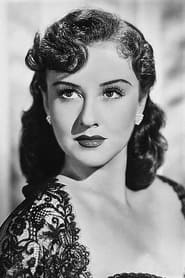
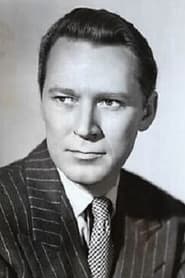
Middle-aged cashier Christopher Cross falls for Kitty March, who with her lover Johnny exploits his secret painting talent. Fritz Lang's noir tragedy drives him toward violence and madness.
Cast & crew
More Drama films
View all →






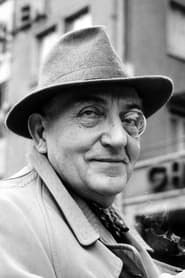
More from Fritz Lang
View all →

More about this film
About the production
Release dateDecember 28, 1945 (New York City premiere), January 1946 (wide release)
BudgetApproximately $415,000
Box officeThe film was commercially successful, though exact figures are not documented
ProductionInternational Pictures Inc., Diana Productions
Filmed inUniversal Studios, Universal City, California, New York City (for establishing shots)
The film was based on the 1931 French film 'La Chienne' directed by Jean Renoir. Producer Walter Wanger formed Diana Productions specifically to make this film with his wife Joan Bennett. The production faced censorship challenges from the Production Code Administration due to its themes of adultery, prostitution, and unpunished crime, requiring multiple script revisions. The famous painting scenes featured actual artwork by John Decker, a Hollywood painter who created the pieces shown in the film.
Themes
Obsessive loveArtistic integrity vs. commercial successBetrayal and deceptionThe dark side of human natureMale insecurity and emasculation
Themes & topics
amateur artistcon artistsobsessive loveart fraudpsychological manipulationmurderguiltbetrayalprostitutionmiddle-aged manfemme fataleart dealerjealousygreedpsychological breakdownurban noirmoral ambiguityidentity theft
Historical background
Released in 1945 as Hollywood noir peaked, Scarlet Street was produced outside the major studio system by Fritz Lang and Walter Wanger.
Why this film matters
Its bleak ending and moral inversion made it a touchstone for later crime melodramas and auteur noir studies.
Making of
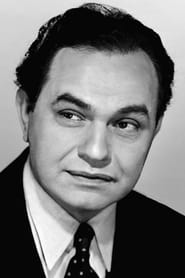
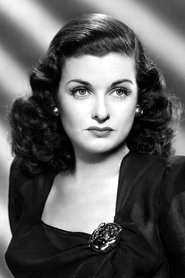
The production of 'Scarlet Street' was marked by significant challenges, particularly with the Hollywood Production Code. The original story involved the protagonist getting away with murder, which censors found unacceptable. Lang and producer Walter Wanger had to modify the ending to show Cross's psychological torment and implied punishment. Edward G. Robinson was initially hesitant about playing such a weak character but was convinced by Lang's vision. The relationship between Lang and Bennett was particularly collaborative; she had significant input into her character's development and costume design. The film's distinctive visual style was achieved through the use of chiaroscuro lighting techniques that Lang had perfected in his German Expressionist period. The famous scene where Cross paints in his basement was shot on a specially constructed set that allowed for dramatic shadow play and emphasized the character's isolation.
What critics said
Contemporary reviewers noted its harshness; modern criticism ranks it among Lang's essential American works.
Did you know?
- This was the final film in Fritz Lang's 'noir trilogy' with Joan Bennett, following 'The Woman in the Window' (1944)
- Edward G. Robinson, famous for playing gangsters, specifically wanted to play a non-criminal role to showcase his dramatic range
- The film was banned in New York State upon initial release for being 'immoral and indecent'
- The title 'Scarlet Street' was suggested by Joan Bennett, referencing both the color of sin and the street setting
- Fritz Lang considered this his best American film
- The paintings in the film were created by artist John Decker, who was paid $500 for his work
- The film was remade in 1953 as 'The Big Noise' but without the dark psychological elements
- Joan Bennett and Walter Wanger were married in real life during production
- The film's ending was changed from the original French version to satisfy the Production Code
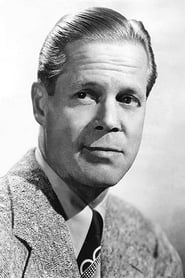
- Dan Duryea's character Johnny Prince was partially based on real-life con men Lang had encountered in Europe
- The film was shot in just 28 days, an unusually short schedule for the time
- Robinson's character's name 'Christopher Cross' was symbolic, referencing the Christian cross and the burden he carries
Awards & recognition
- National Board of Review Award for Best Film (1945)
- National Board of Review Award for Best Actor - Edward G. Robinson (1945)
Visual style
The cinematography by Milton R. Krasner is a masterclass in film noir visual style, employing dramatic chiaroscuro lighting and deep shadows to create a mood of psychological oppression. Lang and Krasner used low-angle shots to emphasize power dynamics and high-angle shots to suggest vulnerability. The film's visual palette emphasizes darkness and shadow, with light often used to reveal characters' true nature. The famous basement scenes where Cross paints are particularly notable for their claustrophobic composition and use of single light sources to create dramatic shadows. The camera work often mirrors Cross's psychological state, with increasingly distorted angles and movements as his mental state deteriorates. The street scenes use wet pavement and neon lights to create the classic noir urban landscape, while interior scenes employ doorways and windows to create frames within frames, suggesting entrapment and observation.
Innovations
Scarlet Street pioneered several technical innovations that would become standard in film noir. The film's use of deep focus photography allowed for complex compositions where foreground and background elements carried equal narrative weight. Lang's innovative use of sound design, particularly the way off-screen sounds create psychological tension, influenced subsequent noir films. The film's editing style, with its rhythmic cross-cutting between different characters' perspectives, enhanced the narrative's psychological complexity. The production design, particularly the creation of Cross's basement studio, used forced perspective and clever set construction to maximize the sense of claustrophobia and isolation. The film's special effects, particularly the dream sequences and psychological montage scenes, used innovative double exposure techniques that were ahead of their time.
Music
The musical score was composed by Hans J. Salter, with additional music by Frank Skinner. The soundtrack effectively enhances the film's dark psychological atmosphere without overwhelming the narrative. Salter's score uses leitmotifs for different characters, with Kitty's theme characterized by seductive, flowing melodies while Cross's theme uses more discordant, anxious musical phrases. The music often employs minor keys and dissonant harmonies to reflect the film's moral ambiguity and psychological tension. The film makes effective use of diegetic music, particularly in scenes set in bars and restaurants, where popular songs of the era contrast with the dark events unfolding. The soundtrack received an Academy Award nomination, recognition of its significant contribution to the film's atmosphere and emotional impact.
Famous quotes
I'm not a killer! I'm a cashier! I'm a Sunday painter!
She's the most wonderful thing that ever happened to me. I'd die for her.
You're a good man, Christopher. You're just a fool.
I don't paint for money. I paint because I have to.
Love is a funny thing. It makes you do things you never thought you'd do.
There's no such thing as love. There's only infatuation and habit.
I've been a fool all my life. Why should I stop now?
Every man has his price, and I've just found mine.
You can't buy class, Johnny. You're born with it or you're not.
The worst thing in the world is to be ordinary.
Memorable scenes
- The opening scene where Cross saves Kitty and becomes instantly infatuated, establishing the film's central obsession
- The basement painting sequence where Cross creates his masterpieces in isolation, visually representing his artistic soul
- The scene where Kitty first sees Cross's paintings and realizes their commercial potential, marking the turning point in the deception
- The brutal confrontation between Johnny and Kitty where the true nature of their relationship is revealed
- Cross's psychological breakdown in his apartment after discovering the full extent of the betrayal
- The murder scene, filmed with expressionistic shadows and minimal explicit violence
- The final scene where Cross, now homeless and broken, hears his own painting being praised on the radio
- The sequence where Cross imagines himself as a celebrated artist, contrasted with his pathetic reality
What audiences thought
Despite initial censorship issues in some markets, Scarlet Street was a commercial success with audiences. Edward G. Robinson's star power attracted viewers, though some were surprised by his non-gangster role. The film's dark themes and psychological intensity resonated with post-war audiences who were experiencing their own moral uncertainties. The movie developed a strong cult following over the years, particularly among film noir enthusiasts. Modern audiences continue to discover the film through revivals and home video releases, with many praising its timeless exploration of obsession and betrayal. The film's reputation has grown significantly since its initial release, with contemporary viewers often expressing surprise at how daring and psychologically complex a 1945 Hollywood film could be.
Film connections
Influenced by
- La Chienne (1931) - Jean Renoir's French original
- German Expressionist cinema - particularly Lang's own early work
- American hardboiled detective fiction
- Post-war European cinema
- Sigmund Freud's psychoanalytic theories
- Film noir visual traditions
This film influenced
- The Killing (1956)
- Vertigo (1958)
- Psycho (1960)
- The Hustler (1961)
- The Graduate (1967)
- Taxi Driver (1976)
- American Beauty (1999)
- The Artist (2011)
- Nightcrawler (2014)
Film restoration
Scarlet Street has been well-preserved and is part of the permanent collection at the Library of Congress. The film underwent a complete 4K restoration by Universal Pictures in 2019, which included extensive digital cleanup of the original nitrate elements. The restored version premiered at the TCM Classic Film Festival in 2020. The film exists in its complete original form with no lost footage. Multiple high-quality home video releases are available, including Blu-ray editions from Criterion Collection and Universal. The restoration work revealed previously unseen details in the film's shadow photography and enhanced the audio quality of the dialogue and score.
Where to watch
- The Criterion Channel (streaming)
- HBO Max (streaming)
- Amazon Prime Video (for rent/purchase)
- Apple TV (for rent/purchase)
- Google Play Movies (for rent/purchase)
- Criterion Collection Blu-ray/DVD
- Universal Studios Home Entertainment Blu-ray
- TCM (Turner Classic Movies - periodic broadcasts)
- Various public library collections (DVD/Blu-ray)