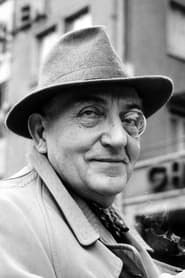
Fritz Lang
Actor & Director
Born: December 5, 1890 in Vienna, Austria-Hungary (now Austria) Died: August 2, 1976 Active: 1919-1963 Birth Name: Friedrich Christian Anton Lang
Films
8 films
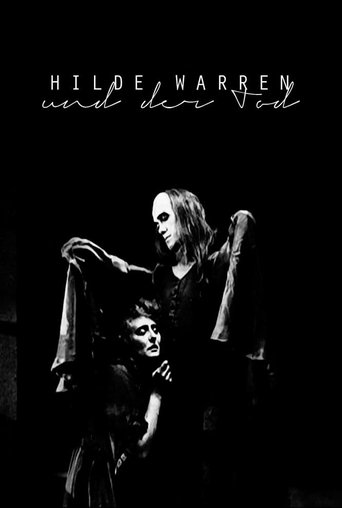
About Fritz Lang
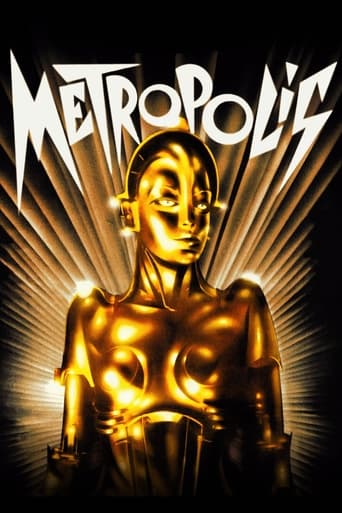
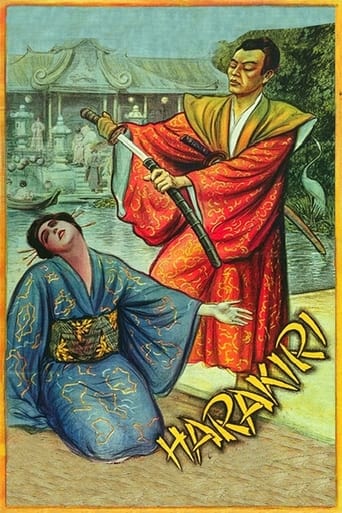
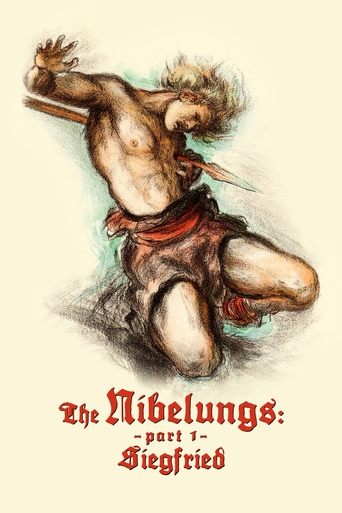
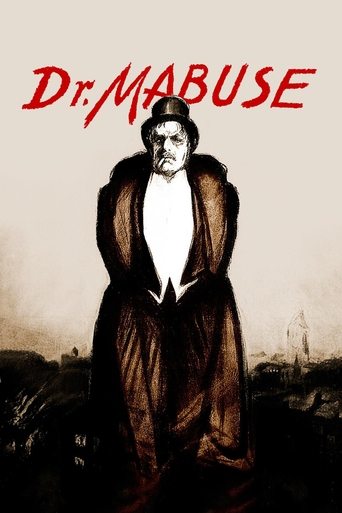
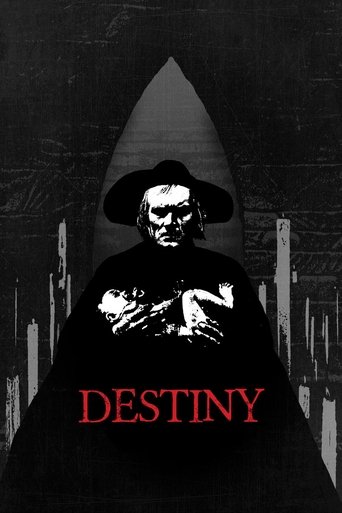
Fritz Lang was and visionary directors in cinema history, beginning his career in Germany during the height of the Expressionist movement. After serving in World War I, he transitioned from painting to filmmaking, making his directorial debut with 'Harakiri' in 1919. Lang quickly established himself excelled in visual storytelling with films like 'Destiny' (1921), 'Dr. Mabuse, the Gambler' (1922), and his epic 'Die Nibelungen' (1924). His 1927 masterpiece 'Metropolis' became expensive and ambitious silent films ever made, showcasing his innovative use of special effects and elaborate set designs. Lang's first sound film, 'M' (1931), starring Peter Lorre, is considered a landmark of cinema and one of the greatest psychological thrillers ever made. Fleeing Nazi Germany in 1934 after being approached by Joseph Goebbels to head the German film industry, Lang moved to Paris and then Hollywood, where he continued his career. During his American period (1936-1956), he directed numerous film noirs and thrillers including 'Fury' (1936), 'You Only Live Once' (1937), 'The Woman in the Window' (1944), and 'The Big Heat' (1953), cementing his reputation excelled in suspense and social commentary.
The Craft
Behind the Camera
Fritz Lang's directing style was characterized by meticulous visual composition, dramatic lighting influenced by German Expressionism, and a fascination with themes of fate, justice, and the darker aspects of human nature. He was known for his use of sweeping camera movements, elaborate set designs, and innovative special effects. Lang often employed a cold, detached perspective that created psychological distance, making his films feel like clinical examinations of society's ills. His visual storytelling was precise and economical, with every frame carefully composed to serve the narrative. Lang's films frequently featured themes of paranoia, obsession, and the struggle of individuals against oppressive systems, reflecting his own experiences with political turmoil. His use of shadows, angular compositions, and stark contrasts created a distinctive visual language that heavily influenced the film noir genre.
Milestones
- Directed 'Metropolis' (1927),
- Created the iconic character Dr. Mabuse in a series of films spanning decades
- Made the groundbreaking sound film 'M' (1931) starring Peter Lorre
- Fled Nazi Germany in 1934 after refusing to work for the regime
- Established himself as a major director in Hollywood's film noir genre
- Directed over 40 films across two continents and three decades
- Pioneered techniques in visual effects and set design that influenced generations
Best Known For
Must-See Films
Accolades
Won
- Venice Film Festival Volpi Cup for Best Foreign Film (The Big Heat, 1953)
- German Film Award for Best Feature Film (The Indian Tomb, 1959)
- Bodil Award for Best European Film (The Big Heat, 1954)
- Kinema Junpo Award for Best Foreign Language Film (The Big Heat, 1954)
Nominated
- Academy Award nomination for Best Assistant Director (The Four Horsemen of the Apocalypse, 1921)
- Venice Film Festival Golden Lion (While the City Sleeps, 1956)
- Directors Guild of America Award for Outstanding Directorial Achievement in Motion Pictures (The Big Heat, 1953)
Special Recognition
- Star on Hollywood Walk of Fame (located at 6400 Hollywood Blvd)
- German Film Museum dedicated permanent exhibition to his work
- Cannes Film Festival retrospective of his films (1965)
- National Film Registry inclusion for 'Metropolis' (2001)
- National Film Registry inclusion for 'M' (2003)
- AFI's 100 Years.100 Thrills - 'M' ranked #96
- Sight & Sound Critics' Poll - 'Metropolis' consistently ranked among greatest films
Working Relationships
Worked Often With
Studios
Why They Matter
Impact on Culture
Fritz Lang's impact on cinema is immeasurable, with his films serving as blueprints for entire genres and aesthetic movements. 'Metropolis' essentially created the template for science fiction cinema, influencing everything from 'Blade Runner' to 'Star Wars' with its vision of futuristic cities and class struggle. His German Expressionist style, with its dramatic shadows, angular sets, and psychological intensity, directly shaped the film noir genre that would dominate Hollywood in the 1940s and 1950s. Lang's exploration of themes like justice, paranoia, and the nature of evil in films like 'M' established new possibilities for psychological depth in cinema. His visual techniques, including the use of mirrors, reflections, and complex camera movements, became part of the cinematic vocabulary that directors still employ today. Lang's work also reflected and influenced the political consciousness of his time, from his critique of industrial capitalism in 'Metropolis' to his examination of mob mentality in 'Fury' and his anti-fascist undertones throughout his oeuvre.
Lasting Legacy
Fritz Lang's legacy endures through the countless filmmakers he influenced and the timeless power of his greatest films. He is universally recognized as one of cinema's great auteurs, a director who maintained a consistent artistic vision while working across different countries, languages, and studio systems. His films continue to be studied in film schools worldwide as exemplars of visual storytelling and genre innovation. Lang's influence can be seen in the work of directors from Alfred Hitchcock to Ridley Scott, Martin Scorsese to David Lynch. The preservation and restoration of his films, particularly 'Metropolis,' has introduced new generations to his visionary work. Film scholars continue to debate and analyze his complex relationship with his actors, his perfectionist methods, and the political dimensions of his art. Lang's career represents one of cinema's most remarkable journeys, from the artistic explosion of Weimar Germany to the studio system of Hollywood's Golden Age, always maintaining his distinctive voice and uncompromising artistic standards.
Who They Inspired
Lang's influence on cinema is both direct and indirect, spanning technical innovations, narrative techniques, and thematic concerns. Alfred Hitchcock openly acknowledged Lang's influence, particularly in the use of suspense and psychological tension. Film noir directors like John Huston and Orson Welles adopted Lang's visual style and moral ambiguity. Science fiction filmmakers from Stanley Kubrick to George Lucas drew inspiration from 'Metropolis.' His exploration of the dark side of human nature influenced countless thriller directors. Lang's methodical approach to set design and visual effects established new standards for production design. His use of sound in 'M' demonstrated how audio could enhance psychological tension, influencing the entire thriller genre. Even contemporary directors like Christopher Nolan and Denis Villeneuve show Lang's influence in their blend of spectacle with philosophical themes. Lang's career also demonstrated how directors could maintain artistic integrity while working within studio systems, a lesson that continues to resonate with filmmakers today.
Off Screen
Fritz Lang's personal life was as dramatic as his films, marked by multiple marriages and a dramatic escape from Nazi Germany. He married his first wife, writer Thea von Harbou, in 1924, and they collaborated on many of his most famous German films before their divorce in 1933, partly due to political differences as she supported the Nazis while he opposed them. Lang had a reputation for being tyrannical on set and difficult to work with, often clashing with actors and studio executives. He lost sight in his right eye during World War I, which gave him a distinctive appearance and possibly contributed to his unique visual perspective. After moving to America, he became a U.S. Citizen in 1939 and never returned to live in Germany, though he did return to direct some films there in the late 1950s. Lang spent his final years in Los Angeles, largely isolated from the film industry he had helped shape.
Education
Studied architecture and engineering at the Technical University of Vienna; attended art schools in Vienna and Munich; briefly studied at the Academy of Fine Arts Vienna
Family
- Lisa Rosenthal (1914-1920, divorced)
- Thea von Harbou (1924-1933, divorced)
- Lily Latté (1941-1943, divorced)
- Ann Kitzman (1944-1947, divorced)
Did You Know?
- Lang claimed he invented the countdown for rocket launches in 'Woman in the Moon' (1929), which NASA later adopted
- He was approached by Nazi propaganda minister Joseph Goebbels to head the German film industry but fled the country the next day
- Lang lost the sight in his right eye during World War I, which gave him a distinctive menacing appearance
- His film 'Metropolis' was the most expensive silent film ever made, costing approximately 7 million Reichsmarks
- Lang was reportedly so difficult to work with that he was nicknamed 'the Iron Man' by crews
- He kept a diary throughout his life, which provided valuable insights into his creative process and personal struggles
- Lang's first wife, Thea von Harbou, stayed in Germany and became a prominent filmmaker under the Nazi regime
- His film 'M' was Peter Lorre's first major role and made him an international star
- Lang was one of the few directors who successfully transitioned from silent films to sound films without losing his artistic vision
- He often claimed to have invented many cinematic techniques, though some of these claims are disputed
- Lang — passionate chess player and incorporated chess themes into several of his films
- His distinctive monocle became part of his public image, though he reportedly only wore it for publicity photos
In Their Own Words
I am not in this world to live up to your expectations, and you are not in this world to live up to mine.
All I care about is the film. I don't care for anything else. Not for people, not for money, not for love.
Pictures are for entertainment. Messages should be delivered by Western Union.
I make films for the masses, but I make them in a way that only a few can understand.
Cinema should not be a mirror, but a hammer.
I hate actors. They are the most impossible people in the world.
The only way to deal with producers is to make them think they're getting their way while you get yours.
Every film is a kind of dream, and the director is the dreamer.
Frequently Asked Questions
Who was Fritz Lang?
Austrian-American on YTB.my. He was a pioneer of German Expressionist cinema in the 1920s and later became a significant director in Hollywood, particularly known for his film noir work. His most famous films include 'Metropolis' (1927), 'M' (1931), and 'The Big Heat' (1953).
What films is Fritz Lang best known for?
Titles linked here include Metropolis (1927), M (1931).
When was Fritz Lang born and when did he die?
Born December 5, 1890; died August 2, 1976.
What awards did Fritz Lang win?
While Lang never won an Academy Award, he received numerous international honors including the Venice Film Festival's Volpi Cup for 'The Big Heat' (1953), the German Film Award for 'The Indian Tomb' (1959), and has had multiple films inducted into the National Film Registry. He also received a star on the Hollywood Walk of Fame and has been the subject of major retrospectives at prestigious film festivals worldwide.
What was Fritz Lang's directing style?
Lang's directing style was characterized by German Expressionist influences, including dramatic lighting, elaborate set designs, and psychological intensity. He was known for his meticulous visual composition, innovative camera techniques, and exploration of themes like fate, justice, and human nature's dark side. His films often featured cold, detached perspectives that created psychological distance while examining social and moral issues.
Why did Fritz Lang leave Germany?
Lang left Germany in 1934 after the Nazi party came to power. According to his account, propaganda minister Joseph Goebbels offered him the position of head of German film production, but Lang, whose mother was Jewish and who opposed the Nazi regime, fled the country the next day, first to Paris and then to Hollywood. His first wife, Thea von Harbou, stayed in Germany and became a filmmaker under the Nazis.
How did Fritz Lang influence other filmmakers?
Lang influenced countless directors, particularly in the film noir and science fiction genres. Alfred Hitchcock acknowledged his influence in creating suspense, while directors like Ridley Scott and George Lucas drew inspiration from 'Metropolis.' His visual techniques, thematic concerns, and approach to psychological storytelling have been studied and emulated by filmmakers from Billy Wilder to Christopher Nolan. Lang essentially created templates for entire genres that continue to evolve today.