
Destiny
"Love defies even Death himself."
Keys: Space play/pause · ←/→ 10s · F fullscreen · M mute · </> speed
About this film
As a young couple stops and rests in a small village inn, the man is abducted by Death and is sequestered behind a huge doorless, windowless wall. The woman finds a mystic entrance and is met by Death, who tells her three separate stories set in exotic locales, all involving circ.
Cast & crew
More films like this
More Drama films
View all →







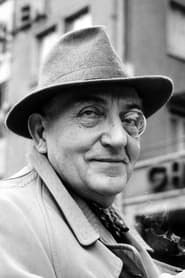
More from Fritz Lang
View all →
More about this film
About the production
Release dateOctober 13, 1921 (Berlin premiere)
Box officeModerately successful commercially, though not as profitable as Lang's later works
ProductionDecla-Bioscop AG
Filmed inBabelsberg Studios, Potsdam, Germany
The film featured groundbreaking special effects for its time, including early use of superimposition and multiple exposure techniques. The elaborate sets, particularly the exotic locations for the three stories, were constructed entirely in studio and required massive resources. Lang was obsessed with achieving visual perfection, often reshooting scenes multiple times. The famous wall sequence involved complex camera tricks and set design to create the illusion of an impenetrable barrier. The production took approximately six months to complete, unusually long for films of this era.
Themes
Love versus DeathFate and Free WillSacrificeThe Universality of Human ExperienceTime and Mortality
Themes & topics
Death PersonifiedThree StoriesSupernaturalLove Conquers AllFateSacrificeExpressionismSilent FilmFantasyRomanceTragedy
Historical background
Silent-era production in 1921 relied on intertitles, live accompaniment, and studio systems that were rapidly consolidating into national industries.
Why this film matters
Destiny remains part of the screen heritage of its era, offering evidence of prevailing genres, production methods, and audience tastes. Later revivals, archive screenings, and digitization have kept such titles accessible to researchers and dedicated viewers long after their first commercial runs.
Making of
Fritz Lang's meticulous attention to detail drove the production to extraordinary lengths. He insisted on building full-scale sets rather than using miniatures, including the massive wall that dominates the film's opening sequence. The collaboration with his wife Thea von Harbou marked the beginning of one of cinema's most famous creative partnerships. Lang reportedly worked 18-hour days during production, personally overseeing every aspect from set design to special effects. The film's most complex sequence, where Death turns candles representing human lives, required innovative use of multiple exposure techniques that were revolutionary for 1921. The cast endured grueling conditions, particularly during the exotic sequences where heavy costumes and elaborate makeup had to be worn under hot studio lights. Lang's perfectionism led to numerous reshoots, causing the production to run over budget and schedule, much to the concern of the studio executives at Decla-Bioscop.
What critics said
Trade and newspaper reviews from the silent period for Destiny survive only in fragments, making precise reception history difficult to reconstruct. Modern assessment tends to emphasize historical value, craft, and cultural context rather than box-office performance.
Did you know?
- The film's German title 'Der müde Tod' translates to 'The Weary Death', reflecting Death's exhaustion with his eternal duties
- Fritz Lang and his wife Thea von Harbou wrote the screenplay together, beginning their collaborative partnership
- The film was reportedly inspired by Lang's own near-death experience during World War I when he was wounded in battle
- The famous wall sequence influenced Alfred Hitchcock, who later used similar visual techniques in several of his films
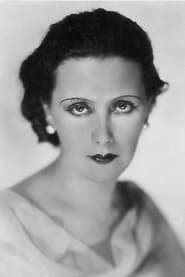
- Lil Dagover's performance as the Woman was so powerful that it launched her to international stardom
- The three exotic stories were filmed using different color tints: amber for Persia, blue for Venice, and sepia for China
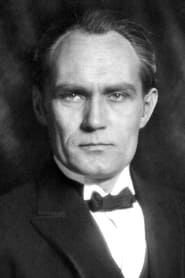
- Death was played by Bernhard Goetzke, whose gaunt appearance was enhanced by makeup and costume design
- The film's special effects were created by Eugen Schüfftan, who later developed the Schüfftan process used in 'Metropolis'
- A young Marlene Dietrich appears briefly as an uncredited extra in the Venice sequence
- The original negative was considered lost for decades until a complete print was discovered in the 1970s
Awards & recognition
- None - The film was released before major film awards were established
Visual style
The cinematography, credited to Fritz Arno Wagner and Erich Nitzschmann, revolutionized visual storytelling through innovative camera techniques and lighting effects. The film employed dramatic chiaroscuro lighting characteristic of German Expressionism, using deep shadows and stark contrasts to create an atmosphere of mystery and foreboding. The camera work featured unusual angles and movements that enhanced the supernatural elements of the story. Wagner pioneered the use of superimposition to create ghostly images and dream sequences, particularly effective in the scenes where Death manipulates the candles representing human lives. The different visual textures created for each of the three stories - from the warm, golden tones of Persia to the cool, blue hues of Venice - demonstrated sophisticated understanding of color tinting's emotional impact. The famous wall sequence utilized innovative camera tricks and forced perspective to create an illusion of infinite height and impenetrability.
Innovations
'Destiny' featured groundbreaking special effects that were revolutionary for 1921. The film pioneered sophisticated multiple exposure techniques, particularly in scenes where Death appears and disappears and in the candle sequence showing lives being extinguished. The production developed innovative matte painting techniques to create the illusion of vast, exotic landscapes within the confines of studio sets. The famous wall sequence utilized complex mechanical effects and camera tricks to create an impenetrable barrier that seemed to defy physical laws. The film's use of color tinting was particularly sophisticated, with different color schemes employed for each of the three stories to enhance their distinctive atmospheres. The special effects team, led by Eugen Schüfftan, developed new techniques for superimposition that would influence visual effects for decades to come. The production also featured elaborate makeup and costume design that transformed actors into convincing representations of characters from different historical periods and cultures.
Music
As a silent film, 'Destiny' was originally accompanied by live musical performance, with theaters typically providing their own orchestral or organ accompaniment. The original score was composed by Giuseppe Becce, one of Germany's most prolific film composers of the silent era. Becce's music incorporated leitmotifs for different characters, particularly a haunting theme for Death that recurs throughout the film. The score drew on late Romantic traditions, using Wagnerian harmonies to enhance the film's mythic qualities. Modern restorations have featured newly commissioned scores by contemporary composers, including works by Timothy Brock and the Alloy Orchestra. These modern interpretations often blend period-appropriate musical styles with contemporary sensibilities, helping new audiences connect with the film's emotional power while respecting its historical context.
Famous quotes
Love is stronger than death!
I am Death. None escape me.
You would bargain with Death for a mortal's life?
In each story, love meets its destiny.
Time is my garden, and I am its gardener.
Memorable scenes
- The opening sequence where the mysterious wall appears around the village, growing impossibly high and blocking all escape routes
- The woman's first encounter with Death in his candle-lit chamber, where each flame represents a human life
- The Persian sequence with the flying carpet and magical palace, showcasing groundbreaking special effects
- The Venetian story featuring the elaborate carnival and the dramatic confrontation on the bridge
- The final revelation where Death allows the couple to reunite, demonstrating that true love transcends even his power
What audiences thought
Initial audience response was generally positive, though the film's philosophical themes and abstract visual style proved challenging for some viewers expecting more straightforward entertainment. The film found particular success with urban audiences and intellectual circles who appreciated its artistic ambitions. Despite not achieving the blockbuster status of some contemporary productions, 'Destiny' developed a strong cult following among cinema enthusiasts. The film's international distribution was limited but successful wherever it played, particularly in France and artistic circles in the United States. Over the decades, 'Destiny' has gained appreciation among silent film aficionados and is now regarded as a classic of world cinema, regularly featured in retrospectives and film festivals dedicated to silent era masterpieces.
Film connections
Influenced by
- Gothic literature
- German Romanticism
- Arthurian legends
- Medieval mystery plays
- E.T.A. Hoffmann's supernatural tales
- Richard Wagner's operatic cycles
This film influenced
- The Seventh Seal (1957)
- Orpheus (1950)
- A Matter of Life and Death (1946)
- Meet Joe Black (1998)
- The Fountain (2006)
- Wings of Desire (1987)
- Pan's Labyrinth (2006)
Film restoration
The film has been preserved and restored by various archives, including the Friedrich Wilhelm Murnau Foundation. A complete 35mm print was discovered in the 1970s, allowing for comprehensive restoration. The most recent restoration was completed in 2016, featuring digitally remastered images and reconstructed original tints. The film is considered well-preserved compared to many silent era productions, with multiple complete copies existing in archives worldwide.
Where to watch
- The Criterion Collection (Blu-ray/DVD)
- Kino Lorber (DVD/Blu-ray)
- MUBI streaming service
- The Criterion Channel
- Various public domain archives
- Film archives and museum screenings worldwide