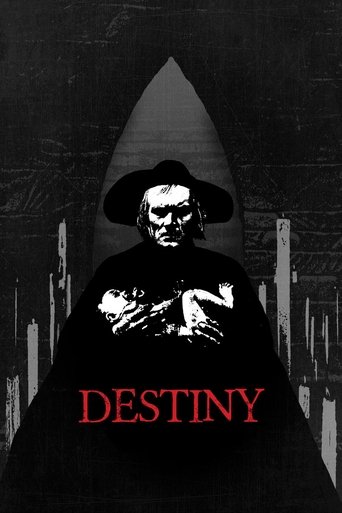
Films
1 film
About Hans Sternberg
Made his most notable appearance in Fritz Lang's 1921 film 'Destiny' (Der müde Tod). Born in the late 19th century, Sternberg emerged as part of the vibrant German film industry during the expressionist movement of the 1920s. His brief but memorable film career appears to have been concentrated primarily around 1921, with 'Destiny' being his most documented and significant work. In Lang's masterpiece, Sternberg contributed to the film's exploration of love, death, and the supernatural, themes that were central to German expressionist cinema. While his filmography seems limited, his participation in such an influential film places him within the context of early cinematic innovation. Sternberg's career, though brief, coincided with what many consider the golden age of German silent film, a period that produced numerous masterpieces that would influence cinema worldwide. His work represents the ensemble nature of early film production, where even supporting actors contributed to the lasting impact of these artistic achievements.
The Craft
On Screen
As a character actor in German expressionist cinema, Sternberg likely employed the exaggerated gestures and dramatic facial expressions characteristic of the silent era, helping to convey the emotional and supernatural themes prevalent in films of this period.
Milestones
- Appeared in Fritz Lang's 'Destiny' (1921)
- Participated in German Expressionist cinema movement
- Contributed to
Best Known For
Iconic Roles
Must-See Films
Working Relationships
Worked Often With
Studios
Why They Matter
Impact on Culture
Hans Sternberg's contribution to cinema, while limited in scope, is part of the broader cultural impact of German Expressionist film. Through his participation in 'Destiny,' he contributed to a film that would influence countless directors and filmmakers worldwide, including Alfred Hitchcock and Luis Buñuel. The film's innovative narrative structure and visual techniques, which Sternberg helped bring to life through his performance, represented a significant artistic achievement in early cinema. German Expressionism, as exemplified by 'Destiny,' would go on to influence film noir, horror cinema, and psychological thrillers for decades to come. Even as a supporting actor, Sternberg was part of this revolutionary movement that changed how stories could be told through visual media.
Lasting Legacy
Hans Sternberg's legacy is intrinsically tied to his participation in. While he may not be widely remembered as an individual actor, his contribution to 'Destiny' ensures his place in film history as part of an ensemble that created a masterpiece of early cinema. The film itself continues to be studied by film scholars and screened at classic film festivals, maintaining Sternberg's connection to cinematic history. His work represents the countless character actors of the silent era who, while not achieving star status, were essential to the creation of films that have endured for over a century. Sternberg's legacy is that of a craftsman who contributed to an art form during its most innovative and transformative period.
Who They Inspired
As a supporting actor in a single documented film, Hans Sternberg's direct influence on other actors and filmmakers is difficult to trace. However, his participation in 'Destiny' means he was part of a film that influenced generations of filmmakers. The techniques and approaches developed in German Expressionist cinema, which actors like Sternberg helped embody through their performances, would influence acting styles in genre films for decades. The emotional intensity and visual storytelling methods he contributed to would echo through film noir, horror, and psychological thrillers throughout the 20th century.
Off Screen
Very limited information is available about Hans Sternberg's personal life, which is common for many supporting actors of the silent era whose biographical details were not extensively documented.
Did You Know?
- Appeared in Fritz Lang's 'Destiny' (1921), considered one of the masterpieces of German Expressionist cinema
- His film career appears to have been extremely brief, with 1921 being the only documented year of his activity
- German Expressionist films like 'Destiny' were known for their elaborate sets and dramatic lighting effects
- The film 'Destiny' was also known by its German title 'Der müde Tod' (The Weary Death)
- Fritz Lang, who directed Sternberg in 'Destiny', would later direct the classic film 'Metropolis' (1927)
- German Expressionist cinema heavily influenced the film noir movement in Hollywood during the 1940s and 1950s
- Silent era actors often had to convey complex emotions through exaggerated gestures and facial expressions
- Many supporting actors from the silent era, like Sternberg, have limited biographical documentation
- The restoration of silent films has helped preserve the work of actors like Sternberg for modern audiences
- German cinema of the 1920s was considered
Frequently Asked Questions
Who was Hans Sternberg?
German character with credits in this catalog. His career appears to have been brief, with 1921 being the primary documented year of his film activity.
What films is Hans Sternberg best known for?
Titles linked here include Destiny (1921).
When was Hans Sternberg born and when did he die?
Unfortunately, specific birth and death dates for Hans Sternberg are not well documented, which is common for many supporting actors from the silent era. He was active in the German film industry in 1921.
What awards did Hans Sternberg win?
There are no documented awards or nominations for Hans Sternberg, which reflects the limited recognition typically given to supporting actors during the early 1920s film industry.
What was Hans Sternberg's acting style?
As an actor in German Expressionist cinema, Sternberg likely employed the dramatic gestures and intense facial expressions characteristic of silent film acting, helping to convey the emotional and supernatural themes prevalent in films of this period.
How is Hans Sternberg connected to German Expressionist cinema?
Through his appearance in 'Destiny' (1921), Sternberg was part of the German Expressionist movement,.
Why is Hans Sternberg historically significant?
While not a major star, Sternberg is historically significant for his participation in 'Destiny,' a film that influenced generations of filmmakers and contributed to the development of cinematic techniques and storytelling methods.