
Die Nibelungen: Siegfried
"Siegmund under pressure"
Keys: Space play/pause · ←/→ 10s · F fullscreen · M mute · </> speed
About this film
Siegfried, son of King Siegmund of Xanten, travels to Worms, capital of the Burgundian kingdom, to ask King Gunther for the hand of his sister, the beautiful Kriemhild.
Cast & crew
More films like this
More Adventure films
View all →

More from Fritz Lang
View all →
More about this film
About the production
Release dateFebruary 14, 1924 (Berlin premiere)
BudgetApproximately 2 million Reichsmarks (an enormous sum for 1924, making it
Box officeThe film was commercially successful both domestically and internationally, though exact figures are not preserved in historical records
ProductionDecla-Bioscop AG, UFA (Universum Film AG)
Filmed inUFA Studios, Babelsberg, Potsdam, Germany, Various locations in the German countryside for exterior shots
The production was a massive undertaking that required over 7 months of filming. The dragon was an elaborate mechanical creation operated by 17 technicians inside, weighing over 2 tons and requiring 2 men to operate its head alone. The film used over 2,000 costumes and employed hundreds of extras. The famous blood scene where Siegfried bathes in dragon's blood used 200 liters of chocolate syrup mixed with red dye. The sets were enormous, with the Nibelungen cave alone taking 3 months to construct.
Themes
Heroism and the heroic idealBetrayal and deceptionFate and destinyThe corrupting influence of powerLove and sacrifice
Themes & topics
Historical background
Made in 1924, Die Nibelungen: Siegfried reflects production norms of late silent cinema and the transition toward sound—shorter runtimes, regional audiences, and limited preservation infrastructure.
Why this film matters
Historians reference Die Nibelungen: Siegfried (1924) when discussing 1924 film by Fritz Lang.
Making of
The making of 'Die Nibelungen: Siegfried' was. Fritz Lang, known for his perfectionism, demanded unprecedented realism in every aspect. The dragon sequence alone took months to prepare, with the mechanical beast requiring a team of engineers and puppeteers. Lang insisted on shooting the dragon footage in natural light, which meant the crew had to wait for perfect weather conditions. The cast underwent extensive preparation; Paul Richter trained in sword fighting and horseback riding for months, while the female leads learned period-appropriate courtly gestures and movements. The relationship between Lang and von Harbou was reportedly strained during production due to creative differences, though they continued to collaborate. The film's massive scale required the construction of entire medieval villages and castles, many of which were full-scale rather than miniatures. Lang's attention to detail extended to historical accuracy, with researchers consulting medieval manuscripts to ensure costumes and props were authentic to the period depicted in the original epic.
What critics said
Trade and revival screenings have kept Die Nibelungen: Siegfried (1924) on the map for collectors and scholars rather than mass first-run promotion.
Did you know?
- The dragon was so realistic that early audiences reportedly screamed and some fainted during its first appearance on screen
- Director Fritz Lang and his wife Thea von Harbou wrote the screenplay together, adapting it from the medieval German epic poem 'Nibelungenlied'
- The film was originally intended to be a single epic, but was split into two parts: 'Siegfried' and 'Kriemhild's Revenge'
- Paul Richter, who played Siegfried, was a former ski instructor discovered by Lang while working as a bank clerk
- The film's special effects were so advanced that they influenced Hollywood productions for years, particularly in the fantasy genre
- Adolf Hitler was reportedly a great admirer of the film and screened it frequently for his inner circle
- The original camera negative was destroyed during World War II, but the film survived through various prints and was later restored
- The film's production coincided with the period of hyperinflation in Germany, making its massive budget particularly significant
- Margarethe Schön, who played Kriemhild, wore a wig weighing over 5 pounds for her role
- The famous scene where Siegfried forges his sword required actor Paul Richter to actually work with a blacksmith for weeks to learn the proper techniques
Awards & recognition
- Honorary Mention at the Venice Film Festival, 1934 (retrospective award)
- German Film Heritage Award, 1967 (for cultural significance)
Visual style
The cinematography by Carl Hoffmann and Günther Rittau was for its time, combining expressionist lighting techniques with epic scale. The film features innovative use of chiaroscuro lighting to create dramatic contrasts, particularly in the Nibelungen cave sequences. The camera work includes sweeping movements and unusual angles that enhance the mythic quality of the story. The dragon sequence utilized multiple cameras and innovative lighting to create the illusion of a massive, living creature. The cinematography employs extensive use of forced perspective and miniature work to create epic battle scenes. The film's visual style influenced the development of the fantasy genre, particularly in its use of lighting to create magical atmospheres. The black and white photography makes exceptional use of tonal range, with deep blacks and brilliant whites enhancing the mythic quality of the narrative.
Innovations
The film pioneered numerous technical innovations that would become standard in later cinema. The mechanical dragon represented a breakthrough in creature effects, using a combination of full-scale puppetry and camera tricks. The film employed innovative matte painting techniques to extend sets and create vast landscapes. The special effects team developed new methods for simulating fire and smoke, particularly in the dragon's breath and forge sequences. The film's use of multiple exposure photography created magical effects, particularly in scenes involving Siegfried's cloak of invisibility. The production developed new techniques for creating large-scale battle sequences using a combination of full-scale action and carefully choreographed miniature work. The film's soundstage sets were revolutionary for their size and detail, establishing new standards for production design. The cinematography employed innovative camera movements, including tracking shots that would influence the development of the moving camera in cinema.
Music
As a silent film, 'Die Nibelungen: Siegfried' was originally accompanied by live musical performances. The original score was composed by Gottfried Huppertz, who created a Wagnerian-style leitmotif system that enhanced the epic nature of the story. Huppertz's score was so integral to the film that it was published as a standalone concert piece. The original orchestral score required approximately 70 musicians and included themes for each major character. Modern restorations have included reconstructions of Huppertz's score, performed by orchestras such as the Munich Radio Orchestra. The music combines late Romantic harmonies with medieval-inspired melodies, creating a sound world that bridges the ancient setting with contemporary 1920s musical language. The score's complexity and ambition matched the visual spectacle of the film, setting a new standard for film music composition.
Famous quotes
I am Siegfried, son of Siegmund, and I have come to seek the hand of Kriemhild.
The dragon is dead! Its blood shall make me invincible!
A hero's fate is written in the stars, not in the fears of mortal men.
Betrayal cuts deeper than any sword.
Even the mightiest warrior has his weakness.
Memorable scenes
- The dragon battle sequence, where Siegfried confronts and slays the fearsome beast in its cave lair, featuring special effects and cinematography
- Siegfried bathing in the dragon's blood to achieve invincibility, with the dramatic moment when a linden leaf falls on his back creating his one vulnerable spot
- The contest of strength between Gunther and Brunhild, where Siegfried uses his cloak of invisibility to help Gunther appear to defeat the warrior queen
- The royal wedding feast where tensions escalate and the truth about Siegfried's role in Gunther's victory is revealed
- Siegfried's murder during the hunt, where Hagen discovers his vulnerable spot and strikes him down in the forest
What audiences thought
The film was a box office success upon its release, drawing large audiences in Germany and across Europe. American audiences, who saw it in 1925, were particularly impressed by its scale and technical achievements. Contemporary audience reports indicate that viewers were genuinely frightened by the dragon sequence and emotionally moved by Siegfried's death. The film's length proved challenging for some viewers, leading some theaters to show it in two parts with an intermission. Modern audiences at revival screenings and film festivals continue to be impressed by the film's visual spectacle, though some find the pacing slow compared to contemporary films. The film has developed a cult following among silent film enthusiasts and remains popular at classic film festivals worldwide.
Film connections
Influenced by
- Nibelungenlied (medieval German epic poem)
- Wagner's 'Ring Cycle' operas
- German Expressionist cinema
- Nordic mythology
- Arthurian legends
This film influenced
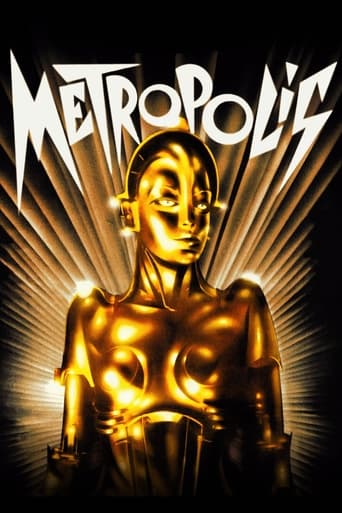
- Metropolis (1927)
- The Lord of the Rings trilogy (2001-2003)
- Excalibur (1981)
- The Seventh Seal (1957)
- Fantasia (1940)
- Jason and the Argonauts (1963)
- Clash of the Titans (1981)
- Game of Thrones (TV series)
Film restoration
The film has been preserved and restored multiple times. The original camera negative was destroyed during World War II, but the film survived through various distribution prints. A major restoration was undertaken in the 1980s by the Munich Film Museum, combining elements from different sources. The most recent restoration was completed in 2012 by the Friedrich Wilhelm Murnau Foundation, using digital technology to enhance image quality and reconstruct missing scenes. The restored version runs at the correct projection speed and includes the original color tints. The film is considered well-preserved compared to other silent films of its era, with complete versions available in multiple archives worldwide.
Where to watch
- The Criterion Collection (Blu-ray/DVD)
- Kino Classics (Blu-ray/DVD)
- The MUBI streaming service
- The Criterion Channel
- Various public domain streaming sites
- Film archives and museums with film screening programs
- Educational institutions with film studies programs