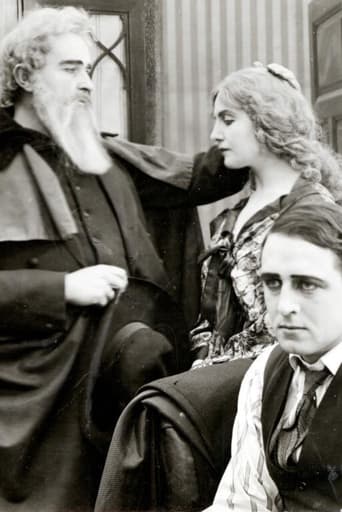
Vilhelm Glückstadt
Director
- Active
- 1914-1914
Films directed 1
About Vilhelm Glückstadt
Vilhelm Glückstadt is a little-documented early Danish film director known primarily for helming the 1914 silent short His Guilty Conscience. Surviving reference sources indicate that his screen career was very brief, and he appears in film history largely as a name attached to the Danish silent-era production record rather than as a widely profiled public figure. Because his filmography is so limited and contemporary biographical documentation is scarce, many details of his life outside that single credited directing role remain unverified or unavailable in modern reference works. He belongs to the formative period of Scandinavian cinema, when directors often worked quickly on short subjects and when many practitioners left little paper trail beyond credits and trade listings. His surviving credit places him among the early contributors to Danish film culture during a period of significant international influence for Nordic cinema. No reliable evidence has surfaced in standard film histories to suggest a longer directing career, major awards, or a substantial body of extant films. As a result, Glückstadt is best understood as an obscure but historically relevant participant in the silent era whose contribution is preserved mainly through filmography records.
More about Vilhelm Glückstadt
Behind the camera
No detailed stylistic analysis can be reliably reconstructed from the surviving record, since only a single directing credit is commonly associated with him. As an early silent-era director, his work would have depended on visual clarity, expressive staging, and concise storytelling rather than dialogue. Beyond that general historical context, there is not enough surviving evidence to identify a distinctive personal style, recurring themes, or a recognizable aesthetic signature.
In film history
Vilhelm Glückstadt's cultural impact lies less in a large body of surviving work than in what his credit represents: the breadth of early Danish silent cinema and the many contributors who helped establish it. Even directors with limited surviving filmographies played a role in building the professional structures, production routines, and narrative conventions that made Scandinavia one of the most admired filmmaking regions of the pre-World War I era. His name in the record is a reminder that film history is not only shaped by famous auteurs, but also by lesser-known craftsmen whose work often survives only in catalogs, program notes, and archival indexes. For database purposes, he is significant as a verified historical credit from the silent period, helping to document the international and collaborative nature of early cinema production.
Later reputation
Glückstadt's legacy is archival rather than celebrity-based: he endures as a credited director from the silent era whose existence and work are preserved in filmographic sources. Because no substantial critical literature or broad body of surviving films is widely associated with him, his reputation rests on historical documentation rather than on popular recognition. That said, his surviving credit contributes to the reconstruction of early Danish film history, which is valuable to scholars tracing the development of European cinema before and during the 1910s. In that sense, his legacy is the preservation of a name, a title, and a place in the earliest phase of screen storytelling.
Influence
There is no evidence that Vilhelm Glückstadt exerted a documented influence on major later directors or that he established a school or identifiable movement. His broader influence is indirect: by participating in the early silent-film industry, he was part of the generation whose collective work formed the grammar of cinematic direction. In historical terms, even obscure directors contributed to the normalization of film production practices that later filmmakers inherited. Any specific influence on later artists cannot be verified from currently available sources.
Off screen
Very little has been documented about Vilhelm Glückstadt's personal life, family background, marriage, or private activities. Standard film-reference sources do not appear to preserve reliable information about spouses, children, residence, education, or later occupation. This lack of biographical detail is common for minor silent-era personnel whose careers were brief and whose lives were not extensively covered by the press. Any attempt to supply precise personal facts would be speculative, so the safest account is that his personal history remains largely unknown in publicly accessible records.
Credits
- Directed the silent film His Guilty Conscience (1914)
- Is recorded in film history as part of the early Danish silent cinema era
- Represents one of the many understudied craftsmen whose work survives mainly through production credits
Films
- His Guilty Conscience (1914)
Notes
- He is chiefly remembered today for a single known directing credit, His Guilty Conscience (1914).
- He appears to have worked during only one recorded year, 1914, in currently available filmography data.
- He is associated with the Danish silent-film era, a period that produced internationally respected cinema despite many now-obscure personnel.
- No widely circulated portrait, biography, or interview is commonly cited in standard modern references.
- He is an example of how many early film professionals are known almost entirely through production records rather than personal documentation.
- Because his surviving filmography is so small, it is difficult to determine whether he worked under a stage name or used his legal name professionally.
- His credit helps historians reconstruct the breadth of early Scandinavian film production beyond the best-known major directors.
- There is no reliable evidence of awards, nominations, or major studio affiliations in the available record.
Questions
Who was Vilhelm Glückstadt?
Vilhelm Glückstadt was a Danish silent-era film director best known for directing His Guilty Conscience (1914). He remains a little-documented figure, known primarily through filmography records rather than extensive biographical sources. His place in film history comes from his participation in the formative years of Scandinavian cinema.
What films is Vilhelm Glückstadt best known for?
He is best known for His Guilty Conscience (1914), the only widely documented directing credit associated with him. No larger, reliably verified filmography is commonly cited in major reference sources. As a result, that film stands as his primary surviving screen credit.
When was Vilhelm Glückstadt born and when did he die?
His birth and death dates are not reliably documented in the commonly available film-reference sources consulted for classic cinema records. Because the available evidence is limited, it is not possible to state verified dates or places with confidence. He is therefore treated as a historically attested but biographically obscure early film figure.
What awards did Vilhelm Glückstadt win?
No awards or nominations are currently documented for Vilhelm Glückstadt in the available historical record. This is not unusual for early silent-era filmmakers, especially those with brief or poorly documented careers. His significance lies in his early credit rather than in formal honors.
What was Vilhelm Glückstadt's directing style?
No detailed stylistic profile can be securely reconstructed because only limited evidence of his work survives. As a 1914 silent-film director, his approach would have relied on visual narration, staging, and expressive performance, but no specific directorial trademarks are currently verified. Any more precise description would be speculative.
What is Vilhelm Glückstadt's legacy in film history?
His legacy is mainly archival: he is one of the many early filmmakers whose credited work helps historians map the development of silent cinema. Even though he is not a well-known name today, his record contributes to the documentation of early Danish film production. That makes him valuable to film historians studying the industry's foundations.