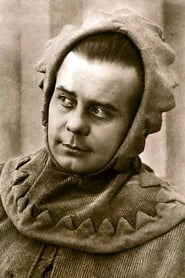
1914 · Unknown

Also available on: Archive.org
His Guilty Conscience

His Guilty Conscience

1914 Unknown Denmark
Guilt and conscienceDebt and financial desperationMoral temptationDomestic dangerSocial anxiety

Plot

Poul Wang, a young clerk, spends recklessly on pleasure and nightlife while an enigmatic stranger seems to follow him at a distance. When the next day brings a debt payment he cannot meet, Poul is driven to seek help from a local moneylender, but the mounting interest only deepens his panic and desperation. Tempted by the idea of stealing from his workplace, he is nearly exposed by a vigilant colleague, and in a final moral collapse he turns to robbing his own family’s savings. His wife, mistaking him for an intruder, fires at him in the dark, and only then does the mysterious stranger intervene to prevent the situation from ending in tragedy, bringing the story toward its moral resolution.

About the Production

Release Date 1914
Production Nordisk Films Kompagni
Filmed In Denmark

This is a Danish silent drama produced by Nordisk Films Kompagni, one of the most important Scandinavian studios of the early 20th century. As with many films of the period, detailed production records such as budget, box office, and exact shooting locations have not survived in widely accessible form. The film’s surviving historical footprint is primarily through Danish archive and database references, including plot information preserved by Stumfilm.dk. Because the film was made in the silent era, production would have depended on visual storytelling, intertitles, and studio-based staging rather than synchronized sound. No widely documented evidence survives of major location shooting, star salaries, or elaborate production controversy.

Historical Background

The film was made in 1914, on the eve of World War I, during a period when Danish cinema was one of the most influential film industries in Europe. Nordisk Films Kompagni had already established an international reputation for sophisticated dramas, often built around moral conflict, social anxiety, and visually polished mise-en-scène. His Guilty Conscience fits squarely into that tradition, using a domestic moral crisis to explore themes of debt, temptation, and consequence. The film also reflects prewar silent cinema’s fondness for allegory and melodrama, where a shadowy stranger, a near-theft, and a mistaken-identity shooting could all be used to externalize conscience and guilt.

Why This Film Matters

Although not a famous canonical title, the film is culturally significant as part of the early Danish silent tradition that helped shape international film style before World War I. It demonstrates how Scandinavian filmmakers used morally charged narratives and psychological tension to craft compact melodramas that could travel across borders through intertitles and visual storytelling. Today its importance lies largely in film-historical and archival contexts: it is evidence of the breadth of Nordisk’s output and of the kinds of social dramas that circulated in the silent era. For scholars, the film is a useful example of early 1910s cinematic morality plays, where guilt, financial anxiety, and domestic peril are dramatized with strong visual economy.

Making Of

His Guilty Conscience appears to have been produced within the efficient studio culture of Nordisk Films Kompagni, which in the 1910s specialized in tightly controlled dramatic features with strong moral narratives. Like many silent-era Danish films, it likely relied on compact production schedules, carefully staged interiors, and expressive acting styles designed for clarity without dialogue. No substantial behind-the-scenes documentation appears to survive in widely accessible English-language sources, so the best-supported information concerns its Danish origin, production company, and archival survival. The film’s presence in modern reference resources suggests that it has at least some archival or cataloged preservation history, even if details of the shoot, editing process, and original reception remain sparse.

Visual Style

As a Danish silent drama from the Nordisk stable, the film likely employed the clean, composed visual style associated with Scandinavian cinema of the period. Early 1910s Danish films commonly favored carefully arranged interiors, strong blocking of actors within the frame, and expressive lighting contrasts to emphasize emotional states. Given the story’s emphasis on shadowy pursuit, temptation, and mistaken identity, the cinematography probably used framing and movement to heighten paranoia and moral tension. Without surviving detailed shot analyses in widely accessible sources, the most reliable statement is that the visual style would have been shaped by the elegant, theatrical realism characteristic of Nordisk productions.

Innovations

The film does not appear to be associated with major technical innovations, but it belongs to the period when Danish cinema was refining fluent silent storytelling through restrained camera setups and effective melodramatic construction. Its principal achievement is narrative and atmospheric: the careful escalation from financial irresponsibility to domestic peril demonstrates an efficient use of visual suspense. The use of a mysterious stranger as a symbolic figure is also a notable storytelling device, allowing the film to balance realism with allegory. In archival terms, its survival as a cataloged title is itself important for understanding the production range of early Nordisk cinema.

Music

As a 1914 silent film, it had no synchronized recorded soundtrack. In original exhibition, it would have been accompanied by live music chosen by the theater, often a pianist or small ensemble, and the exact score would have varied by venue and print. No original composed score is widely documented in surviving reference sources. Any modern screenings would likely use a reconstruction or newly prepared accompaniment if presented at archives or festivals.

Memorable Scenes

  • Poul secretly visiting the moneylender as his debt crisis worsens, a scene that crystallizes his downward spiral.
  • The tense moment when a vigilant colleague interrupts Poul’s contemplated theft at the workplace.
  • Poul robbing his own family’s savings in desperation, showing the collapse of his moral judgment.
  • The nocturnal misunderstanding in which his wife mistakes him for a burglar and fires at him, creating a near-tragic climax.
  • The intervention of the mysterious stranger, who arrives at the decisive moment to prevent catastrophe and restore order.

Did You Know?

  • The film is a Danish silent drama from the early years of Nordisk Films Kompagni’s international prominence.
  • Its plot centers on debt, temptation, and moral collapse, themes common in early 1910s Scandinavian melodrama.
  • The mysterious stranger who shadows Poul functions as a moral or allegorical figure, a device often used in silent-era cautionary dramas.
  • Historical plot information for the film is preserved by Danish archival sources such as Stumfilm.dk.
  • The film stars Hakon Ahnfelt-Rønne, Emanuel Gregers, and Gudrun Houlberg, names associated with early Danish cinema.
  • Vilhelm Glückstadt directed the film, placing it among the lesser-known but historically important Danish silent features of the period.
  • No surviving mainstream commercial data such as budget or box office is commonly cited for the film, which is typical of many 1914 productions.
  • The film belongs to the era when Danish cinema was especially influential in Europe, before World War I disrupted the industry’s dominance.
  • The story’s climax involving a wife firing at her husband in darkness reflects the heightened melodramatic tension favored by silent films of the period.
  • The film is often discussed today primarily as an archive title rather than as a widely circulated repertory or commercial classic.

What Critics Said

Contemporary reviews are not widely documented in the readily available sources consulted for this title, so precise critical responses from 1914 are difficult to reconstruct. In general, early Nordisk dramas were often praised for polished production values, clear storytelling, and emotionally direct performances, and this film likely belonged to that respectable mainstream tradition. Modern critical attention is limited and tends to be archival rather than review-driven, with interest focused on film history, preservation, and the study of silent Danish melodrama. As a result, it is better described as a historically significant obscure title than as a film with a large body of critical commentary.

What Audiences Thought

Specific audience-response data does not appear to survive in common reference sources, which is unsurprising for a 1914 regional silent release. At the time, films of this type typically appealed to audiences drawn to melodrama, moral dilemma, and sensational domestic conflict. The plot’s escalating danger, culminating in an almost tragic misunderstanding at home, would have provided exactly the kind of suspense and emotional payoff that silent-era audiences often favored. Today, audience reception is necessarily limited to historians, archivists, and silent-film enthusiasts rather than the general public.

Film Connections

Influenced By

  • Early Scandinavian moral melodramas
  • Stage-style domestic dramas of the pre-sound era
  • Didactic cautionary tales common in 1910s cinema

This Film Influenced

  • Later Scandinavian domestic melodramas
  • Silent-era cautionary crime dramas

Film Restoration

The film appears to survive at least as an archival/catologed title, but detailed public information about the completeness of any extant print is limited. It is not widely available in mainstream home-video circulation and is best known through film archive references and Danish silent-film databases. If prints exist, they are likely held or referenced by archival institutions rather than distributed commercially. No clear evidence of a modern restoration was found in widely accessible sources.

Themes & Topics