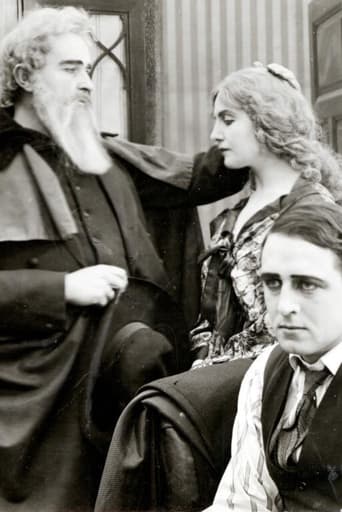
Charles Løwaas
Actor
- Active
- 1912-1914
Films 2
About Charles Løwaas
Charles Løwaas was a silent-era film actor whose known screen work is limited to a very small number of early motion pictures, including The Pride of the Circus (1912) and His Guilty Conscience (1914). He appears in the historical record as part of the formative years of cinema, when many performers moved between stage, vaudeville, and the rapidly expanding film industry. Because surviving documentation on his life is sparse, only a narrow outline of his career can be established with confidence. What is clear is that he was active during the transitional period when film acting was evolving from theatrical presentation toward the more restrained styles associated with screen performance. His name is preserved chiefly through filmography references rather than extensive press coverage or later celebrity. No reliable biographical evidence currently confirms his birth details, family background, training, or activities after 1914. As a result, he remains one of the many lesser-documented contributors to the silent-film era whose work survives mainly in credits and historical catalogues.
More about Charles Løwaas
In film history
Charles Løwaas's cultural impact lies less in fame than in historical representation: he is part of the large body of early film performers whose work helped define the silent era but whose names are now preserved mostly in archival filmographies. Performers like Løwaas contributed to the development of screen acting at a time when cinema was still inventing its storytelling language, visual conventions, and performance style. Even when individual careers were brief or poorly recorded, these actors formed the labor base of early film production and helped shape the industry’s transition from novelty entertainment to a major popular art form. His surviving credits also serve as evidence of the international and multicultural composition of early film personnel, though details of his background remain uncertain. In film history terms, he is a reminder that the silent era was built not only by major stars but also by many lesser-known actors whose work supported the medium's expansion.
Later reputation
Charles Løwaas's legacy is primarily archival and historical. He is remembered through documented credits rather than through a widely circulated body of surviving films or a major star persona, which makes him representative of many early cinema artists whose contributions are difficult to reconstruct in detail. For historians and database researchers, his name is valuable because it helps preserve the completeness of silent-era film records and offers a trace of production history from the 1910s. His career also underscores how much early cinema history remains fragmented, with many performers known only from cast lists and trade references. In that sense, his lasting legacy is the survival of his name within the documented fabric of early motion picture history.
Influence
There is no verifiable evidence that Charles Løwaas directly mentored later actors or that he became a widely recognized influence on the development of performance styles. His significance is instead indirect: he was part of the generation of performers who participated in the experimentation that led to more refined silent-film acting. By taking part in early productions during 1912-1914, he contributed to a medium that would soon establish conventions later actors and directors would inherit. His place in film history is therefore best understood as part of the broader collective influence of silent-era performers rather than through individual celebrity or widely documented mentorship.
Off screen
No reliable publicly documented information is currently available regarding Charles Løwaas's personal life, including marriage, children, residence, or activities outside of filmmaking. Unlike better-documented silent-era figures, he does not appear to have left behind a substantial trail in contemporary newspaper coverage, memoirs, or studio publicity materials that is readily verifiable. Any further claims about his family life or later years would be speculative and are therefore not included here.
Credits
- Appeared in the silent film The Pride of the Circus (1912), one of the earliest surviving credits associated with his career.
- Appeared in His Guilty Conscience (1914), indicating continued work during the early development of narrative film.
- Worked during the formative years of American silent cinema, a period when film acting, production methods, and screen storytelling were rapidly changing.
- Represents the many early performers whose contributions helped build the silent-era studio and production system even though their individual biographies are poorly documented.
- His filmography places him within the first decade of commercial feature filmmaking and the expansion of short dramatic films.
Films
- The Pride of the Circus (1912)
- His Guilty Conscience (1914)
Notes
- Charles Løwaas is one of the many early silent-film actors whose surviving record is extremely limited.
- His credited film activity falls within a very short documented span, 1912 to 1914.
- The surname contains the Scandinavian letter 'ø', which makes him easy to distinguish from similarly named performers in film databases.
- His known credits come from the earliest years of narrative film production, before the studio system fully matured.
- He is preserved in film history largely through cast listings rather than through extensive biographical sources.
- Because so little documentation survives, he is a useful example of how incomplete early cinema records can be.
- His career overlaps with the period when silent acting was becoming more standardized and less theatrical.
- The available record suggests that he may have worked in short subjects or early dramatic films rather than in high-profile star vehicles.
Questions
Who was Charles Løwaas?
Charles Løwaas was a silent-era film actor known from a small number of early screen credits, including The Pride of the Circus (1912) and His Guilty Conscience (1914). He is one of many lesser-documented performers from the formative years of cinema whose names survive mainly in historical film records.
What films is Charles Løwaas best known for?
He is best known for The Pride of the Circus (1912) and His Guilty Conscience (1914). These credits are the principal surviving evidence of his screen career and place him in the earliest phase of narrative filmmaking.
When was Charles Løwaas born and when did he die?
Reliable birth and death information for Charles Løwaas is not currently available in the accessible historical record. His documented film activity spans 1912 to 1914, but beyond that, verified biographical data is lacking.
What awards did Charles Løwaas win?
No awards or formal honors are currently documented for Charles Løwaas. This is not unusual for many silent-era performers whose work predates the modern awards culture and whose careers were not widely publicized.
What was Charles Løwaas's acting style?
There is no surviving detailed critique of his performance style, so any precise description would be speculative. As a silent-era actor, he would have worked in the era’s visually expressive mode of performance, where gesture, facial expression, and physical clarity were essential.
What is Charles Løwaas's legacy in film history?
His legacy is primarily historical and archival. He represents the many early film actors whose work helped build silent cinema even though their individual biographies are only partially preserved.