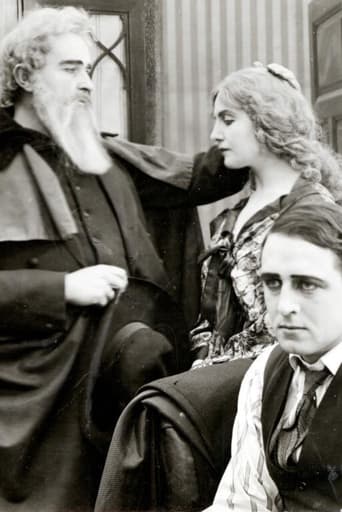
Kristian Møllback
Actor
- Active
- 1914-1914
Films 1
About Kristian Møllback
Kristian Møllback is an obscure early film-era actor known primarily for appearing in the 1914 silent short "His Guilty Conscience." Available reference material on him is extremely limited, and he does not appear to have left behind a substantial documented screen career in widely accessible film histories or modern reference works. Based on surviving filmography listings, his known activity is confined to 1914, placing him among the many performers whose work belongs to the first generation of motion pictures. Because of the scarcity of biographical records, details such as his life outside the screen, later career, and personal background remain unverified. His name survives chiefly through cast listings and archival film references rather than through a broad body of credited performances. As a result, he is best understood as one of the many lesser-documented contributors to the silent cinema of the 1910s, whose participation helped populate early dramatic shorts even when the historical record preserved only fragments of their careers.
More about Kristian Møllback
In film history
Kristian Møllback’s cultural impact is best understood in the context of the early silent era, when even minor credited performers contributed to the rapid expansion of screen storytelling. While he does not appear to have achieved celebrity status or left a widely traceable body of work, his presence in a 1914 release places him within the foundational years of narrative cinema. Performers like Møllback helped establish the acting conventions, casting practices, and production rhythms that shaped early motion pictures. His name endures as part of the archival record that documents how international and regional film industries relied on a broad pool of actors, many of whom were not later preserved in popular memory.
Later reputation
Møllback’s legacy is primarily archival rather than star-driven: he is remembered because historical film records preserve his participation in an early silent production. For film historians, such names are important because they help reconstruct the personnel and production networks of the 1910s, a period when film credits were often inconsistent and documentation was incomplete. Even without a known larger body of work, his surviving credit contributes to the broader map of early cinema history and the study of forgotten performers. In that sense, his legacy is tied to the preservation of silent-film heritage and the recognition of the many working actors who supported the medium’s development.
Influence
No direct influence on later actors or directors can be confirmed from the available evidence. His historical significance lies more in representing the anonymous or semi-anonymous ranks of early film performers than in any documented mentorship or stylistic legacy. Because so little personal and professional information survives, any claims of measurable influence would be speculative.
Off screen
No reliably documented personal-life information is readily available in standard film reference sources. Marital status, family background, residence, and post-screen life are not confirmed in the available record. Because of the limited surviving documentation, any further claims about his private life would be speculative.
Education
No verified educational background is currently available in accessible reference material.
Credits
- Appeared in the silent film "His Guilty Conscience" (1914)
- Documented as part of the early silent-era screen workforce during the 1910s
- Represents one of the many early film performers whose career survives in filmographic records even when personal biographical data is scarce
Roles
- Role in "His Guilty Conscience" (1914)
Films
- His Guilty Conscience (1914)
Notes
- He is documented as appearing in only one known film title in the available record, "His Guilty Conscience" (1914).
- His known screen activity falls entirely within 1914, making him a very early silent-era figure.
- He appears to be one of many early film actors whose surviving recognition comes from cast lists rather than detailed biographies.
- No widely available modern biography has been established for him in standard reference sources.
- His surname contains the Scandinavian letter "ø," suggesting a Nordic or Scandinavian connection, though this is not definitively confirmed by the accessible record.
- Because silent-era records are often incomplete, it is possible that additional credits existed but have not been securely attributed in surviving sources.
Questions
Who was Kristian Møllback?
Kristian Møllback was an early silent-era actor known from his appearance in "His Guilty Conscience" (1914). Very little biographical information has survived about him, so he is remembered mainly through filmographic records rather than a large body of preserved work.
What films is Kristian Møllback best known for?
He is best known for "His Guilty Conscience" (1914), which is the principal title associated with his surviving screen record. No other securely documented film credits are currently available in the reference material used here.
When was Kristian Møllback born and when did he die?
His birth and death dates are not currently verified in accessible historical sources. Likewise, his birthplace and death details have not been established from the available record.
What awards did Kristian Møllback win?
No awards or formal honors are documented for Kristian Møllback in the available sources. This is not unusual for very early silent-era performers, many of whom worked before the modern awards culture of cinema existed.
What was Kristian Møllback's acting style?
There is no detailed surviving description of his acting technique or screen persona. As a performer in 1914, he would have worked within the expressive conventions of silent cinema, but no specific stylistic assessments have been verified.
What is Kristian Møllback's legacy in film history?
His legacy is primarily archival, as a preserved name linked to the early development of silent film. He stands as one of the many early screen actors whose existence helps historians reconstruct the personnel and production culture of cinema's formative years.