Luigi Mele
Actor
- Active
- 1913-1913
Films 1
About Luigi Mele
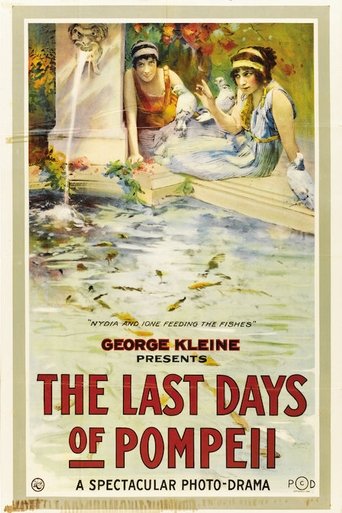
Luigi Mele is documented in surviving film reference material as a silent-era actor who appeared in the 1913 Italian historical spectacle The Last Days of Pompeii. Beyond that credited appearance, very little biographical information about him has survived in readily accessible English-language sources, which is not uncommon for performers from the earliest years of cinema, especially those whose careers were brief or whose work was concentrated in local European production circles. His known screen activity places him in the period when Italian historical epics were helping establish cinema as a large-scale narrative art form, and his presence in such a production suggests he was part of the cast assembled for one of the era's ambitious prestige pictures. Because extant records are sparse, his full life story, training, and later career remain obscure, and it is not currently possible to verify additional film credits with confidence. The available evidence therefore identifies him primarily as an early film actor associated with silent Italian cinema, rather than as a broadly documented star of the international screen. His name endures chiefly through filmography databases and historical listings connected to The Last Days of Pompeii, which preserves his place in early film history. Any more detailed reconstruction of his career would require archival research in Italian production records, trade papers, or contemporary reviews.
More about Luigi Mele
In film history
Luigi Mele's cultural importance lies less in personal celebrity than in his participation in the formative years of Italian silent cinema, when major historical dramas were demonstrating the artistic and commercial potential of feature-length film. The Last Days of Pompeii belongs to a tradition of large-scale biblical and ancient-world spectacles that helped define early screen storytelling and influenced film production beyond Italy. Even when the individual performers are not well documented, their appearances in such works contributed to the visual vocabulary, ensemble performance style, and prestige ambitions of early cinema. Mele's presence in the cast places him among the many early screen actors whose work formed part of the foundation on which later European and Hollywood epics were built.
Later reputation
Luigi Mele's legacy is primarily archival and historical: he survives in film history as a named participant in one of the notable early silent-era productions of the 1910s. While he does not appear to have left a large documented body of work, his credited involvement in The Last Days of Pompeii ensures that he remains part of the record of early Italian screen performance. For historians of silent cinema, figures like Mele are important because they illustrate how many contributors to foundational films remain under-documented despite their participation in influential productions. His name is therefore preserved less through celebrity than through the survival of filmographies and historical cast lists.
Influence
Because there is no surviving detailed record of his career, Luigi Mele's direct influence on later actors or filmmakers cannot be specifically documented. His significance is best understood collectively: he was part of the early generation of performers whose work helped establish acting conventions for Italian historical cinema, including the use of expressive physical performance suited to silent film. In that sense, his influence is embedded in the broader evolution of screen acting rather than traceable to identifiable protégés or later disciples.
Off screen
No reliably verified information about Luigi Mele's personal life, family background, marriages, or descendants is currently available in standard reference sources. Given the limited surviving documentation, it is not possible to confirm whether he remained in the film industry beyond 1913 or pursued work in theater, business, or another profession. His private life appears to have left little trace in widely accessible archival material.
Education
No verified educational background is currently available.
Credits
- Appeared in the 1913 silent historical film The Last Days of Pompeii
- Participated in one of the early Italian prestige productions associated with the international rise of historical epics
- Represents the generation of performers who helped shape silent-era screen acting in Italy
Roles
- Cast member in The Last Days of Pompeii (1913)
Films
- The Last Days of Pompeii (1913)
Notes
- Luigi Mele is specifically associated with the 1913 film The Last Days of Pompeii, one of the era's early historical spectacles.
- He appears to have had a very limited documented screen career, at least in surviving accessible sources.
- His career highlights how many early silent-film performers are known only through cast lists and filmographies.
- The Last Days of Pompeii belongs to the influential Italian historical film tradition that helped popularize epic production values.
- No verified birth or death records are readily available in standard English-language references for this performer.
- He is not to be confused with later or similarly named individuals in other professions.
- His surviving fame is largely tied to film historiography rather than star promotion or preserved personal archives.
Questions
Who was Luigi Mele?
Luigi Mele was an Italian silent-era actor best known for appearing in The Last Days of Pompeii (1913). Surviving records about his life and broader career are very limited, so he is primarily remembered through film history references rather than extensive biographical documentation.
What films is Luigi Mele best known for?
He is best known for The Last Days of Pompeii (1913), which is the only confidently identified credit in the information currently available. If he appeared in other films, they are not well documented in accessible reference sources.
When was Luigi Mele born and when did he die?
At present, no reliably verified birth or death dates are available for Luigi Mele. Standard public reference sources do not provide enough information to confirm his lifespan or place of origin.
What awards did Luigi Mele win?
No awards or nominations are currently documented for Luigi Mele. This is common for many early silent-era performers whose careers were not preserved in the same way as later film stars.
What was Luigi Mele's acting style?
There is no surviving detailed critical description of his individual acting style. As a performer in a 1913 silent film, his work would have been shaped by the expressive physicality and visual clarity typical of early silent cinema.
What is Luigi Mele's legacy in film history?
His legacy lies in his participation in the formative years of Italian silent cinema, especially in a production like The Last Days of Pompeii. Even though his biography is obscure, his name remains part of the historical record of early film performance.