Ferdinand Richter
Actor
- Active
- 1912-1912
Films 1
About Ferdinand Richter
Ferdinand Richter is a largely obscure early German silent-era film actor whose documented screen career, as far as surviving filmographies currently show, is limited to a single known credit in the 1912 short film "Poor Jenny." Because the available record is extremely sparse, little can be verified about his birth, death, education, or personal background with confidence. He appears in cinema history primarily as one of the many working performers who populated the rapidly expanding European film industry in the years before World War I, when film companies often left behind incomplete personnel records. No reliable evidence has surfaced to connect him with a broader later career in theater, sound film, or other branches of the entertainment industry. His historical significance lies less in an extensive body of work than in his presence in one of the thousands of surviving names from the silent period whose contributions are preserved only fragmentarily in archival indexes and film databases. Because no authoritative biographical source has yet established a fuller identity profile, any further details about his life would require careful archival research in German studio records, trade papers, or civil registries.
More about Ferdinand Richter
In film history
Ferdinand Richter’s cultural impact is difficult to measure because the surviving record of his career is so limited. Even so, his single known credit places him within the foundational years of German silent cinema, when countless actors helped establish the industry’s visual vocabulary and production culture. Performers like Richter were part of the workforce that allowed early film studios to develop a stable repertory of faces, types, and supporting players, even if only a small fraction of those names remained prominent in later histories. In that sense, his significance is archival as much as artistic: he represents the many lesser-documented contributors whose labor underpinned the rise of cinema in the 1910s.
Later reputation
Richter’s legacy is mainly one of historical presence rather than enduring fame. His name survives in film databases as evidence of early German film production, but no substantial body of work has yet been attributed to him in a way that allows a fuller critical reassessment. For film historians, such figures matter because they remind us how incomplete the record of silent cinema remains, especially for supporting actors and one-off performers. If additional archival material is discovered, his profile could expand, but for now his legacy is the reminder that classic film history still contains many unresolved identities.
Influence
There is no verifiable evidence that Ferdinand Richter directly influenced later actors or filmmakers in a documented way. Any influence he may have had would have been indirect, as part of the collective body of early performers who helped normalize acting conventions in silent cinema. Because his career is currently represented by only one known film appearance, he cannot be linked confidently to specific protégés, collaborators, or stylistic descendants.
Off screen
No reliable personal-life documentation has been found for Ferdinand Richter in the currently available classic-cinema reference material. His marriages, family background, residence, and off-screen activities are not established in surviving public records tied to his film credit. He should therefore be treated as an undocumented early-screen figure rather than a fully profiled celebrity of the silent era.
Credits
- Known surviving screen credit: "Poor Jenny" (1912)
- Representative of early German silent-film performers whose work is preserved only in fragmentary filmographies
- Documented as part of the pre-World War I European cinema landscape
Roles
- Role in "Poor Jenny" (1912) not specified in surviving records
Films
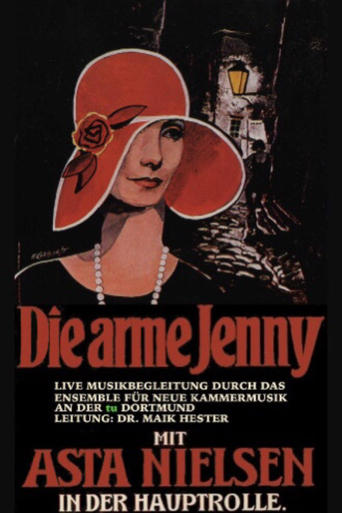
- Poor Jenny (1912)
Notes
- His currently documented filmography is extremely short, with only one known credit: "Poor Jenny" (1912).
- He belongs to the silent-era European film world, where many performers are recorded only by name and title.
- There is no widely available verified information on his birth, death, or family background.
- He is an example of how early cinema history often preserves the existence of performers without preserving detailed biographical data.
- His name may appear in databases and film indexes, but that does not necessarily mean there are surviving full biographical records.
- Researchers would likely need German archival sources to verify whether he had additional stage or screen work.
Questions
Who was Ferdinand Richter?
Ferdinand Richter was an early German silent-film actor known from the 1912 film "Poor Jenny." Very little verified biographical information survives about him, so he is primarily recognized as a minor but documented figure from the formative years of cinema. His record is typical of many early film performers whose names are preserved while personal details are lost.
What films is Ferdinand Richter best known for?
He is currently best known for "Poor Jenny" (1912), which is the only surviving screen credit reliably associated with him in the available record. No other confirmed film appearances are presently documented in the information at hand.
When was Ferdinand Richter born and when did he die?
His birth and death dates are not currently verified in the surviving reference material. Likewise, his birth and death places are not documented with confidence. This is not unusual for some early silent-era performers whose archival trail is incomplete.
What awards did Ferdinand Richter win?
No awards or nominations are known for Ferdinand Richter from the available historical record. Early silent-era supporting performers were often not publicly honored in the way later studio-era stars were, and no verifiable award history has surfaced for him.
What was Ferdinand Richter's acting style?
There is no surviving critical description that allows a confident reconstruction of his personal acting style. As a performer in 1912, he would have worked within the expressive, gesture-driven conventions of silent cinema, but any more specific characterization would be speculative. His style cannot be reliably described beyond that general historical context.
What is Ferdinand Richter's legacy in film history?
His legacy is mainly archival, because he represents the many early cinema performers whose names survive even when detailed biographical records do not. He is part of the historical fabric of German silent film and serves as a reminder that the era’s cast lists often preserve fragments of careers rather than complete life stories.