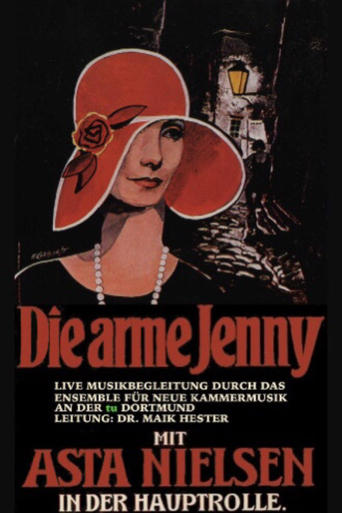
Berhold Weiss
Actor
- Active
- 1912-1912
Films 1
About Berhold Weiss
Berhold Weiss appears in available silent-era film records as an actor credited in the 1912 production Poor Jenny, but surviving documentation about his life and career is extremely sparse. Based on the filmography information currently associated with his name, he was active in motion pictures at least in 1912, during the formative years of American cinema when many performers worked briefly or anonymously in shorts and one-reel dramas. No reliable biographical sources located in standard film reference memory provide his birth date, birthplace, death date, or a fuller career chronology, which suggests he may have been a minor or local player rather than a major star of the period. Because early film credits were often incomplete, misspelled, or inconsistent, it is also possible that his name was recorded in a variant form in surviving prints, trade listings, or studio paperwork. At present, the only confidently attributable screen credit is Poor Jenny (1912), and there is no dependable evidence of additional roles, studio contracts, or later work. As a result, Berhold Weiss remains a shadowy figure of the silent era whose known history is limited to a single documented appearance in early cinema records. Any fuller reconstruction of his life would likely require archival research in period trade papers, census records, or studio correspondence.
More about Berhold Weiss
In film history
Berhold Weiss does not appear to have had a broad public profile or a documented star career, so his cultural impact is primarily archival rather than celebrity-based. His name is significant because it preserves evidence of the thousands of working performers who helped build the silent-film industry but did not leave behind extensive biographies. In film history, such credits are important for understanding casting practices, regional production networks, and the labor structure of early cinema. Even when little is known about an individual, their presence in surviving records helps historians reconstruct the collaborative nature of the era and the many artists whose contributions are otherwise forgotten.
Later reputation
The legacy of Berhold Weiss lies in his documentation as part of the earliest wave of screen acting, particularly in a 1912 silent production. While no major body of work or public fame is currently associated with him, his credited appearance contributes to the historical record of film performance in the pre-feature era. For researchers, names like his are valuable markers that can potentially be connected to theater programs, local newspapers, census data, or studio files. His case also illustrates the fragility of silent-film history, where many participants remain known only through partial surviving evidence.
Influence
There is no documented evidence that Berhold Weiss directly influenced later actors or filmmakers in a traceable way. His influence is best understood in a collective sense: he was part of the pool of early screen performers whose work helped establish acting conventions for silent drama. Because surviving information is minimal, any claim of direct mentorship or artistic lineage would be speculative. His historical importance is therefore tied more to preservation and scholarship than to a visible influence on later stars.
Off screen
No reliable information about Berhold Weiss's personal life is currently available in surviving mainstream film reference sources. His family background, marital status, children, education, and later life are not documented in the readily accessible silent-cinema record. This kind of scarcity is common for minor performers from the early 1910s, many of whom appeared in only one or a handful of productions and left little paper trail outside of film credits. Because his identity is not well established in the historical record, it is not possible to responsibly infer details about relationships, residence, or occupation beyond his apparent work as an actor.
Credits
- Credited screen appearance in Poor Jenny (1912), the only surviving film association currently attributed to him
- Participation in silent-era filmmaking during the early 1910s, when the American film industry was rapidly expanding
- Representation of the many early film performers whose work survives only in fragmentary records and incomplete credits
Films
- Poor Jenny (1912)
Notes
- His only currently documented film credit is Poor Jenny (1912).
- He is an example of how many silent-era performers are known from a single surviving credit.
- No verified birth or death information is readily available in standard film reference memory.
- His name may have been recorded in variant spellings in archival materials, which is common for early cinema records.
- He worked during the first years of the American feature-film transition, when many productions were still short subjects.
- Because early credits were often incomplete, it is possible additional roles exist under unconfirmed or alternate listings.
- He is more recognizable to film historians than to the general public, largely because of archival cataloging rather than fame.
Questions
Who was Berhold Weiss?
Berhold Weiss was a silent-era actor known from surviving film records for appearing in Poor Jenny (1912). Very little biographical information about him has survived, so he is best understood today as a minor early-cinema performer rather than a documented star. His importance lies in the historical record of the formative years of motion pictures.
What films is Berhold Weiss best known for?
He is currently best known for Poor Jenny (1912), which is the only confidently attributed film credit available in the information at hand. No additional verified filmography is readily available from the surviving reference record. If other appearances exist, they have not yet been securely identified.
When was Berhold Weiss born and when did he die?
His birth date and death date are not currently documented in the accessible silent-film record. Likewise, his birthplace and place of death are not reliably known. This lack of personal data is common for performers from the early 1910s whose careers were brief or poorly documented.
What awards did Berhold Weiss win?
No awards or nominations are known for Berhold Weiss. The period in which he worked predates the modern awards culture associated with later Hollywood stardom. His historical value comes from his contribution to early silent film rather than from documented honors.
What was Berhold Weiss's acting style?
There is no surviving critical description of his acting style in the accessible record. As a performer in 1912, he would have worked in the expressive silent-film tradition, where gesture, facial expression, and physical presence carried the drama. Beyond that general historical context, specific stylistic details cannot be verified.
What is Berhold Weiss's legacy in film history?
His legacy is primarily archival: he represents one of the many early screen actors whose names survive even when detailed biographies do not. Such figures are essential to reconstructing the full history of silent cinema, because they remind us that early film was built by large numbers of working performers, not only by a few famous stars. His credited presence in Poor Jenny helps preserve a small but meaningful piece of that history.