Franz Schwaiger
Actor
- Active
- 1913-1913
Films 1
About Franz Schwaiger
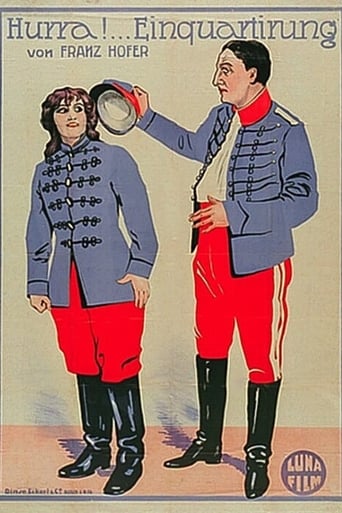
Franz Schwaiger is a documented early Austrian/German film actor whose surviving screen credit places him in the silent-era comedy Hurra! Einquartierung! (1913). Beyond that filmographic trace, very little reliably verifiable biographical information about his life, training, or later career is readily available in standard film reference sources, which is not uncommon for performers from the earliest years of European cinema. He appears to have worked during a formative period of film production when many actors were stage performers or local theater artists who moved briefly into motion pictures without leaving extensive archival records. Because of the limited surviving documentation, his broader career arc cannot be reconstructed with confidence, and there is no dependable evidence of a long film career under this exact name. His surviving credit nonetheless places him among the many early contributors to Central European silent film history whose work helped establish screen acting conventions in the years before features became the dominant form.
More about Franz Schwaiger
On screen
No detailed contemporary reviews or performance analyses have been reliably located for Franz Schwaiger. As an actor from the early silent era, his work would have relied on the visual expressiveness typical of the period, including clear gesture, mime, and readable physical characterization rather than spoken dialogue. Any more specific description would be speculative without surviving criticism, production notes, or extant footage tied securely to his performance.
In film history
Franz Schwaiger's cultural impact is best understood within the broader context of early silent cinema rather than through a large individually documented body of work. Performers like Schwaiger contributed to the rapid development of screen acting in the years before the First World War, when film language, comic timing, and visual storytelling were still being standardized. Even when individual biographies have not survived in detail, their credited appearances help scholars map the growth of regional film production in Austria and the German-speaking world. His presence in a 1913 production places him among the early generation of screen actors whose work supported the transition from stage-influenced performances to more distinctly cinematic acting.
Later reputation
Schwaiger's legacy lies mainly in archival and historical significance: he is a traceable name from the silent-era film record, associated with one of the thousands of performers whose work formed the foundation of European cinema. For modern film historians, such names are important because they help reconstruct casting practices, production networks, and the personnel of early studios and companies. His limited surviving documentation also illustrates a broader preservation problem in silent-film history, where many participants are known only from credits, trade listings, or fragmentary databases. In that sense, his legacy is less about celebrity than about evidentiary value for the study of early motion-picture culture.
Influence
There is no securely documented evidence that Franz Schwaiger directly influenced later actors or filmmakers in a traceable, named way. His historical influence should therefore be understood as indirect and collective: he was part of the early generation of performers whose work helped establish the norms of silent screen performance in Central Europe. The cumulative influence of such actors shaped comic pacing, expressive gesture, and ensemble behavior in early film production, even when individual contributions were not preserved in detail.
Off screen
No reliably verified biographical detail about Franz Schwaiger's personal life, including family background, marriage, children, or later occupation, is currently available in the major accessible film-reference records associated with this name. As a result, any account of his private life would be conjectural. His historical footprint is primarily that of a credited early film performer rather than a widely documented public figure.
Credits
- Screen credit in the 1913 silent film Hurra! Einquartierung!
- Participation in the early European silent-cinema period
- Representation of the many lesser-documented actors who appeared in short-form films of the pre-World War I era
Roles
- Role in Hurra! Einquartierung! (1913)
Films
- Hurra! Einquartierung! (1913)
Notes
- His surviving film record is extremely sparse, with Hurra! Einquartierung! (1913) being the key documented credit.
- He belongs to the pre-World War I silent-cinema generation, a period when many film performers left limited archival traces.
- Because of scarce documentation, he is often more visible to researchers in filmographies than in biographical sources.
- No reliable evidence of awards, nominations, or later celebrity status has been found under this exact name.
- His case is representative of many early European screen actors whose careers were briefly recorded but not extensively chronicled.
- If he worked primarily in short films, that would be consistent with common production practice in 1913, though this cannot be confirmed from the available evidence.
- His surname is sometimes potentially confusable with other similarly named Central European figures, so identification must be kept strictly tied to the 1913 film credit.
Questions
Who was Franz Schwaiger?
Franz Schwaiger was an early silent-era film actor known from the 1913 production Hurra! Einquartierung!. He is one of many early European screen performers whose surviving record is limited to a small number of archival references.
What films is Franz Schwaiger best known for?
He is best known, in the surviving record, for Hurra! Einquartierung! (1913). No other securely verified film credits under this exact name are currently established from the available reference material.
When was Franz Schwaiger born and when did he die?
His birth and death dates are not reliably documented in the available sources. The current record confirms only his association with an active screen credit in 1913.
What awards did Franz Schwaiger win?
No awards or formal honors have been found for Franz Schwaiger in the available historical record. This is not unusual for very early film performers, many of whom worked before the modern awards culture of cinema developed.
What was Franz Schwaiger's acting style?
No contemporary performance analysis of Franz Schwaiger survives in the accessible record. As a silent-era actor, his work would have depended on expressive body language, gesture, and visual clarity typical of films from 1913.
Why is Franz Schwaiger historically important?
He is important as a documented participant in the earliest years of Central European cinema. Even with limited biographical data, his credit helps historians map the people involved in pre-World War I film production.