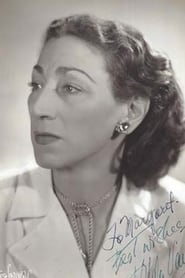
Hilda Vaughn
Actor
- Active
- 1930-1930
Films 1
About Hilda Vaughn
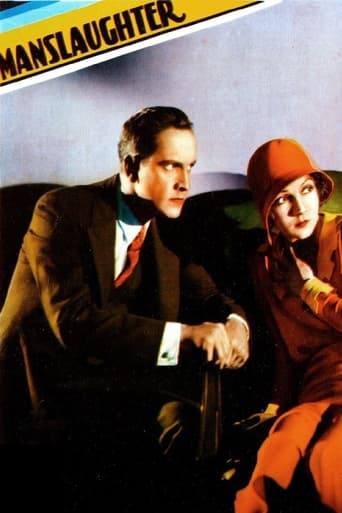
Hilda Vaughn was a little-documented American actress active in the early sound era, best remembered today for her supporting role in Warner Bros.' Manslaughter (1930). Her screen career appears to have been brief and concentrated around 1930, a period when many stage-trained performers were recruited for the new demands of talking pictures. Because surviving documentation on her is scarce, she is chiefly known through cast listings and film databases rather than a long chain of credited roles. She appears to have worked during the transition from silent film conventions to early sound cinema, when studios sought performers with clear speech, poise, and a strong on-camera presence. Vaughn did not become a major star, but her inclusion in Manslaughter places her within an important early-Pre-Code production associated with the first years of the talkie era. No reliable evidence currently confirms a long filmography, major awards, or a later public career. Her significance lies in representing the many skilled but now-obscure performers who helped shape the texture of early 1930s Hollywood supporting casts.
More about Hilda Vaughn
On screen
No detailed contemporary reviews or surviving performance analyses are readily available for Hilda Vaughn. Based on her placement in an early talkie cast, her acting would have needed the clarity, composure, and audible precision that studios valued as they moved away from silent-era expressiveness. Any assessment of her style must remain cautious, since only limited film evidence and documentation appear to survive.
In film history
Hilda Vaughn's cultural impact is subtle rather than star-driven: she belongs to the large body of early sound-era supporting performers whose work helped make the transition to talking pictures viable. Films such as Manslaughter depended on capable ensemble players to create social atmosphere, establish class tensions, and give credibility to the new verbal style of performance. Even when not individually famous, performers like Vaughn contributed to the realism and polish that audiences came to expect from early 1930s studio productions. Her presence in film records also illustrates how many women's careers in early Hollywood were brief, under-documented, and preserved mainly through surviving credits rather than publicity campaigns. For historians, she is valuable as part of the broader mosaic of working actors who sustained the studio system beyond its marquee names.
Later reputation
Hilda Vaughn's legacy lies primarily in archival significance. She is a reminder that classic cinema history is not only built on major stars and celebrated directors, but also on lesser-known performers whose careers were short or only partially documented. Because her known filmography is so limited, her name tends to surface in research on early talkies, cast lists, and the labor history of Hollywood's transitional years. In that sense, she represents the many performers whose contributions are preserved in credits even when their biographies are not. Her legacy is therefore one of historical presence rather than celebrity, and of value to scholars reconstructing the personnel of early sound cinema.
Influence
There is no clear evidence that Hilda Vaughn directly influenced later actors or filmmakers in a documented, traceable way. Her broader influence is historical and illustrative: she stands for the many working performers whose professionalism supported the development of early sound film acting norms. By appearing in a film like Manslaughter, she participated in the model of ensemble casting that shaped studio-era performance expectations, even if she did not become widely recognized herself.
Off screen
Little reliable biographical information is publicly documented about Hilda Vaughn's personal life, including family background, marriage history, or later activities. She does not appear in standard reference sources as a major celebrity, so details beyond her screen credit are sparse. Until stronger archival evidence emerges, personal information should be treated as unknown rather than inferred.
Credits
- Appeared in the early sound-era feature Manslaughter (1930), a notable Pre-Code production from Paramount/early talkie Hollywood.
- Worked during the transition period when studios were adapting casts for synchronized dialogue and more naturalistic screen acting.
- Represents one of the many supporting players whose names survive in credit records even when broader biographical documentation is limited.
Roles
- Supporting role in Manslaughter (1930)
Films
- Manslaughter (1930)
Studios
- Paramount (associated through Manslaughter, 1930)
Notes
- Hilda Vaughn is best remembered for one surviving, commonly cited screen credit: Manslaughter (1930).
- She worked during the first wave of Hollywood sound films, when many performers' careers rose or vanished quickly depending on voice, screen presence, and studio needs.
- Her filmography is so limited in surviving references that she is often discussed more as an obscure credit than as a full-fledged star biography.
- Because documentation is scarce, many standard biographical details such as birth date, birthplace, and family background remain unverified.
- Her name appears in connection with Pre-Code-era cinema, a particularly interesting and sometimes boundary-pushing period in Hollywood history.
- She is an example of the many supporting actors and actresses whose careers were important to the studio system even if they did not achieve headline status.
Questions
Who was Hilda Vaughn?
Hilda Vaughn was an American actor from the early sound era of Hollywood, best known for a supporting role in Manslaughter (1930). She appears to have had a brief film career, and surviving documentation about her life is limited. She is now remembered mainly through cast records and film-history references.
What films is Hilda Vaughn best known for?
She is primarily known for Manslaughter (1930), the main film consistently associated with her name in surviving film records. At present, her documented screen career appears to be very small, so no broader list of major titles can be stated confidently.
When was Hilda Vaughn born and when did she die?
Her birth date and death date are not currently verified in readily available reference sources. Likewise, her birthplace has not been reliably documented in the accessible records tied to her screen career.
What awards did Hilda Vaughn win?
No known awards or nominations are currently documented for Hilda Vaughn. She appears to have been a supporting performer from the early talkie period rather than a major award-recognized star.
What was Hilda Vaughn's acting style?
There is no detailed critical record describing her style, but as an early sound-era performer she would have needed clear diction, poise, and adaptability to the more dialogue-centered demands of talkies. Any assessment beyond that would be speculative because surviving performance commentary is scarce.
What is Hilda Vaughn's legacy in film history?
Her legacy is mainly archival and historical. She represents the many lesser-known performers who contributed to early Hollywood productions and helped shape the transition from silent film to sound cinema.