1930 · Approximately 76 minutes

Also available on: Wikimedia
Manslaughter

Manslaughter

1930 Approximately 76 minutes United States

"A spoiled rich girl learns the meaning of life behind prison walls."

Class privilege and social awakeningPunishment, justice, and redemptionWomen’s experience inside institutionsRomantic transformation through sufferingMoral responsibility and consequences

Plot

Helen Spencer is a wealthy, reckless young woman whose self-absorbed life changes after a fatal traffic accident. After she accidentally strikes and kills a pedestrian, she is prosecuted and sent to prison, where she must confront the consequences of her actions for the first time. Behind bars, Helen is forced to live among women from very different social backgrounds, and the experience gradually strips away her entitlement while opening her eyes to the realities of poverty, labor, and human suffering. Her relationship with the prison doctor, Dr. Kildare, and the moral education she undergoes inside the penal system become the emotional center of the story, as the film follows her transformation from spoiled socialite to a more compassionate and self-aware woman.

About the Production

Release Date 1930-12-06
Budget Not publicly documented in surviving standard reference sources
Box Office Not reliably documented in surviving standard reference sources
Production Paramount Famous Lasky Corporation
Filmed In Paramount Studios, Hollywood, Los Angeles, California, USA

This was a Paramount early-sound production adapted from the stage play by Bayard Veiller, itself based on a successful Broadway property. Director George Abbott, primarily known as a major stage director and playwright, was relatively early in his screen-directing career, and the film reflects strong theatrical roots in its dialogue-driven structure and courtroom/prison settings. The production was made during the transitional early-1930 sound era, when studios were still adjusting staging, microphone placement, and pacing to accommodate the new technology. Contemporary and later references also note that the film was produced in the pre-Code period, allowing it to address sexual double standards, prison life, and social privilege more openly than many later 1930s pictures would.

Historical Background

The film was released in late 1930, at the beginning of the Great Depression, when American audiences were becoming increasingly aware of social class inequality, economic hardship, and the fragility of privilege. In that environment, a story about a wealthy young woman discovering the lives of prisoners and the poor had immediate relevance, especially as Hollywood began to reflect more openly on social reform, institutional life, and moral accountability. It also belongs to the early sound era, when studios were learning how to use dialogue, sound recording, and performance style effectively; many films of this period were still strongly influenced by stage presentation. As a pre-Code drama, it sits in a brief window before enforcement of the Production Code tightened, allowing the film to explore desire, punishment, and social hypocrisy with comparatively little restraint.

Why This Film Matters

Manslaughter is significant as an example of early-1930s Hollywood melodrama that combines romance with a critique of class privilege and a sympathetic look at women inside the penal system. The film reflects a recurring American cultural interest in moral reform narratives, especially stories in which an insulated upper-class character is transformed by contact with hardship and institutional discipline. Its stage-to-screen transition also illustrates how Broadway drama fed the development of sound cinema in the late 1920s and early 1930s. While not among the most famous classics of the era, it contributes to the evolving screen images of Claudette Colbert and Fredric March and demonstrates how pre-Code films could be franker in tone and subject matter than many later studio dramas.

Making Of

Manslaughter was mounted at a moment when Hollywood was rapidly adapting stage material for sound film, and its origins in Bayard Veiller’s play are evident in the emphasis on spoken exchanges, confrontational scenes, and moral debate. George Abbott, who had built his reputation in live theater, brought a stage director’s instincts to the material, which likely helped with blocking and actor performance but also gives the film a somewhat intimate, proscenium-like quality typical of early talkies. Casting Claudette Colbert and Fredric March was a strong commercial move for Paramount, pairing two rising performers whose screen personas could carry both melodrama and romantic tension. As with many early-1930 productions, the film had to balance contemporary realism with studio decorum, and its prison sequences were shaped by the limits and conventions of early sound recording and studio-bound production.

Visual Style

The film’s visual style reflects the early sound period, with comparatively restrained camera movement and a strong reliance on medium shots and carefully staged dialogue scenes. Its prison and courtroom material likely benefits from stark, functional compositions that emphasize confinement, hierarchy, and social contrast rather than elaborate visual flourish. Early Paramount sound cinematography of this type often balanced expressive lighting with the technical need to keep actors near microphones, producing a slightly theatrical but still polished look. The overall effect is one of intimate melodrama, where performance and dialogue carry much of the emotional weight.

Innovations

The film’s main technical significance lies in its early-sound production values and its adaptation of stage material into a synchronized-dialogue feature. It demonstrates the transitional filmmaking style of the period, when studios were refining microphone techniques, interior recording, and scene staging for talkies. While it does not appear to be associated with a major formal innovation, its value is in showing how Paramount handled a dramatic, dialogue-intensive property during the first years of sound cinema. Its polished studio-bound construction is representative of the period’s technical constraints and achievements.

Music

As an early talkie, the film is primarily driven by synchronized dialogue and sound effects rather than a fully elaborated modern-style underscore. Surviving standard references do not consistently document a specific credited score for this title, and early Paramount features of this period often used limited musical accompaniment or studio-curated cue material rather than a prominently advertised original soundtrack. The film’s sound design would have emphasized spoken performance, courtroom and prison ambience, and transitional musical cues typical of early-1930 studio practice.

Famous Quotes

No reliably documented famous quotes from the film are widely cited in standard reference sources.
Dialogue is largely preserved in theatrical, early-sound style, but no single line has achieved lasting canonical status comparable to more famous classics.

Memorable Scenes

  • Helen’s courtroom reckoning after the fatal accident, when her carefree privilege is abruptly replaced by legal consequence and public shame.
  • Her arrival in prison, where the physical and social reality of confinement forces her to confront lives very different from her own.
  • The gradual emotional transformation that develops through contact with other inmates and the prison doctor, turning the prison setting into a site of moral education.
  • The romance between Helen and Dr. Kildare, which gives the film both a sentimental core and a pathway toward redemption.

Did You Know?

  • Manslaughter (1930) is an early sound-era Paramount production and part of the pre-Code cycle, which often tackled social and sexual issues more directly than later films under stricter censorship.
  • The film is adapted from Bayard Veiller’s play Manslaughter, which had already proven successful on Broadway and in an earlier silent film version.
  • George Abbott was better known as a Broadway playwright and director, making this an interesting example of a major stage figure crossing into Hollywood film direction.
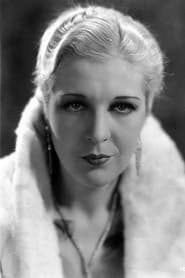
  • Claudette Colbert appears at an early stage in her screen career, before she became one of the defining female stars of the 1930s.
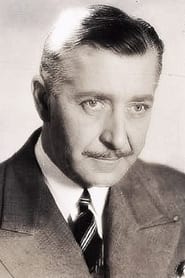
  • Fredric March was also in the ascent as a major dramatic leading man, and the film helped consolidate his reputation for polished, emotionally nuanced performances.
  • The story’s prison setting allowed the film to contrast upper-class privilege with the hardships of working-class and incarcerated women, a theme that aligned with Depression-era social anxieties.
  • Because it was made in the early years of synchronized sound, the film’s style is more static and dialogue-centered than later studio productions, but that also gives it a strong theatrical intensity.
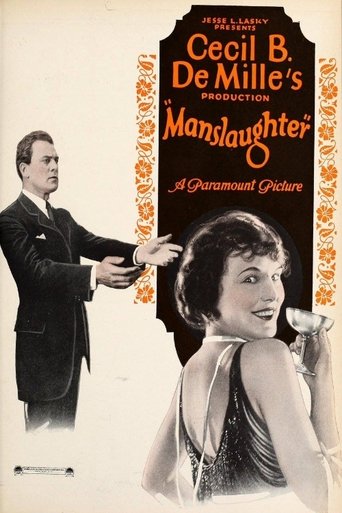
  • The title should not be confused with other films called Manslaughter, especially the 1922 Cecil B. DeMille silent film or any later unrelated projects.
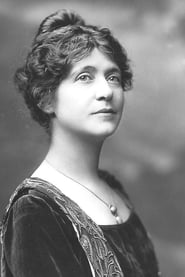
  • Emma Dunn, who plays an important supporting role, was a respected character actress with a long stage background, helping reinforce the film’s theatrical pedigree.
  • The film’s narrative is an early example of a redemption-through-confinement arc that would recur in later Hollywood dramas about privilege, punishment, and moral awakening.

What Critics Said

Contemporary reception appears to have treated the film as a respectable dramatic vehicle rather than a major event picture, with attention often centered on the performances and the adaptation of the stage source. Like many early sound films, it was likely praised for dialogue and acting while also subject to criticism for stagebound staging by later viewers. Modern assessments tend to value it as a historical artifact of the early talkie era and as an example of pre-Code social melodrama, especially for those interested in the careers of Colbert and March. It is not usually ranked among the top titles of either performer, but it remains of interest to classic-film scholars for its themes, cast, and theatrical lineage.

What Audiences Thought

Audience response in 1930 likely reflected the appeal of its star pairing and its sensational premise of a rich woman punished by the law and transformed by prison life. The story’s blend of romance, social shame, and redemption would have been accessible to Depression-era viewers, especially those drawn to emotional dramas about character change and justice. Because it is not one of the era’s most frequently revived or discussed titles, its long-term popular reputation has been modest, but it remains of interest to classic-film enthusiasts and viewers of early Paramount productions. Today it is mainly encountered by audiences through repertory exhibition, archives, or home-media/streaming circulation of classic films.

Film Connections

Influenced By

  • Bayard Veiller's stage play Manslaughter
  • Early Broadway social dramas
  • Pre-Code prison and reform melodramas
  • Early sound-era studio adaptations of stage hits

This Film Influenced

  • Later prison-reform melodramas
  • Female-redemption dramas of the 1930s
  • Class-conscious pre-Code social dramas

Film Restoration

The film is preserved; it is not generally regarded as a lost film. Surviving prints or archival copies are known to exist in circulation through archives and classic-film holdings, though print quality may vary depending on source material.

Themes & Topics