



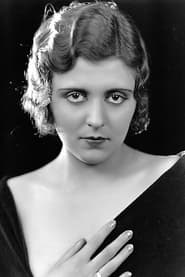

The Divorcee
"Last unfaithful"
Keys: Space play/pause · ←/→ 10s · F fullscreen · M mute · </> speed
About this film
When a woman discovers that her husband has been unfaithful, she decides to pay him back in kind.
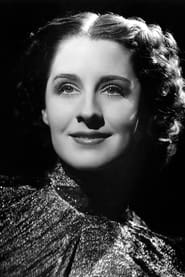
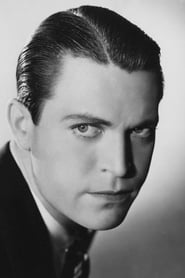
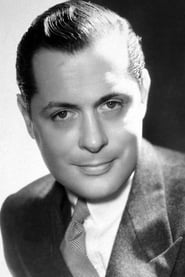
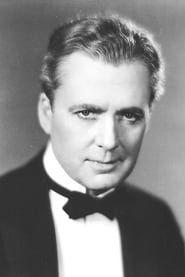
Cast & crew
More films like this
More Drama films
View all →







More from Robert Z. Leonard
View all →
More about this film
About the production
Release dateApril 19, 1930
BudgetApproximately $350,000
Box office$1,230,000 (Domestic), $896,000 (Foreign)
ProductionMetro-Goldwyn-Mayer (MGM)
Filmed inMGM Studios, Culver City, California, USA
The film was a major gamble for MGM and producer Irving Thalberg. It was based on the scandalous 1929 novel 'Ex-Wife' by Ursula Parrott, which had been published anonymously. Thalberg initially thought his wife, Norma Shearer, was too 'wholesome' for the role and considered Joan Crawford or Greta Garbo. To prove she could play a 'sexually liberated' woman, Shearer commissioned a series of provocative photographs from George Hurrell, which successfully convinced Thalberg to cast her. This collaboration also launched Hurrell's career as the premier portrait photographer of Hollywood's Golden Age.
Themes
The Double StandardFemale AutonomyModern MarriageInfidelity and RetributionSocial Hypocrisy
Themes & topics
divorceinfidelityrevengepre-codenew york citysocialitedouble standardreconciliation
Historical background
Made in its country of production around 1930, The Divorcee belongs to the early sound era. Its story of when a woman discovers that her husband has been unfaithful, she decides to pay him back in kind spoke to audiences of the day through familiar genres and topical settings.
Why this film matters
Archivists and historians still cite The Divorcee when tracing how the early sound era filmmakers staged discovers and husband on screen.
Making of
The production was marked by the professional rivalry between Norma Shearer and Joan Crawford. Crawford was devastated when the role was given to Shearer, believing it was favoritism by Thalberg. Director Robert Z. Leonard worked closely with Shearer to transition her acting style from the exaggerated gestures of silent film to the more naturalistic requirements of the 'talkie' era. The film's dialogue was considered exceptionally 'snappy' and modern for 1930, as writers John Meehan and Zelda Sears sought to capture the authentic slang of the New York 'Bright Young Things.'
What critics said
Reviews from 1930 weighed The Divorcee on pacing, performance, and novelty. Later criticism reads its emphasis on discovers, husband, unfaithful through modern standards of craft and representation.
Did you know?
- Norma Shearer won the Academy Award for Best Actress for her performance, cementing her status as the 'First Lady of the MGM lot.'
- The film is widely cited by historians as the definitive 'Pre-Code' movie, as it openly discusses female sexual desire and infidelity without moralizing.
- The original novel 'Ex-Wife' was so controversial that its author, Ursula Parrott, initially published it under a pseudonym to protect her reputation.
- The film features an early appearance by Robert Montgomery, who would go on to become a major MGM star and later a political advisor.
- The 'balancing the accounts' line became a famous feminist slogan of the early 1930s cinema.
- The film was released just as the Hays Code was being drafted, and its success was one of the reasons censors pushed for stricter enforcement later in 1934.
- Norma Shearer's costumes were designed by Adrian, who became famous for creating the 'MGM look.'
- The film was a massive hit, earning over $2 million worldwide during the start of the Great Depression.
Awards & recognition
- Academy Award for Best Actress (Norma Shearer)
Visual style
Cinematographer Norbert Brodine used high-key lighting to emphasize the glamour of the MGM sets. The film utilizes the 'moving camera' techniques that were just beginning to be mastered in the early sound era, moving away from the static 'booth' shots that plagued many 1929 talkies. The use of close-ups on Shearer's face was instrumental in conveying her internal emotional shifts without the need for title cards.
Innovations
The film is noted for its sophisticated sound editing for 1930, particularly in the overlapping dialogue during party scenes. It also showcased the 'soft focus' glamour photography that would become a hallmark of 1930s MGM productions.
Music
The film features a typical early 1930s score with jazz influences, reflecting the 'Jazz Age' setting. Notable is the use of diegetic music (music occurring within the world of the film) during the many party scenes to create an atmosphere of restless energy and decadence.
Famous quotes
Jerry: 'I've balanced our accounts.' (Context: Jerry telling Ted she has slept with another man to even the score of his affair.)
Jerry: 'From now on, you're the only man in the world that my door is closed to!'
Ted: 'It didn't mean a thing, Jerry. Not a thing!' (Context: Ted's dismissive excuse for his own infidelity.)
Jerry: 'It is so silly to mind. Just an incident in the career of a Modern Woman. What the hell!'
Memorable scenes
- The 'Balancing Accounts' Scene: Jerry calmly informs Ted of her infidelity, subverting the trope of the hysterical, wronged wife.
- The Car Crash: A dramatic early sequence where Paul's drunken driving leads to Dorothy's disfigurement, setting the tragic subplot in motion.
- The New Year's Eve Reunion: The final scene in Paris where the couple reconciles amidst the celebration, signifying a new, more honest beginning.
What audiences thought
Audiences, particularly women, flocked to the film. It resonated with a generation of women who were navigating the changing landscape of marriage and dating. The film's glamorization of the 'divorcee' lifestyle—complete with Art Deco sets and high-fashion gowns—offered a form of escapism and wish fulfillment during the early years of the Depression.
Film connections
Influenced by
- Ex-Wife (novel by Ursula Parrott)
- The 'Bright Young Things' social movement
- Early feminist writings of the 1920s
This film influenced
- A Free Soul (1931)
- Possessed (1931)
- Design for Living (1933)
- The Women (1939)
Film restoration
The film is well-preserved and has been digitally restored by Warner Bros. (who now own the pre-1986 MGM library). It is frequently aired on Turner Classic Movies (TCM) and is available on DVD as part of the 'Forbidden Hollywood' collection.
Where to watch
- Turner Classic Movies (TCM)
- Warner Archive Collection (DVD)
- Amazon Prime Video (Rental/Purchase)
- Apple TV (Rental/Purchase)