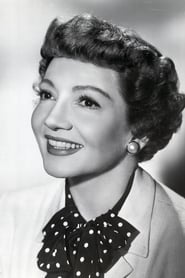
Claudette Colbert
Actor
- Born
- September 13, 1903, Saint-Mandé, Val-de-Marne, France
- Died
- July 30, 1996
- Active
- 1927-1987
- Birth name
- Émilie Claudette Chauchoin
Films 1
About Claudette Colbert
Claudette Colbert was one of the great stars of early sound cinema, admired for her wit, elegance, and agile screen intelligence. Born Émilie Claudette Chauchoin in France and raised in New York, she began her career on the stage before moving into silent films and then quickly finding her ideal persona in talkies, where her crisp delivery and sophisticated comic timing made her a natural for the new era of dialogue-driven filmmaking. She rose to prominence at Paramount in the early 1930s and became especially associated with urbane comedies, romantic dramas, and adventure films that showcased her cool glamour and sharp presence. Her performance in It Happened One Night (1934) made her one of the defining stars of the decade and earned her the Academy Award for Best Actress, helping establish the romantic comedy as a major Hollywood genre. During the 1930s and 1940s she remained a leading box-office attraction in a wide range of films, including Cleopatra, The Gilded Lily, Midnight, Since You Went Away, and The Palm Beach Story. Colbert was known for projecting poise without stiffness, self-possession without coldness, and sophistication without affectation, qualities that made her both aspirational and accessible to audiences. She continued working successfully in film, radio, and television after her peak years and remained a revered figure in Hollywood history until her death in 1996.
More about Claudette Colbert
On screen
Colbert's acting style was marked by crisp diction, elegant physical control, and a finely tuned comic intelligence. She specialized in the dry, amused, and self-possessed woman who could deliver rapid-fire dialogue while suggesting emotional depth beneath the polish. In romantic comedy she often played heroines who seemed worldly and modern, yet her performances retained a warmth and vulnerability that kept them from becoming merely icy or mannered. She was especially adept at timing—pauses, double takes, and line readings were handled with apparent ease, giving her work a polished but never mechanical quality. Even in melodrama she projected discipline and wit, making her characters feel intelligent and observant rather than passive. Her face and voice were central to her style: expressive without excess, refined without rigidity.
In film history
Claudette Colbert helped define the modern Hollywood heroine of the 1930s: independent, witty, stylish, and emotionally self-possessed. Her Oscar-winning performance in It Happened One Night became a template for screwball comedy and remains one of the most influential romantic-comedy performances ever captured on film. She also contributed significantly to the image of the sophisticated American woman in popular culture, blending European elegance with New World directness in a way that felt both aspirational and contemporary. Because she moved so successfully between comedy, drama, and historical spectacle, she demonstrated that a female star could be both commercially powerful and artistically versatile in the studio era. Her films continue to be shown, studied, and restored, ensuring her place as one of the defining presences of early Hollywood sound cinema.
Later reputation
Colbert's legacy rests on the combination of star persona, technical mastery, and historical significance. She is remembered not only as an Academy Award winner but as one of the central architects of the classic screwball-comedy style and one of the best examples of how early sound stars could transform performance through voice, timing, and demeanor. Her work in films such as It Happened One Night and The Palm Beach Story remains essential viewing for understanding how Hollywood evolved from silent melodrama into sophisticated dialogue comedy. Film historians frequently cite her as a model of controlled glamour, a performer who could be funny, emotionally precise, and emotionally elusive at the same time. Her career also illustrates the durability of a carefully managed star image across changing studio systems and audience tastes. Even decades after her peak, Colbert remains a benchmark for actresses playing intelligent, stylish, and independent women on screen.
Influence
Colbert influenced later actresses by showing that comedy for women could be sharp, adult, and emotionally nuanced rather than merely decorative. Her poised, quick-witted persona can be seen as an ancestor to many later romantic-comedy stars who combined elegance with verbal dexterity. She also helped normalize the idea of the sophisticated, career-savvy heroine in mainstream film, a character type that became central to Hollywood comedies and dramas. Directors and actors studying classic cinema continue to reference her for timing, line delivery, and the art of expressive restraint. Her influence extends beyond acting technique into costume-driven star construction, since her wardrobe and screen manner were integral to how her characters were received.
Off screen
Colbert married sculptor and doctor Norman Foster in 1928; the marriage was famously unconventional in that they were often publicly presented as a couple while living apart for much of the time, and it ended in divorce in 1935. She later married Dr. Joel Pressman in 1935 and remained with him until his death in 1968. She had no children. Although born in France, she was raised in the United States from childhood and generally considered herself deeply American in culture and career, while retaining a distinctive French elegance that became part of her star image. Offscreen, she was known for being private, polished, and professionally disciplined, and she carefully controlled her public image throughout her career.
Education
She attended schools in New York City, including Washington Irving High School, but did not pursue a formal college education; her training came largely through stage work, self-education, and experience in the theatre and early film industry.
Credits
- Became a major screen star during the transition from silent films to sound films, where her voice and diction were especially well suited to the new medium.
- Won the Academy Award for Best Actress for It Happened One Night (1934), one of the defining films of classic Hollywood comedy.
- Established a durable screen persona as a smart, glamorous, fast-talking, and emotionally controlled modern woman.
- Starred in a series of successful Paramount features in the 1930s that made her one of the era's most bankable actresses.
- Delivered acclaimed performances in both romantic comedy and dramatic roles, demonstrating unusual range for a top star.
- Played the title role in Cecil B. DeMille's Cleopatra (1934), one of the most famous historical epics of the period.
- Appeared in the wartime ensemble drama Since You Went Away (1944), one of her most respected dramatic performances.
- Worked steadily in film, stage, radio, and television for decades, maintaining visibility well beyond the Golden Age of Hollywood.
Roles
- Ellie Andrews in It Happened One Night
- Princess Cleopatra in Cleopatra
- Mildred Plotka in The Palm Beach Story
- Mimi Dubarry in The Gilded Lily
- Martha Wyeth in Since You Went Away
- Erika Sanger in Midnight
- Jeanne de Riencourt in Bluebeard's Eighth Wife
Films
- It Happened One Night
- Cleopatra
- The Palm Beach Story
- Midnight
- Since You Went Away
- The Gilded Lily
- Bluebeard's Eighth Wife
- The Sign of the Cross
Awards
- Academy Award for Best Actress for It Happened One Night (1935 ceremony; film released 1934)
- Golden Globe Award, Henrietta Award / World Film Favorite - Female (historical recognition as a top box-office star)
- National Board of Review Award recognition for selected performances
- Venice Film Festival honor for lifetime achievement-era recognition (historical retrospective honor)
- Honorary Academy Award nomination not recorded as a win, but widely recognized by the Academy and film historians as an iconic Oscar-winning performance
Nominations
- Academy Award nomination for Best Actress for Cleopatra (1935)
- Academy Award nomination for Best Actress for Since You Went Away (1945)
- Academy Award nomination for Best Actress for The Song of Bernadette (1944) was not hers; no nomination recorded for that title
- Multiple contemporary popularity polls and industry honors recognizing her as a leading female star of the 1930s and 1940s
Honors
- Hollywood Walk of Fame star
- Included in numerous classic film retrospectives and restoration programs as one of the major stars of early sound cinema
- Recognized by the American Film Institute and major film historians among the greatest stars of classic Hollywood
- Preserved as one of the canonical Oscar-winning performances in film history
Collaborators
- Frank Capra
- Cecil B. DeMille
- Mitchell Leisen
- Wesley Ruggles
- Fred MacMurray
- Fredric March
- Herbert Marshall
- Charles Laughton
- Irene Dunne
- Barbara Stanwyck
Studios
- Paramount Pictures
- Columbia Pictures
- MGM
- 20th Century Fox
- United Artists
- Warner Bros.
Family
- Norman Foster (1928-1935)
- Dr. Joel Pressman (1935-1968)
Notes
- Her birth name was Émilie Claudette Chauchoin, and she later adopted the stage name Claudette Colbert.
- She was born in France but became a major American film star after being raised in New York.
- Her performance in It Happened One Night made her one of the few actresses to win the Academy Award for Best Actress in a landmark screwball comedy.
- She was famous for her aversion to being photographed from the left side, reportedly due to a small facial scar.
- She was initially associated with Broadway and stage work before becoming a major motion-picture star.
- Her role in Cleopatra helped make the film a huge publicity sensation even by the lavish standards of 1930s Hollywood.
- She remained active in entertainment well after the decline of the studio system, including television appearances and stage work.
- She was widely admired for her professional discipline and for guarding her private life from Hollywood publicity.
Quotes
I am not a movie star. I'm an actress.
I have always liked being a woman. I have always enjoyed the female side of being a woman.
I think the best thing about being a woman is the privilege of being a woman.
Questions
Who was Claudette Colbert?
Claudette Colbert was a French-born American actress and one of the great stars of classic Hollywood. She became especially famous in the 1930s and 1940s for her sophisticated comic timing, elegant screen presence, and versatility in both comedy and drama.
What films is Claudette Colbert best known for?
She is best known for It Happened One Night, Cleopatra, The Palm Beach Story, Midnight, Since You Went Away, The Gilded Lily, and Bluebeard's Eighth Wife. These films show the range of her work, from screwball comedy to historical epic and wartime drama.
When was Claudette Colbert born and when did she die?
She was born on September 13, 1903, in Saint-Mandé, Val-de-Marne, France. She died on July 30, 1996, in Barbados.
What awards did Claudette Colbert win?
Her greatest honor was the Academy Award for Best Actress for It Happened One Night. She also received major industry recognition during her career as one of the leading female stars of Hollywood's Golden Age.
What was Claudette Colbert's acting style?
Colbert's style was elegant, controlled, and intellectually sharp, with exceptional timing for rapid dialogue and comedy. She projected sophistication and self-possession, but also warmth and vulnerability when the role required it.
What is Claudette Colbert's legacy in film history?
She is remembered as one of the defining actresses of early sound cinema and a key figure in the development of romantic comedy. Her performances helped establish a model for glamorous, witty, independent heroines in Hollywood.