
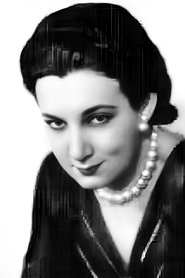
Judith Vosselli
Actor
Born: June 25, 1895 in Barcelona, Spain Died: September 18, 1966 Active: 1920-1935
Films
1 film
About Judith Vosselli
Spanish-born actress who became a sophisticated presence on the American stage and screen during the transition from the silent era to the early talkies. Born in Barcelona in 1895, she immigrated to the United States and made her Broadway debut in the 1920 farce 'Ladies' Night,' which established her as a capable comedic and dramatic performer. Throughout the 1920s, she appeared in several successful Broadway productions, including 'Merry Wives of Gotham' and 'Louie the 14th,' before making her film debut in 1926's 'The Prince of Tempters.' Vosselli specialized in playing elegant, often worldly or 'other woman' characters, a niche she filled perfectly during the Pre-Code era of the early 1930s. Her career saw her share the screen with stars such as Greta Garbo in 'Inspiration' (1931) and Cary Grant in 'Madame Butterfly' (1932). She retired from the screen in 1935 following a role in the prestigious Dickens adaptation 'A Tale of Two Cities,' spending her later years in New York City until her death in 1966.
The Craft
On Screen
Vosselli was known for her sophisticated and cosmopolitan screen presence, often cast as the 'other woman,' a socialite, or a refined continental lady. Her stage training provided her with a clear, resonant voice that allowed her to transition seamlessly into 'talkies' while many of her contemporaries struggled. She excelled in Pre-Code melodramas where her characters often possessed a cynical or worldly-wise edge.
Milestones
- Broadway debut in the hit farce 'Ladies' Night' (1920)
- Transitioned to film in the silent drama 'The Prince of Tempters' (1926)
- Featured role in the early Technicolor musical 'The Rogue Song' (1930)
- Appeared alongside Greta Garbo in the MGM melodrama 'Inspiration' (1931)
- Cast in the original sound version of 'Madame Butterfly' (1932) with Cary Grant
- Final film appearance in the classic 'A Tale of Two Cities' (1935)
Best Known For
Iconic Roles
Must-See Films
Accolades
Special Recognition
- Recognized as a prominent Broadway transplant during the early sound era of Hollywood
Working Relationships
Worked Often With
Studios
Why They Matter
Impact on Culture
Judith Vosselli represented the 'Continental' archetype that was highly sought after during the early 1930s as Hollywood sought to add sophistication to its new sound films. Her ability to play complex, often morally ambiguous women in Pre-Code cinema helped define the era's more mature and European-influenced storytelling style. Though she did not reach top-tier stardom, her presence in major productions like 'Inspiration' and 'A Tale of Two Cities' solidified her as a reliable and elegant supporting player in the Golden Age.
Lasting Legacy
Vosselli's legacy resides in her contributions to the early sound era and her work in several 'lost' or partially preserved films of the early 1930s. She remains a figure of interest for film historians studying the transition from Broadway to Hollywood and the specific 'socialite' archetypes of the Pre-Code period. Her appearance in a Greta Garbo vehicle ensures her continued visibility in the study of MGM's golden era.
Who They Inspired
She influenced the portrayal of the 'sophisticated rival' in early 1930s cinema, providing a blueprint for the elegant, slightly dangerous woman of the world that would be further developed by actresses like Gail Patrick.
Off Screen
Judith Vosselli was married to John Eshelman Lloyd, a prominent figure, from December 1918 until their divorce was finalized on April 27, 1932. Their personal lives occasionally made headlines, including legal disputes following their separation. After her retirement from the film industry in 1935, she lived a relatively private life in New York.
Education
Trained in European and American theatrical traditions; specific institutions are not publicly documented.
Family
- John Eshelman Lloyd (1918-1932)
Did You Know?
- She was born in Spain but made her entire professional career in the United States.
- She appeared in 'The Rogue Song' (1930), which was MGM's first all-talking Technicolor film.
- Her film 'Sunny' (1930) was a vehicle for Broadway legend Marilyn Miller.
- She retired from acting at the relatively young age of 40.
- Vosselli was 5'6½" tall, which was considered quite tall for an actress of that era.
- She appeared in over 20 feature films in just a ten-year span.
In Their Own Words
Context: Regarding her transition to sound, she was noted for her 'impeccable diction' which she attributed to her years on the Broadway stage.
Frequently Asked Questions
Who was Judith Vosselli?
Spanish-born stage and film actress active during the 1920s and 1930s. She was best known for her sophisticated supporting roles in early Hollywood sound films and her successful career on Broadway.
What films is Judith Vosselli best known for?
Titles linked here include Sunny (1930), Inspiration (1931).
When was Judith Vosselli born and when did she die?
Born June 25, 1895; died September 18, 1966.
What awards did Judith Vosselli win?
While she did not win major competitive awards like an Oscar, she was a highly respected character actress of the Pre-Code era, appearing in several films that were nominated for Academy Awards.
What was Judith Vosselli's acting style?
She was known for a refined, 'Continental' acting style, often portraying elegant socialites or worldly women with a sense of poise and clear vocal delivery honed on the Broadway stage.