Hayden Stevenson
Actor
- Active
- 1915-1915
Films 1
About Hayden Stevenson
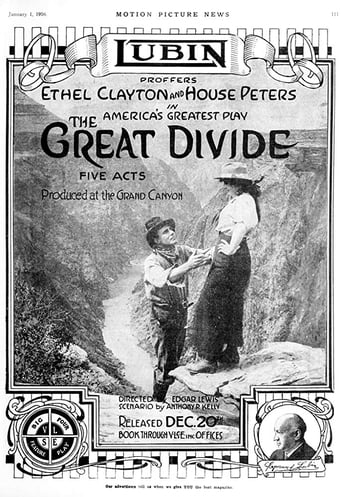
Hayden Stevenson was an American character actor active in the silent-film era, with a screen career that appears to have been brief and largely concentrated in the mid-1910s. He is credited in the 1915 film The Great Divide, one of the better-known adaptations associated with early feature-length melodrama, and his surviving filmography suggests he worked during a period when many stage-trained performers transitioned to motion pictures. Like many actors of the era, Stevenson’s screen legacy is difficult to reconstruct in detail because studio records were incomplete, many silent films are lost, and his career did not extend into the heavily documented sound era. Available evidence points to him being a working supporting player rather than a major star, which means his contributions are preserved more in film credits than in biographical profiles. Because of the limited surviving documentation, many personal details of his life remain unverified, but he is nonetheless part of the broad group of early cinema performers who helped establish screen acting styles and feature-film production practices in the 1910s. His appearance in The Great Divide places him within an important transitional moment in American cinema, when longer narrative films and more naturalistic performance methods were becoming standard. Stevenson’s exact broader career trajectory, later life, and personal history are not well documented in readily available film-reference sources.
More about Hayden Stevenson
On screen
No detailed contemporary reviews of Hayden Stevenson’s acting style are readily verifiable from surviving mainstream sources. Given the period in which he worked, his performances would likely have relied on silent-era techniques such as expressive gesture, clear physical characterization, and broadly readable emotional beats suited to intertitles and stage-derived melodrama. Because his documented film work is minimal, any more specific description would be speculative.
In film history
Hayden Stevenson’s cultural impact is best understood as part of the foundational workforce of silent cinema rather than as a star-driven legacy. Performers like Stevenson helped populate the supporting casts of early feature films, giving texture and dramatic continuity to productions that were helping define what American screen acting could be. Even when individual careers were brief or poorly documented, these actors contributed to the professionalization of motion-picture performance in the 1910s and the move away from short-form, stage-like novelties toward more sustained narrative cinema. His role in The Great Divide connects him to an era when major productions were adapting popular plays and novels for a growing national audience. Though he is not a widely celebrated name today, his surviving credit is part of the historical record that supports scholarship on silent-era film labor, casting, and production.
Later reputation
Stevenson’s legacy lies primarily in preservation and film history rather than celebrity. He represents the many working actors whose names appear in surviving credits but whose lives were not extensively chronicled, reminding researchers how much of early Hollywood and silent-era performance history remains incomplete. For databases and historians, such figures are important because they document the talent ecosystem that sustained early feature filmmaking. His presence in an extant film credit helps anchor The Great Divide within the broader casting practices of the period. In that sense, his legacy is archival: he is one of the many contributors whose work survives in the record of cinema’s formative years.
Influence
No direct line of influence can be confidently established for Hayden Stevenson based on currently accessible information. If he influenced others, it would have been through his participation in the standard performance conventions of the silent era, rather than through a documented teaching, mentoring, or star-making role. His broader significance is indirect, as part of the generation of actors whose work helped normalize screen acting as a distinct craft. Because his career is sparsely documented, any claim of measurable influence on later actors or directors would be speculative.
Off screen
There is no reliable, widely available biographical record that documents Hayden Stevenson’s family background, marriages, children, or private life. Unlike major stars of the silent era, he does not appear to have left behind a substantial publicity trail in surviving reference sources. As a result, his personal life remains largely obscure to modern researchers. Any specific claims about relationships, education, or later career activity would require archival verification beyond the available film references.
Credits
- Screen credit in the 1915 feature film The Great Divide
- Participation in American silent-era cinema during the rapid expansion of feature-length storytelling
- Association with early character acting in a period when film performers were often identified primarily through studio credits rather than publicity profiles
Roles
- Supporting role in The Great Divide (1915)
Films
- The Great Divide (1915)
Notes
- He is credited in The Great Divide (1915), a title associated with the early feature-film era.
- His documented screen activity appears to be limited to 1915, at least in commonly referenced filmography sources.
- He is a typical example of a silent-era supporting performer whose personal history is far less documented than that of major stars.
- Many silent films from his era are lost, which makes reconstructing the full scope of his work difficult.
- His surviving record is valuable to historians because it preserves the names of performers who helped build early American cinema.
- He should not be confused with later or similarly named performers from other periods.
Questions
Who was Hayden Stevenson?
Hayden Stevenson was an American actor active in the silent-film era, best known from surviving records for appearing in The Great Divide (1915). He seems to have been a supporting performer rather than a major star, and very little personal biographical information has survived in standard reference sources.
What films is Hayden Stevenson best known for?
The film most clearly associated with Hayden Stevenson is The Great Divide (1915). His surviving documented filmography is extremely limited, so that title is the primary work used to identify him today.
When was Hayden Stevenson born and when did he die?
At present, reliable publicly accessible sources do not clearly establish Hayden Stevenson’s birth date, death date, or birthplace. Because the documentation on him is sparse, those details should be treated as unknown until supported by archival evidence.
What awards did Hayden Stevenson win?
No awards or formal honors are currently documented for Hayden Stevenson in the available film-reference record. This is not unusual for many silent-era supporting actors, whose careers were not tracked with the same awards infrastructure used in later Hollywood history.
What was Hayden Stevenson’s acting style?
There is no surviving detailed critical profile of Hayden Stevenson’s acting style, but as a silent-era performer he would almost certainly have worked within the expressive conventions of early cinema. That typically meant clear body language, emotional readability, and performance calibrated for melodramatic storytelling and intertitles.
What is Hayden Stevenson’s legacy in film history?
His legacy is primarily archival and historical. He represents the many early film actors whose credited work helped shape the silent feature era, even if their personal biographies and later careers were not extensively recorded.