The Great Divide
Plot
In this frontier melodrama, Phil Jordan and his wife Ruth, along with Ruth's suitor Dr. Newbury, travel west to try to salvage a failing parcel of inherited desert land left to the Jordan family. The move quickly exposes the gulf between the East, represented by refinement, social expectations, and old attachments, and the West, represented by hardship, danger, and rough masculine codes of conduct. Their fortunes become entangled with Stephen Ghent, a hard, self-reliant Westerner whose connection to the local saloon crowd and his own abrasive reputation make him both feared and misunderstood. As the characters struggle over land, loyalty, and romantic feeling, the story builds toward a confrontation in which the hardships of the frontier force the East-West conflict, personal desire, and questions of honor to be resolved.
About the Production
This 1915 feature was mounted during the final years of the Lubin Manufacturing Company’s active feature production period, when American studios were rapidly expanding from shorts into longer narrative films. Like many films of the era, it was adapted from a stage or literary property and shaped as a morally framed melodrama with Western elements, romance, and class conflict. Surviving documentation on exact production circumstances is limited, and no authoritative record of budget, specific unit locations, or elaborately documented stunt work is readily confirmed in standard reference sources. As with many silent-era Lubin productions, the film likely relied on studio-controlled interiors and pragmatic location material rather than extensive on-location spectacle.
Historical Background
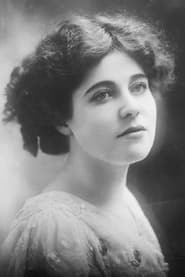
The Great Divide was made in 1915, a pivotal year in world and American cinema as feature-length films were rapidly becoming the norm and the silent film industry was consolidating around larger production companies and national distribution networks. In the United States, the Western remained one of the most culturally resonant genres, but many films of this era were moving beyond simple action stories into more elaborate social dramas involving class, gender, and regional identity. The film reflects a period when the West was being mythologized on screen as both a physical landscape and a moral test, while the East was often associated with inheritance, gentility, and restraint. Its existence also sits within the broader development of star-driven melodrama, where performers like Ethel Clayton and House Peters helped define emotional credibility for early audiences.
Why This Film Matters
Although not among the best-remembered silent Westerns, The Great Divide is significant as an example of how early American cinema used frontier settings to stage cultural debates about modernization, marriage, inheritance, and the meaning of masculinity. It belongs to the cycle of films that helped establish the West as a key symbolic space in national cinema, not merely for action, but for the testing of values and identities. The film also illustrates the importance of the 1910s feature melodrama in shaping the emotional grammar of later Hollywood storytelling, where romantic conflict and social contrast became standard narrative engines. Today, its primary cultural importance lies in its historical placement within silent-era genre development and in the preservation of early star performances that helped define the period’s screen acting style.
Making Of
The Great Divide was produced in the period when American silent features were becoming more sophisticated in length and dramatic structure, and studios were increasingly adapting stage and literary material into filmed melodrama. Edgar Lewis’s direction would have had to balance intimate emotional scenes with the broader conventions of frontier storytelling, including saloon milieus, regional types, and the symbolic opposition between civilization and wilderness. The available historical record does not preserve extensive behind-the-scenes documentation about set design, shooting schedule, or cast anecdotes, which is typical for many mid-1910s productions. What is clear is that the film was shaped for audiences who enjoyed moral conflict, romance, and a distinctly American “East versus West” dramatic framework.
Visual Style
Specific cinematographer credit is not confidently established in the available reference data, but visually the film would have followed early 1910s silent feature conventions: clear tableau staging, readable medium and long shots, and emphasis on expressive body language and set composition. Western scenes from this period typically used open landscapes, frontier interiors, and saloon settings to create sharp social contrast, while melodramatic close-ups were increasingly used to register emotional turning points. The film likely relied on strong visual typology, with costumes, props, and blocking carrying much of the narrative burden in the absence of synchronized sound. As with many films of the era, the visual storytelling would have aimed for immediate legibility rather than the fluid continuity style that later became standard.
Innovations
No specific technical innovation is firmly documented for this film, but its importance lies in its participation in the mature development of silent feature storytelling in 1915. The film likely employed the then-advancing norms of continuity editing, intertitles, and carefully staged dramatic action to support complex romance and conflict. Its achievement, from a historical perspective, is less about a single breakthrough than about demonstrating how early American studios integrated Western iconography into a more emotionally layered narrative structure. This combination of genre, star performance, and moral drama was an important step toward the classical Hollywood feature format.
Music
As a silent film, The Great Divide did not have an original synchronized soundtrack. Exhibition would typically have been accompanied by live music provided by theater musicians, ranging from a pianist in smaller venues to a fuller ensemble in larger houses, with selections chosen to match the mood of individual scenes. Surviving sources do not identify a specific original cue sheet or composed score for the film. Any modern screenings, if available, would likely use a reconstructed or newly assembled accompaniment rather than a historically documented studio score.
Memorable Scenes
- The farewell at Milford Corners station, where the Eastern family members leave for the West and the emotional stakes of the journey are established.
- The first encounter with the rough frontier world around Miller's saloon and dance hall, which sharply contrasts with the civility of the opening scenes.
- The depiction of Stephen Ghent among the town's rough regulars, establishing him as both a social outsider and a dominant local presence.
- The struggle over the unredeemed desert land, which functions as both a literal plot device and a symbolic test of perseverance.
- The romantic and moral confrontations that emerge as the characters are forced to choose between security, passion, and duty.
Did You Know?
- The film was directed by Edgar Lewis, a filmmaker active during the early feature era who worked frequently in silent melodrama and early genre cinema.
- It belongs to the 1915 wave of films that blended the Western with domestic drama and romantic conflict, rather than focusing only on gunfights and action.
- The title later became associated with better-known remakes and adaptations, so this 1915 version is often overlooked in general film references.
- The plot centers on a classic early cinema contrast between Eastern respectability and Western ruggedness, a common dramatic device in silent-era storytelling.
- Because it is a 1915 production, original publicity materials, surviving prints, and detailed production records are sparse compared with later studio features.
- The cast includes Ethel Clayton and House Peters, both prominent silent-era performers known for playing emotionally earnest leads in melodramatic narratives.
- The film’s surviving historical footprint is largely bibliographic, meaning it is often documented through catalogs, trade notices, and reference listings rather than through abundant extant footage.
- Its story uses a frontier setting not just for adventure but as a moral proving ground for family loyalty, romantic choices, and the transformation of social attitudes.
What Critics Said
Contemporary critical reception is not widely preserved in easily accessible modern sources, but films of this type were generally reviewed in trade journals and local newspapers for their emotional appeal, picturesque settings, and performance quality. As a 1915 silent feature from a now largely forgotten production company, it has received far less sustained critical attention than landmark Westerns or surviving features from larger studios. Modern evaluation is therefore mostly archival and historical rather than based on frequent reappraisal, and the film is usually discussed in terms of its genre conventions, cast, and place in early feature production. If a print survives, it would be of interest to historians more for its evidence of silent-era melodramatic technique than for a standing reputation as a canonical classic.
What Audiences Thought
Direct evidence of audience reaction is limited, but the film was made for the broad popular audience that favored emotional, moralizing melodramas with romance and frontier conflict. Early twentieth-century viewers were strongly drawn to stories that contrasted refined Eastern characters with rough Western environments, and this film’s plot was designed to deliver that kind of familiar satisfaction. Public response would likely have depended on the appeal of the cast, the clarity of the melodramatic conflicts, and the visual novelty of its Western settings. Over time, audience awareness has become minimal due to the film’s obscurity and the broader loss or rarity of many silent-era prints.
Film Connections
Influenced By
- Popular frontier melodramas of the early 1910s
- Stage and literary traditions that contrasted Eastern refinement with Western ruggedness
- Turn-of-the-century American mythmaking about the frontier
This Film Influenced
- Later silent Western melodramas that paired romance with frontier conflict
- Subsequent Hollywood stories built around East-West cultural contrast
- Later film adaptations and remakes using The Great Divide as a title and frontier premise
You Might Also Like
More Western Films
View allFilm Restoration
Survival status is uncertain in standard readily accessible references, and the film is generally treated as a rare silent-era title with limited documentation. It is not widely available in modern commercial circulation, and no universally cited restoration history is readily confirmed from standard sources. If a print survives, it is likely to be held in archival collections rather than broadly distributed. For database purposes, it should be considered an obscure, possibly incompletely preserved silent feature unless a specific archive record confirms extant material.