Straight Shooting
"A gunman's change of heart at a prairie grave"
Keys: Space play/pause · ←/→ 10s · F fullscreen · M mute · </> speed
About this film
Cattleman Flint dams Sims' water, and when the farmer's son Ted is murdered fetching relief, hired gunman Cheyenne arrives to finish the job—only to switch sides at the fresh grave.
Cast & crew
More Western films
View all →
More from John Ford
View all →
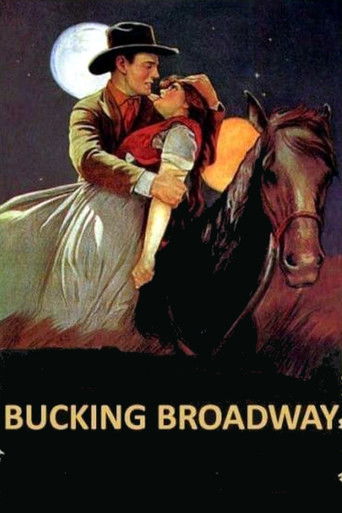
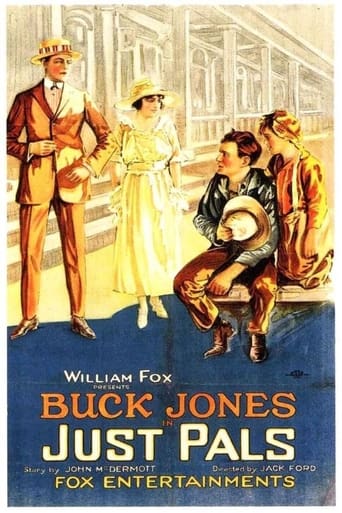
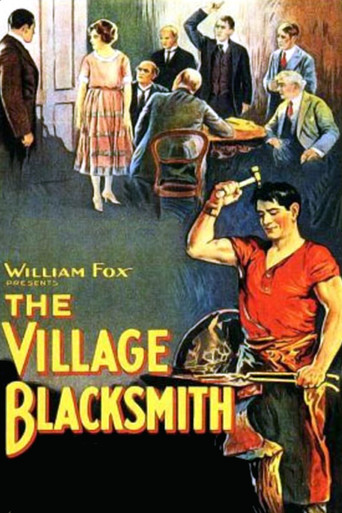

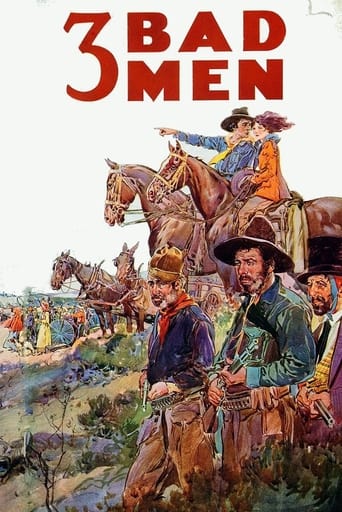

More about this film
About the production
Release dateNovember 24, 1917
Box officeBox office figures not preserved from this period, but the film was commercially successful enough to establish Ford as a director and lead to multiple sequels
ProductionUniversal Film Manufacturing Company
Filmed inUniversal City, California, Lancaster, California, San Fernando Valley, California
This was John Ford's directorial debut, though he was credited as 'Jack Ford' at the time. The film was shot in just 6-8 days, typical for Universal's rapid production schedule. Harry Carey, already a star, was instrumental in getting Ford the directing job after they had worked together on other projects. The production faced challenges with the California heat during summer filming, and several scenes had to be reshot due to film damage from the high temperatures. The water rights conflict depicted in the film was based on real disputes occurring in the American West during this period.
Themes
Moral transformation and redemptionJustice versus lawThe individual against corporate powerFamily and community bondsThe American West as moral landscape
Themes & topics
water rightscattle baronhired gunmoral transformationfamily tragedyrevengejusticewesternsilent filmrural conflictredemptiongunfighterfarmerrancherAmerican frontier
Historical background
John Ford's 1917 Western arrived as Hollywood codified moral conflicts between cattlemen and homesteaders on the silent screen.
Why this film matters
Among Ford's earliest surviving features, it foreshadows his lifelong interest in loyalty, landscape, and men who choose sides under pressure.
Making of
The making of 'Straight Shooting' represents a pivotal moment in cinema history, marking the emergence of one of America's greatest directors. Harry Carey, already a major star for Universal, used his influence to convince the studio to give the young Ford his first directing opportunity. The two had developed a rapport while working on previous projects where Ford was acting and doing assistant work. Production was remarkably fast, even by 1917 standards, with the entire film completed in under a week. Ford, drawing from his own Irish-American background and love of Western mythology, infused the film with a moral complexity that was unusual for the genre at the time. The transformation of Cheyenne Harry from hired gun to righteous avenger became a template for the anti-hero character that would later dominate Western cinema. The production team faced significant challenges with the primitive filming equipment of the era, including cameras that were difficult to move and film stock that was extremely sensitive to heat. Despite these limitations, Ford demonstrated his emerging visual style, particularly in his use of landscape to reinforce the story's emotional themes.
What critics said
Trade papers praised its outdoor authenticity; later historians cite it as an important step in Ford's apprenticeship.
Did you know?
- John Ford was only 23 years old when he directed, his first feature as a director
- Ford was credited as 'Jack Ford' in the original release, not adopting 'John' until later in his career
- Harry Carey's character 'Cheyenne Harry' would appear in over 25 films, becoming especially popular Western heroes of the silent era
- The film was one of the first to explore the moral ambiguity of its protagonist, a theme that would become a Ford trademark
- Universal head Carl Laemmle initially rejected Ford for the director's role, but Harry Carey insisted on him
- The film's success led to three immediate sequels: 'The Secret Man' (1917), 'A Marked Man' (1917), and 'Bare Fists' (1918)
- Only about 15% of Ford's silent films survive today, making this particularly valuable to film historians
- The water rights conflict depicted was based on actual disputes occurring in the American West during the 1910s
- The film was shot on the same Universal backlot that would later be used for countless other Westerns
- Ford's brother Francis Ford, also a director, helped with the screenplay and provided uncredited assistance on set
Visual style
The cinematography of 'Straight Shooting,' while primitive by modern standards, demonstrates remarkable visual sophistication for 1917. The film was photographed by Benjamin H. Kline, who would go on to become one of Hollywood's most respected cinematographers. Kline employed several innovative techniques that were relatively new to cinema at the time, including the use of moving shots and varied camera angles to enhance dramatic impact. The film makes effective use of the California landscape, with wide shots establishing the isolation of the Sims family and the vastness of the territory being contested. Interior scenes utilize natural lighting from windows and doors, creating a realistic and intimate atmosphere that contrasts with the harsh exterior shots. The camera work during the action sequences, particularly the final confrontation, is notably dynamic for the period, with careful composition that guides the viewer's eye through the chaos. Kline's use of depth of field in the grave scene creates a powerful emotional resonance, placing the grieving family in sharp focus against the blurred background of the unforgiving landscape. The film's visual style already shows Ford's emerging preference for composition that tells its own story, with characters often framed against natural elements that reflect their emotional states.
Innovations
While 'Straight Shooting' may appear technically primitive by modern standards, it incorporated several innovations that were significant for 1917. The film utilized the then-recent development of panchromatic film stock, which provided better tonal range and more realistic reproduction of skin tones compared to earlier orthochromatic film. The production made extensive use of location shooting rather than relying solely on studio sets, which was still relatively uncommon and required overcoming significant logistical challenges. The film's editing demonstrates an emerging understanding of cross-cutting to build tension, particularly in sequences showing simultaneous action at different locations. The use of close-ups to emphasize emotional moments was more sophisticated than many contemporary films, showing Ford's early grasp of visual storytelling techniques. The production also employed multiple camera setups for important scenes, allowing for more dynamic editing and better coverage of the action. The film's preservation of continuity across its 50-minute runtime was notable for the period, as many early films suffered from inconsistent storytelling due to their rapid production schedules. The successful integration of location footage with studio material demonstrated technical proficiency that would become a hallmark of Ford's later work.
Music
As a silent film, 'Straight Shooting' was originally accompanied by live musical performance in theaters. The typical score would have been provided by theater organists or small orchestras, using compiled music rather than a composed score. The musical selections would have followed the established conventions of silent film accompaniment: dramatic themes for conflict, romantic melodies for emotional moments, and action music for chase sequences. The water rights conflict scenes would likely have been accompanied by tense, minor-key pieces, while the transformation of Cheyenne Harry would have used more hopeful, major-key themes. Universal often provided cue sheets with their films, suggesting appropriate musical pieces for each scene. Modern restorations and screenings typically feature newly composed scores that attempt to capture the spirit of the original accompaniment while utilizing contemporary musical sensibilities. Some recent presentations have used authentic period instruments and musical styles to recreate the original theatrical experience. The emotional power of the grave scene, in particular, would have been enhanced by mournful musical accompaniment, likely drawing on popular songs of the era or classical pieces known to American audiences.
What audiences thought
Contemporary audience reception to 'Straight Shooting' was enthusiastic, with the film proving popular enough to justify multiple sequels. Theater owners reported strong attendance, particularly in rural areas where the Western genre had its most devoted following. The character of Cheyenne Harry resonated strongly with audiences, leading to his appearance in numerous subsequent films. Modern audiences viewing the film at retrospectives and special screenings have responded positively to its emotional honesty and visual storytelling, despite the limitations of silent cinema. The film's themes of justice and moral transformation continue to connect with viewers, and many are surprised by the sophistication of its narrative structure given its 1917 production date. Online film databases and forums show that contemporary cinema enthusiasts appreciate the film as a historical artifact and as an entertaining story in its own right. The restoration of the film has allowed new generations to experience Ford's debut work, with many noting how many of his directorial trademarks were already present in this early effort.
Film connections
Influenced by
- D.W. Griffith's narrative techniques
- Thomas H. Ince's production methods
- Contemporary dime novels about the West
- Actual water rights disputes in the American West
- Shakespearean themes of moral transformation
- Classical Western literature
This film influenced
- Stagecoach
- The Searchers
- The Man Who Shot Liberty Valance
- Unforgiven
- No Country for Old Men
- Hell or High Water
- The Three Burials of Melquiades Estrada
- similarFilms
Where to watch
- Wikimedia Commons: https://commons.wikimedia.org/wiki/File:Straight%20Shooting%20(1917)%20by%20John%20Ford.webm