Mary Agnes Moore
Actor
- Active
- 1915-1915
Films 1
About Mary Agnes Moore
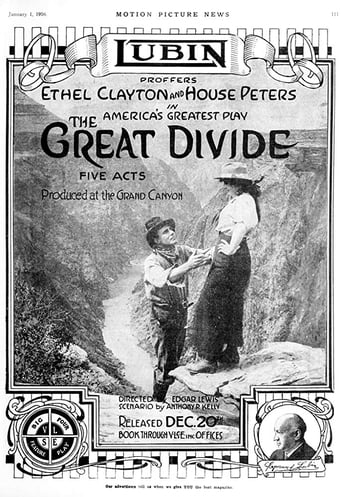
Mary Agnes Moore appears in surviving film records as a silent-era actress, but very little biographical information about her life has been preserved in readily accessible reference sources. She is documented for her participation in the 1915 feature film The Great Divide, one of the many stage-to-screen adaptations produced during the formative years of American feature filmmaking. Because her screen activity is currently traced only to 1915, it is likely that her motion-picture career was brief or that she worked in a limited number of films that have not been fully documented in modern databases. No reliable, widely cited accounts of her birth, training, personal life, or later career have been confirmed in the standard public sources typically used for classic cinema research. As a result, she remains a somewhat obscure figure from the silent period whose name survives mainly through cast listings and historical film indexes. Her importance lies in representing the many early screen performers whose contributions helped build silent cinema, even when their individual biographies were not extensively recorded. Further archival research in trade papers, studio documents, and period reviews would be needed to reconstruct a fuller account of her life and work.
More about Mary Agnes Moore
In film history
Mary Agnes Moore's cultural impact is best understood in the context of the silent film era, when hundreds of performers contributed to the development of feature cinema even if their names later faded from popular memory. Her documented participation in The Great Divide connects her to the early adaptation of popular dramatic material for the screen, a major trend in 1910s American cinema. While she does not appear to have left behind a large or widely celebrated body of work, her credited role is part of the larger historical record that demonstrates how the silent era relied on a broad and often under-credited community of actors. In that sense, she is part of the foundational fabric of movie history, particularly the class of performers whose careers are visible mainly through surviving credits rather than extensive biographies.
Later reputation
Mary Agnes Moore's legacy is primarily archival rather than celebrity-based. She is remembered through film listings and historical databases as part of the silent film workforce at a time when the industry was rapidly professionalizing and expanding into feature-length storytelling. For researchers and enthusiasts of early cinema, names like hers are important because they fill out the cast of the medium's formative years and preserve evidence of who appeared in productions that helped shape screen acting. Her limited surviving record also illustrates a broader legacy of silent-era performers whose contributions were real and significant even when later publicity and preservation were uneven. In film history, such figures serve as reminders that the development of American cinema depended on many artists whose careers were brief, locally documented, or now largely lost to time.
Influence
There is no documented evidence that Mary Agnes Moore directly influenced later actors or directors in a way that can be specifically traced in surviving sources. Her influence is therefore indirect and historical: as one of the many working actors of the silent era, she contributed to the performance traditions and ensemble culture that shaped early feature filmmaking. The broader acting practices of the period, including expressive physical performance and clear visual storytelling, were established collectively by performers like her across countless productions. Her presence in the historical record helps modern scholars understand the depth and breadth of talent that supported early cinema's growth.
Off screen
No reliable public information has been confirmed regarding Mary Agnes Moore's personal life, including marriages, family background, or later activities. Standard silent-film reference sources do not appear to preserve detailed biographical notes for her, which is common for performers whose careers were brief or whose work was not widely covered by the press. At present, any claims about her relationships, residence, education, or post-film career would be speculative and are therefore not stated here.
Credits
- Appeared in the silent feature The Great Divide (1915)
- Is documented in early film-era cast records as an actress active during the mid-1910s
- Represents one of the many lesser-known performers working in the transition from short films to feature-length productions
- Her credited screen work places her within the earliest years of American feature filmmaking
Roles
- Cast member in The Great Divide (1915)
Films
- The Great Divide (1915)
Notes
- Mary Agnes Moore is documented in connection with The Great Divide (1915), an early feature film adaptation of a popular stage property.
- Her surviving public record is extremely limited, which is common for many silent-era supporting players and short-career performers.
- She appears to have been active only in 1915 based on currently available filmography information.
- No widely verified biographical profile, including birth and death details, has been readily preserved in major public reference sources.
- Her name survives chiefly through cast listings and historical film databases rather than extensive press coverage.
- Because early studio record-keeping was inconsistent, it is possible that additional credits or personal details may exist in archival materials not yet widely digitized.
- She is part of the large group of silent film performers whose careers are important to film history even when individual recognition was limited.
Questions
Who was Mary Agnes Moore?
Mary Agnes Moore was a silent-era film actress whose documented screen activity places her in the 1915 production The Great Divide. Very little biographical information about her has survived in standard public sources, so she is best known today through her film credit rather than a detailed personal history.
What films is Mary Agnes Moore best known for?
She is best known for The Great Divide (1915), the principal film currently associated with her in surviving records. No additional confirmed film credits are readily available in the standard reference sources used for this profile.
When was Mary Agnes Moore born and when did she die?
Her birth and death dates are currently unavailable in reliable public sources. The same is true of her birthplace and death location, which have not been firmly documented in the accessible record.
What awards did Mary Agnes Moore win?
No awards or formal honors are currently documented for Mary Agnes Moore. This is not unusual for early silent-film performers, many of whom worked before modern awards culture was established or before their careers were extensively chronicled.
What was Mary Agnes Moore's acting style?
Her specific acting style is not described in surviving sources. As a silent-era actress, she would have worked within the expressive performance conventions of the period, relying on gesture, facial expression, and clear visual communication rather than spoken dialogue.
What is Mary Agnes Moore's legacy in film history?
Her legacy lies in her place within the early silent-film workforce and in her contribution to a 1915 feature film during a crucial phase of Hollywood's development. Even with limited surviving documentation, she remains part of the historical record of performers who helped build the language and industry of cinema.