
Salomy Jane
"Gold Rush romance and a fugitive's flight"
Keys: Space play/pause · ←/→ 10s · F fullscreen · M mute · </> speed
About this film
When beautiful Salomy Jane resists the romantic advances of a young ruffian, she is rescued by Jack Dart, who has his own additional reasons for tangling with the man. Jack fights the ruffian and kills him. He escapes with the law on his trail, for it is (wrongly) presumed that h.
Cast & crew
More films like this
More Romance films
View all →




More from William Nigh
View all →

More about this film
About the production
Release dateOctober 1914
ProductionCalifornia Motion Picture Corporation
Filmed inSan Rafael, California, Mount Tamalpais, California
The film was shot entirely on location in Northern California to take advantage of the authentic Western landscapes. The production utilized natural lighting extensively, which was innovative for the time. The California Motion Picture Corporation invested heavily in this production as a starring vehicle for Beatriz Michelena, one of their contract players. The film featured elaborate costumes and authentic period props sourced from local historical societies.
Themes
Themes & topics
Historical background
Exhibitors in 1914 booked Salomy Jane through California Motion Picture Corporation as part of the era's steady flow of new releases.
Why this film matters
Archivists note that Salomy Jane preserves period framing of when beautiful salomy jane resists the romantic advances of a young ruffian, she is rescue for modern comparison.
Making of
The production of 'Salomy Jane' was marked by innovative techniques for its time. Director William Nigh insisted on shooting on location in the rugged terrain of Marin County, California, to achieve authenticity rather than using the painted backdrops common in studio productions. Beatriz Michelena, who was married to the studio's head George E. Middleton, had significant creative input into the production. The film featured complex tracking shots that were technically challenging for 1914 cinematography. The climactic lynching scene was particularly controversial during filming, with local authorities concerned about how it would be portrayed. The production company invested heavily in promotion, organizing special train excursions for critics and exhibitors to visit the filming locations. The film's success helped establish the California Motion Picture Corporation as a serious competitor to East Coast studios.
What critics said
Trade coverage around 1914 treated Salomy Jane as routine program material rather than a special event.
Did you know?
- Beatriz Michelena was one of the first Latina film stars in Hollywood and had her own production company, which was unusual for the time.
- The film was based on a popular 1898 stage play by Paul Kester, which itself was adapted from Bret Harte's 1892 short story 'Salomy Jane's Kiss.'
- William Nigh, the director, would later become a prolific Hollywood director, making over 100 films in his career.
- House Peters, who played Jack Dart, was known as 'The Star of a Thousand Faces' for his versatility in silent films.
- The film was considered quite daring for its time due to its portrayal of a strong, independent female protagonist who takes action to save the male lead.
- Beatriz Michelena performed her own stunts in the film, including riding scenes and dramatic action sequences.
- The California Motion Picture Corporation built a special outdoor theater in San Rafael specifically for premiering their films, including 'Salomy Jane.'
- This was one of the earliest films to extensively use on-location shooting rather than relying entirely on studio sets.
- The film's success led to a 1923 remake starring Priscilla Dean, though the original is considered superior by film historians.
- The movie was part of a trend in the 1910s of adapting Bret Harte's Western stories for the screen, capitalizing on their popularity.
Visual style
The cinematography by Harry H. Harris was notable for its extensive use of natural lighting and outdoor locations, which was relatively innovative for 1914. The film featured sweeping landscape shots of the California wilderness that captured the grandeur of the American West. Harris employed tracking shots and camera movements that were technically sophisticated for the period, particularly in action sequences. The film's visual style emphasized naturalism over theatricality, with compositions that took full advantage of the outdoor settings. The climactic scenes used dramatic lighting techniques to enhance tension, including silhouetted figures against sunset backgrounds that became a signature of Western cinematography.
Innovations
The film pioneered several technical innovations for its time, including extensive location shooting that required portable equipment and power sources. The production developed new camera mounting techniques for filming on horseback and in rugged terrain. The film featured some of the earliest uses of parallel editing to build suspense during chase sequences. The lighting techniques developed for outdoor filming influenced subsequent Western productions. The movie's relatively long running time of 50 minutes required innovations in film splicing and projection techniques. The production also experimented with color tinting for certain scenes, a practice that was becoming more sophisticated in 1914.
Music
As a silent film, 'Salomy Jane' would have been accompanied by live musical performances during theatrical screenings. The original score was likely composed by the theater's musical director and would have included popular songs of the era, classical pieces, and original incidental music. The emotional scenes would have featured romantic melodies, while action sequences would have been accompanied by dramatic, fast-paced music. Some theaters may have used cue sheets provided by the production company, which suggested specific musical pieces for different scenes. The film's romantic themes might have included contemporary popular songs that audiences would recognize.
Famous quotes
A woman's courage is the strongest weapon against injustice.
In the wild West, justice often wears a different face.
Love knows no law when honor is at stake.
The mountains keep secrets, but the truth always rides into town.
Memorable scenes
- The dramatic rescue sequence where Jack Dart saves Salomy Jane from Red Pete's advances, featuring gunplay and horseback stunts against a mountain backdrop.
- The tense lynching scene where Salomy Jane intervenes to save Jack from the mob, showcasing her courage and determination.
- The romantic sunset scene between Salomy Jane and Jack, utilizing natural lighting and California landscapes for maximum visual impact.
What audiences thought
The film was a commercial success upon its release, particularly in Western states where audiences appreciated the authentic locations and familiar frontier themes. Beatriz Michelena developed a devoted fan following, with many viewers specifically attending her films. The movie's dramatic rescue sequences and romantic elements proved especially popular with audiences of the time. Contemporary newspaper accounts reported enthusiastic responses from theater audiences, with many demanding multiple encores of the film's most dramatic scenes. The film's success led to increased demand for Beatriz Michelena films and helped establish her as one of the era's major stars.
Film connections
Influenced by
- Bret Harte's Western Stories
- Stage Play by Paul Kester
- D.W. Griffith's Narrative Techniques
- Italian Epic Films
- Contemporary Western Literature
This film influenced
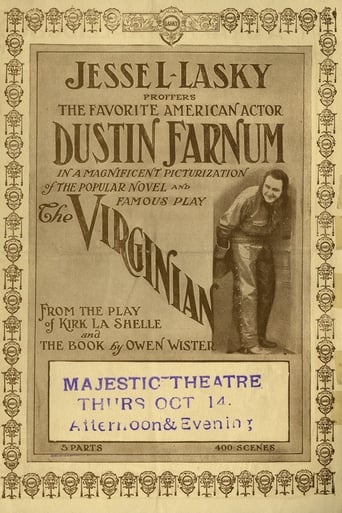
- The Virginian (1914)
- Salomy Jane (1923 remake)
- The Spoilers (1914)
- Rose of the Ranch (1915)
- Western films featuring strong female leads
Film restoration
The film is partially preserved with some reels missing from the original 50-minute version. The Library of Congress holds fragments of the film, and the George Eastman Museum has additional footage. Restoration efforts have been ongoing, with the most complete version running approximately 35 minutes. The surviving footage shows significant deterioration but remains viewable. Some scenes exist only as still photographs and production stills. The film is considered one of the more complete examples of Beatriz Michelena's work, as many of her other films are completely lost.
Where to watch
- Library of Congress National Audio-Visual Conservation Center
- George Eastman Museum archives
- Silent film festivals and special screenings
- Some footage available on YouTube and Internet Archive
- Academic film archives and university collections