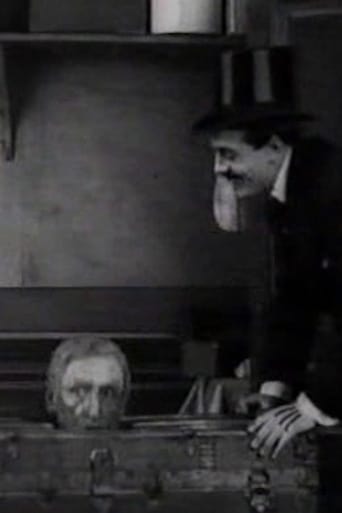
Suzy Depsy
Actor
- Active
- 1912-1912
Films 1
About Suzy Depsy
Suzy Depsy appears to have been a very early screen performer associated with the silent era, but surviving biographical documentation about her is extremely limited. The name is credited in connection with the 1912 film The Wedding Trunk, indicating activity at the outset of narrative cinema when many performers worked briefly or under names that were not consistently preserved in studio paperwork or trade publications. Beyond this single screen credit, readily verifiable information about her life, training, hometown, or later career has not been established in standard film-reference sources. As a result, she is best understood as one of the many obscure contributors to early motion-picture production whose presence is preserved primarily through film credits and archival listings. Because her surviving record is so sparse, it is not possible to reconstruct a reliable full career arc without risking speculation. Her historical significance lies less in celebrity than in the fact that she represents the large and often anonymous body of actors who helped define the silent-film era. Researchers and databases therefore typically note her as an early actor with at least one known credited appearance rather than as a figure with a documented long-term career.
More about Suzy Depsy
In film history
Suzy Depsy's cultural impact is primarily archival and historical rather than celebrity-driven. Her credited presence in a 1912 film contributes to the broader record of women and men who participated in the silent era before systematic star branding and comprehensive documentation became standard. Figures like Depsy are important because they illustrate how much of early film history depends on incomplete credits, surviving prints, and trade-paper references. In this sense, she embodies the many performers whose work helped build early cinema but who did not leave behind the extensive publicity records associated with later Hollywood stars. For scholars and database curators, her existence underscores the importance of preserving and indexing even the smallest fragments of early screen history.
Later reputation
Her lasting legacy is as a documented early-screen actor whose name survives in the historical record of silent cinema. Even a single surviving credit can be valuable because it helps reconstruct production personnel, casting practices, and performer participation in the 1910s. In the context of film history, Suzy Depsy stands as part of the foundational layer of motion-picture performance, when many artists worked briefly and were not yet promoted through the modern star system. Her record also serves as a reminder that countless early cinema contributors remain under-researched, and that database entries often preserve identities that might otherwise be lost. For that reason, her legacy is one of historical presence and archival significance.
Influence
There is no evidence of documented influence on later actors or directors in the usual biographical sense. However, her participation in early silent filmmaking places her among the performers whose collective work shaped the conventions later actors inherited, including stage-derived gesture, visual expression, and scene economy. In a broader historical sense, the early screen actors of her period influenced the development of cinematic acting simply by establishing practices that would later be refined by better-known performers. Suzy Depsy's individual influence cannot be specifically measured, but her credit contributes to the broader lineage of early screen performance.
Off screen
No reliable biographical information about Suzy Depsy's personal life has been established in widely available classic-cinema reference material. Details such as family background, marriages, residence, or post-film career are not currently documented in the sources typically used for silent-era performers. Because of this lack of verifiable evidence, any claim about her private life would be speculative. She should therefore be treated in database contexts as a historically credited performer with unknown personal details rather than a fully documented public figure.
Credits
- Credited performer in the early silent film The Wedding Trunk (1912)
- Participation in cinema during the formative years of feature and short-film production
- Representation of early screen actors whose work survives mainly through fragmentary archival records
Roles
- Role in The Wedding Trunk (1912)
Films
- The Wedding Trunk (1912)
Notes
- Suzy Depsy is known from surviving film-credit records rather than from an extensive biographical archive.
- Her documented screen activity is currently confined to 1912.
- The Wedding Trunk (1912) places her in the silent-film period before synchronized sound.
- She appears to be one of many early cinema performers whose careers were brief or poorly documented.
- No confirmed birth or death information is readily available in standard reference sources.
- Her name is useful for researchers studying obscure or under-documented silent-era casts.
- Her surviving record highlights the gaps that still exist in early film history documentation.
Questions
Who was Suzy Depsy?
Suzy Depsy was an early silent-era actor credited in The Wedding Trunk (1912). Beyond that screen credit, verifiable biographical information is extremely limited, so she is best known as an obscure contributor to early cinema history.
What films is Suzy Depsy best known for?
She is currently known for The Wedding Trunk (1912). No other reliably verified screen credits are readily established in standard reference sources.
When was Suzy Depsy born and when did she die?
Her birth date and death date are not currently documented in widely available classic-cinema references. Both remain unknown unless more archival research uncovers new evidence.
What awards did Suzy Depsy win?
No awards or nominations are currently documented for Suzy Depsy. Her historical record survives primarily through a single early film credit rather than through later industry recognition.
What was Suzy Depsy's acting style?
Her specific acting style is not documented. As a performer from the silent era, she would have worked in a period that generally favored expressive physical acting and visual clarity, but no detailed critique of her technique has survived.
What is Suzy Depsy's legacy in film history?
Her legacy is archival and historical: she represents the many early film performers whose names survive even when their broader biographies do not. That makes her useful to historians studying the silent era and the incomplete preservation of early film credits.