The Wedding Trunk
Plot
Max wants to marry the woman he loves, but her guardian stands firmly in the way, creating the central obstacle of the film's comic action. Determined to win approval and secure the marriage, Max devises a series of increasingly elaborate stratagems to outmaneuver the guardian's objections. As in many of Max Linder's short comedies, the humor comes from escalating misunderstandings, physical gags, and the star's trademark self-assured but ultimately hapless persona. The situation builds toward a solution in which wit, persistence, and comic improvisation allow Max to achieve his goal. The plot is simple and fast-moving, designed to showcase Linder's comic timing rather than elaborate narrative complexity.
Director
Max LinderAbout the Production
The Wedding Trunk is a short French silent comedy made during the peak of Max Linder's international fame at Pathé. Like many early 1910s comedies from Pathé, it was produced as a compact one-reel or short-form farce built around Linder's celebrity persona rather than elaborate sets or large-scale production design. Surviving documentation on exact budgets, release campaign copy, and specific locations is limited, which is typical for films from this period. The film belongs to the era in which Linder was refining the comic-aristocrat character that made him one of the first internationally recognized screen comedians.
Historical Background
The Wedding Trunk was released in 1912, at a moment when cinema was rapidly evolving from one-reel attractions and comic sketches into a more mature international art and industry. In France, Pathé was one of the dominant film companies in the world, exporting films across Europe, the Americas, and elsewhere, and stars like Max Linder helped define the commercial power of the screen comedian. The year 1912 also sits on the cusp of major shifts in feature-length storytelling, yet short comedy remained hugely popular because it was inexpensive to produce and easy to distribute. The film belongs to a period before World War I transformed the European film landscape, making surviving works from this era valuable witnesses to prewar popular entertainment, social manners, and early star culture. Its premise, centered on marriage, guardianship, and comic obstacles to romance, reflects the period's fondness for domestic and social farce.
Why This Film Matters
Although The Wedding Trunk is not among the most famous surviving Max Linder titles, it is culturally significant as part of the body of work that established Linder as a foundational comedian in world cinema. Linder's controlled elegance, confident vanity, and susceptibility to comic humiliation shaped a screen persona that would echo in later film comedy, including the work of Charlie Chaplin, Harold Lloyd, and other silent-era stars. The film also illustrates the international reach of French comic cinema before Hollywood consolidated global dominance. For historians, it matters because it helps document the evolution of short-form narrative comedy and the emergence of recognizable star-driven performance styles. Even when individual plots are slight, films like this are crucial to understanding how early cinema turned recurring character types into a durable popular tradition.
Making Of
The Wedding Trunk was produced in the highly efficient Pathé system, where short comedies were conceived, shot, and distributed quickly to meet a strong demand for fresh comic material. Max Linder was not only the star but often functioned as the key creative force shaping the persona and comic rhythm of his films, so the production was likely built around his established style of performance. Because the film dates from 1912, detailed behind-the-scenes records are scarce, and much of what can be said comes from knowledge of Pathé's production methods and Linder's career patterns rather than from surviving memoirs or production files. The film almost certainly depended on precise physical staging, carefully timed gags, and a small cast to keep the action legible in a short running time. Its simplicity is itself revealing of early comedy production, where the star's screen image was often the main attraction and narrative served primarily as a vehicle for comic situations.
Visual Style
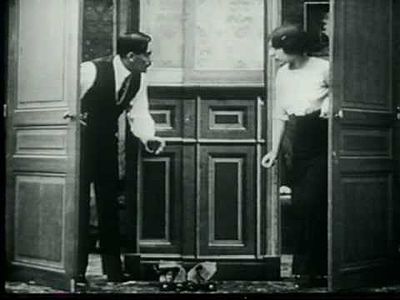
As a 1912 silent short comedy, the film likely uses static or minimally moving camera setups, medium-distance framing, and clear proscenium-like staging typical of the period. The emphasis would have been on making the action readable in a single take or a small number of shots, with actors entering and exiting the frame to sustain visual clarity. Early Pathé comedies often relied on strong contrast between foreground action and simple interior or exterior settings, allowing the physical business to remain the focal point. The cinematography would have been functional rather than expressive in the later modern sense, but that simplicity was central to the effectiveness of the gag construction. The film's visual style likely highlights Linder's expressive body language, costume, and facial reactions as the principal source of humor.
Innovations
The film does not appear to be associated with major technical innovation in the sense of special effects or advanced camera movement. Its achievement lies in the refinement of silent comic timing, the clear orchestration of physical action, and the efficient use of a short runtime to deliver a complete narrative payoff. It is representative of the professionalized comic craftsmanship developed by Pathé and Max Linder in the early 1910s. The film also demonstrates how early cinema could create recognizable character-driven comedy with minimal technical apparatus. Its importance is historical and performative rather than technological.
Music
As a silent film, The Wedding Trunk originally had no synchronized recorded soundtrack. In its original exhibition, it would have been accompanied by live music selected by the theater, often a pianist or small ensemble playing mood-setting and cue-based accompaniment. Any modern presentation may use a newly compiled silent-film score, archival accompaniment, or live performance depending on the venue or restoration source. No original commissioned score is known to survive for this film. Music information is therefore largely a matter of exhibition practice rather than fixed production data.
Famous Quotes
No synchronized dialogue survives, and no verified spoken quotes are known from this silent film.
Intertitles, if any survived, are not widely documented in modern reference sources.
Memorable Scenes
- Max devises comic schemes to win over or bypass the guardian who blocks his marriage plans.
- The escalating visual misunderstandings that turn a simple romantic obstacle into a farcical ordeal.
- The final comic resolution in which Max's persistence and ingenuity secure the desired outcome.
Did You Know?
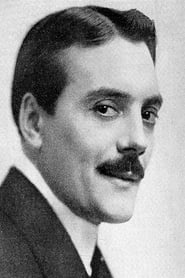
- The film stars Max Linder, one of the first major international film comedians and an early screen star whose style influenced later comic performers.
- It was made during Linder's most productive years at Pathé, when he was turning out short comedies that circulated widely in Europe and beyond.
- The title is sometimes encountered in archival listings and databases with slight variations in wording, which is common for surviving records of silent shorts.
- The central obstacle in the plot is a guardian, a familiar comic device in early cinema for triggering deception, disguise, and social maneuvering.
- The film's comedy relies on physical business and visual misunderstandings rather than intertitles-heavy dialogue, as was standard for the period.
- As with many early Max Linder films, the role likely emphasizes his elegant costume, polished appearance, and ironic contrast between refinement and chaos.
- Documentation for many 1912 shorts is fragmentary, so cast and production details may survive mainly through catalog records rather than full contemporary reviews.
- The film is part of the broader Pathé comedy output that helped establish the short-form comic film as a global commercial staple before feature-length comedies dominated.
- Max Linder's work in this period was widely exported, helping make him a transnational star long before the classical Hollywood era.
- The film is an example of how early screen comedy often centered on courtship plots, marriage obstacles, and social authority figures.
What Critics Said
Contemporary critical response is not well documented in surviving mainstream English-language sources, which is common for short silent comedies from 1912. In the context of its original release, the film would have been understood primarily as a vehicle for Max Linder's persona and as part of the reliable Pathé comedy program rather than as an individually reviewed prestige work. Modern assessment tends to view it through the lens of Linder's larger importance to film comedy history, appreciating the film as an example of his style and of early French farce. Scholars and archivists generally value such films less for complex plotting than for what they reveal about early screen acting, gag construction, and transnational distribution. Its reception today is therefore mostly archival and historical rather than mass-critical.
What Audiences Thought
Specific audience records are not known, but films starring Max Linder were generally popular with contemporary audiences across multiple countries because his comic persona was easy to read visually and did not depend heavily on language. The marriage-and-guardian premise would have been broadly accessible to silent-era viewers, and the film's short length made it suitable for mixed programs and nickelodeon-style exhibition. Audiences likely responded to the escalating comic attempts, social embarrassment, and the pleasure of seeing a stylish protagonist repeatedly defeated and then redeemed. Linder's films were especially effective because they combined sophistication with slapstick, appealing to both urban and general audiences. The continued interest of collectors, archivists, and silent-film fans suggests that the film remains of interest as part of a beloved comic tradition.
Film Connections
Influenced By
- French stage farce and boulevard comedy
- Early Pathé comic shorts
- Max Linder's own recurring screen persona and prior comic films
- Victorian and Belle Époque social comedy traditions
This Film Influenced
- Later Max Linder comedies
- The comic persona and polished-troubleman archetype seen in early Chaplin films
- Silent romantic farces built around social obstruction and escalating misunderstandings
You Might Also Like
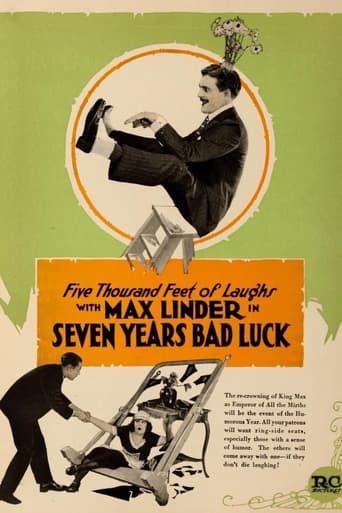
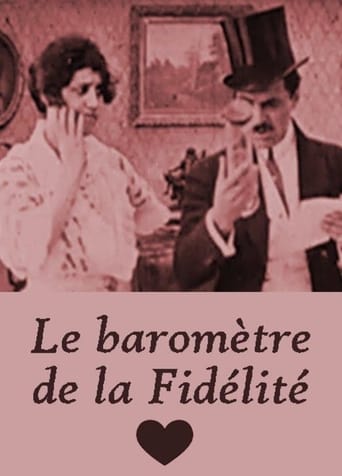
More from Max Linder
View allFilm Restoration
Preservation status is uncertain in accessible public references. The film is documented in archival and database records, but availability of a complete surviving print is not clearly established from general sources. It may survive in archive holdings or fragmentary form, but it should be treated cautiously as an early silent short with limited circulation and potentially incomplete preservation records.