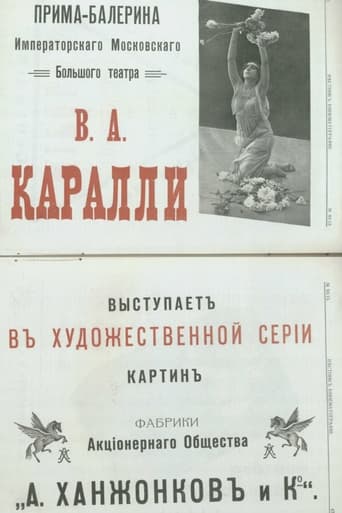

Films
2 films

About Sofya Goslavskaya
Russian actress who emerged during the formative years of Russian cinema, working primarily in the silent film era of the early 1910s. Her brief but notable career coincided with the golden age of pre-revolutionary Russian filmmaking, when the industry was rapidly developing its artistic voice. Goslavskaya appeared in two significant early Russian productions that showcased the emerging cinematic language of the period. Her work in 'The Little House in Kolomna' (1913) and 'Chrysanthemums' (1914) demonstrated the theatrical yet increasingly naturalistic acting style that characterized early Russian cinema. Though her film career was remarkably brief, spanning only 1913 to 1914, she contributed to the foundation of Russian film acting during a crucial transitional period from stage to screen. Her performances reflected the influence of Russian theatrical traditions while adapting to the new medium's unique demands. The limited documentation of her career suggests she may have been part of the theatrical world that was transitioning into cinema during this era.
The Craft
On Screen
Goslavskaya's acting style reflected the transition from theatrical traditions to cinematic naturalism, characteristic of early Russian silent film performers who brought dramatic intensity to the new medium while adapting to its visual requirements.
Milestones
- Starred in 'The Little House in Kolomna' (1913)
- Appeared in 'Chrysanthemums' (1914)
- Participated in early Russian cinema development
- Worked during the pre-revolutionary golden age of Russian film
Best Known For
Iconic Roles
Must-See Films
Working Relationships
Studios
Why They Matter
Impact on Culture
Sofya Goslavskaya represents the generation of Russian film actors who helped establish the foundation of Russian cinema during its nascent stage. Her work in early adaptations of Russian literature contributed to the developing tradition of literary adaptations that would become a hallmark of Russian filmmaking. Though her career was brief, she participated in the crucial period when Russian cinema was establishing its unique identity separate from Western influences. The films she appeared in were part of the movement that would eventually lead to the revolutionary achievements of Soviet cinema in the 1920s. Her performances helped demonstrate how Russian theatrical traditions could be translated to the cinematic medium, influencing subsequent generations of Russian actors.
Lasting Legacy
Sofya Goslavskaya's legacy lies in her contribution to the earliest days of Russian cinema, a period that laid the groundwork for the extraordinary achievements of Russian and Soviet filmmakers in subsequent decades. While her name may not be widely recognized today, she represents the countless actors who were instrumental in establishing cinema as an art form in Russia. Her work in adaptations of Russian literature helped establish the important relationship between Russian cinema and the nation's rich literary heritage. The preservation of her films provides valuable insight into the acting styles and cinematic techniques of early 20th century Russian filmmaking.
Who They Inspired
As an early pioneer, Goslavskaya's influence would have been primarily on her contemporaries in the Russian film industry, helping to establish acting conventions for the new medium. Her work in literary adaptations may have influenced how subsequent Russian actors approached bringing classic Russian literature to the screen.
Off Screen
Very little is documented about Sofya Goslavskaya's personal life, which was common for many early film actors whose careers were brief and occurred before the star system was fully established in Russian cinema.
Did You Know?
- Her film career lasted only two years (1913-1914)
- She worked during the pre-revolutionary period of Russian cinema
- Her films were adaptations of Russian literature
- She was part of the first generation of Russian film actors
- Her career coincided with the rapid development of Russian cinema
- Both of her known films were produced before World War I
- Her work represents the transition from stage to screen acting in Russia
- The Little House in Kolomna was based on a work by Alexander Pushkin
- Early Russian cinema was heavily influenced by French and German filmmaking
- Many early Russian films like hers were lost during the revolutionary period
Frequently Asked Questions
Who was Sofya Goslavskaya?
Russian silent film actress who was active during the early 1910s, appearing in two significant early Russian films before her career ended in 1914.
What films is Sofya Goslavskaya best known for?
Titles linked here include The Little House in Kolomna (1913), Chrysanthemums (1914).
When was Sofya Goslavskaya born and when did she die?
Specific birth and death dates for Sofya Goslavskaya are not documented in historical records, which was common for many early film actors of her era.
What awards did Sofya Goslavskaya win?
No awards or nominations are recorded for Sofya Goslavskaya, as she worked during the very early days of Russian cinema before formal award systems were established.
What was Sofya Goslavskaya's acting style?
Her acting style reflected the transition from theatrical traditions to cinematic naturalism, typical of early Russian silent film actors adapting stage techniques for the screen.
Why was Sofya Goslavskaya's career so short?
Her active years covered only 1913-1914, which was common for early film actors, and may have been affected by the outbreak of World War I and subsequent Russian Revolution.
What is the significance of her films?
Her films are historically significant as examples of early Russian cinema and adaptations of Russian literature, representing the foundation of Russia's rich film history.