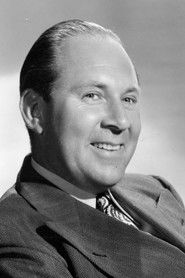
Joseph M. Newman
Director
Born: August 17, 1909 in Logan, Utah, United States Died: January 23, 2006 Active: 1934-1970 Birth Name: Joseph Michael Newman
Films
1 film
About Joseph M. Newman
American film director who enjoyed a prolific career spanning over three decades in Hollywood. Beginning his journey in the film industry as an assistant director at Universal Studios in the 1930s, Newman honed his craft working alongside established filmmakers before transitioning to directing feature films. His directorial debut came with the documentary-style war film 'Diary of a Sergeant' in 1945, which showcased his ability to handle dramatic material with sensitivity and realism. Throughout the late 1940s and 1950s, Newman directed numerous films across various genres, including film noir, westerns, and dramas, establishing himself as a reliable studio director. He worked for major studios including Universal, 20th Century Fox, and Warner Bros., delivering commercially successful films that demonstrated his technical proficiency and storytelling capabilities. Newman's career continued into the 1960s with television work, where he directed episodes of popular series, adapting his cinematic skills to the smaller screen. His final years in the industry saw him transition into television production, cementing his legacy as a versatile filmmaker who successfully navigated the changing landscape of American entertainment.
The Craft
Behind the Camera
Joseph M. Newman was known for his efficient, workmanlike directing style that emphasized clear storytelling and technical competence. He excelled at creating atmospheric tension in his film noir works and demonstrated particular skill in handling science fiction elements in 'This Island Earth.' Newman's approach was characterized by smooth camera movements, effective use of lighting to establish mood, and a focus on narrative clarity that made his films accessible to mainstream audiences. While not considered an auteur with a distinctive visual signature, he was respected for his ability to deliver polished, professional films on schedule and within budget, making him a valuable studio director during Hollywood's golden age.
Milestones
- Directed 'Diary of a Sergeant' (1945)
- Directed 'This Island Earth' (1955)
- Directed 'The Big Circus' (1959)
- Directed 'The Proud Ones' (1956)
- Directed numerous television episodes in the 1960s
Best Known For
Must-See Films
Accolades
Won
- Academy Award nomination for Best Documentary Feature for 'Diary of a Sergeant' (1945)
Nominated
- Academy Award nomination for Best Documentary Feature (1945)
Special Recognition
- Hollywood Walk of Fame star for Motion Pictures
Working Relationships
Worked Often With
Studios
Why They Matter
Impact on Culture
Joseph M. Newman contributed significantly to mid-century American cinema by delivering reliable, entertaining genre films that reflected the values and concerns of postwar America. His work in film noir helped shape the visual and thematic conventions of the genre, while his science fiction film 'This Island Earth' became a cult classic that influenced later sci-fi filmmakers. Newman's transition to television in the 1960s demonstrated his adaptability and helped bridge the gap between theatrical and televised storytelling during a crucial period of media evolution. His films, while not always critically acclaimed during their release, have gained appreciation among film historians and enthusiasts for their craftsmanship and representation of studio-era filmmaking at its most professional.
Lasting Legacy
Joseph M. Newman's legacy endures through his diverse body of work that spans multiple genres and mediums. He is remembered as a quintessential studio director who could handle any assignment with competence and professionalism. His science fiction work, particularly 'This Island Earth,' has achieved cult status and is frequently referenced in discussions of 1950s genre cinema. Newman's career trajectory from assistant director to feature film director to television director exemplifies the evolution of the American film industry from the studio system to the television age. Film scholars often cite him as an example of the journeyman directors who formed the backbone of Hollywood's golden age, creating entertaining and technically proficient films that continue to be discovered and appreciated by new generations of viewers.
Who They Inspired
Newman influenced subsequent generations of filmmakers through his demonstration of efficient, professional directing techniques that prioritized storytelling over personal style. His work in genre filmmaking, particularly in science fiction and westerns, provided templates for directors working in similar categories. The technical polish and narrative clarity of his films served as examples for television directors who emerged in the 1960s and 1970s. While not as widely studied as some of his contemporaries, Newman's career path and adaptability have been analyzed by film historians as representative of the opportunities and challenges faced by studio-system directors during Hollywood's transitional periods.
Off Screen
Joseph M. Newman maintained a relatively private personal life throughout his career in Hollywood. He married his wife Elizabeth in the 1930s, and their marriage lasted until her death in 1985. The couple had two children together, a son and a daughter, who largely stayed out of the entertainment industry. Newman was known among colleagues as a professional and dependable director who preferred to keep his focus on his work rather than seeking publicity. After retiring from directing, he spent his later years in Southern California, occasionally attending film festivals and retrospectives of his work. He passed away at the age of 96, leaving behind a legacy of solid, entertaining films that reflected the craftsmanship of Hollywood's studio era.
Education
University of Utah
Family
- Elizabeth Newman (1930s-1985)
Did You Know?
- Started his career as an assistant director at Universal in the 1930s
- His 1955 film 'This Island Earth' was featured in the movie 'Mystery Science Theater 3000: The Movie'
- Was the nephew of influential film producer Samuel Goldwyn
- Directed over 30 feature films during his career
- Successfully transitioned to television directing in the 1960s
- His documentary 'Diary of a Sergeant' was used for military training purposes
- Worked with many of Hollywood's biggest stars including Rock Hudson and Jeff Chandler
- Was known for completing his films on time and under budget
- Received a star on the Hollywood Walk of Fame for his contributions to motion pictures
- Lived to be 96 years old, outliving most of his Hollywood contemporaries
In Their Own Words
A director's job is to tell the story clearly and effectively, not to impose his personality on every frame.
In the studio system, you learned to be adaptable. One day you're doing a western, the next a film noir. You just had to deliver the goods.
The best directors are the ones who know when to step back and let the story tell itself.
Frequently Asked Questions
Who was Joseph M. Newman?
American on YTB.my. He was known as a reliable studio director who delivered professional, entertaining films for major studios like Universal and 20th Century Fox.
What films is Joseph M. Newman best known for?
Titles linked here include This Island Earth (1955), The Big Circus (1959).
When was Joseph M. Newman born and when did he die?
Born August 17, 1909; died January 23, 2006.
What awards did Joseph M. Newman win?
Newman received an Academy Award nomination for Best Documentary Feature for 'Diary of a Sergeant' in 1945. He also received a star on the Hollywood Walk of Fame for his contributions to motion pictures, recognizing his extensive career as a film director.
What was Joseph M. Newman's directing style?
Newman's directing style was characterized by professionalism, technical competence, and clear storytelling rather than distinctive personal vision. He excelled at creating atmospheric tension in his genre films and was known for his efficiency in delivering polished, commercially successful films on schedule and within budget.