
Diary of a Sergeant
"1945 film by Joseph M. Newman"
Keys: Space play/pause · ←/→ 10s · F fullscreen · M mute · </> speed
About this film
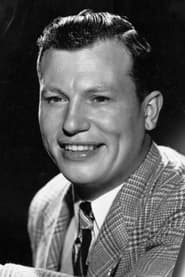
It stars Harold Russell, who lost his hands in a military training accident in 1944. The film centers on his medical rehabilitation at Walter Reed Army Medical Center in Washington, D.C. After seeing the film, director William Wyler cast Russell in The Best Years of Our Lives . Russell received two Academy Awards for his work in the film, becoming the only actor to receive two Oscars for the same role.
Cast & crew
More films like this

More Documentary films
View all →



More about this film
About the production
Release date1945
Box officeUnknown - likely minimal as it was a government-produced documentary
ProductionU.S. Army Signal Corps, Office of War Information
Filmed inWalter Reed Army Medical Center, Washington, D.C., Boston College, Boston, Massachusetts
This film was produced as part of the U.S. government's efforts to document and promote rehabilitation programs for wounded soldiers during World War II. It was one of the first films to realistically portray the challenges and successes of prosthetic rehabilitation. The production was supervised by the Army's medical corps to ensure accuracy in depicting rehabilitation techniques. The film's authentic approach led to Harold Russell being discovered by Hollywood director William Wyler, who would later cast him in 'The Best Years of Our Lives.'
Themes
Overcoming physical disabilityMilitary rehabilitation and medicineHuman resilience and determinationPost-war reintegrationMedical innovation and technology
Themes & topics
rehabilitationamputeeprostheticsWorld War IIveteranmilitary hospitaldisabilitycouragedeterminationmedical traininginspirationaldocumentaryWalter Reed
Historical background
Diary of a Sergeant (1945) circulated in studio-era and wartime programming. It stars Harold Russell, who lost his hands in a military training accident in 1944. Contemporary trade papers and later preservation notes document its place among theatrical and archive releases.
Why this film matters
Diary of a Sergeant remains accessible to researchers and viewers as a screen title in museum, archive, and streaming collections. Programmers cite it when tracing regional production history and surviving early prints.
Making of
The making of 'Diary of a Sergeant' was a unique collaboration between military and film professionals. Joseph M. Newman, already an established Hollywood director before the war, was assigned to the Army Signal Corps where he oversaw production of training and documentary films. The film was conceived as both a training tool for medical personnel and an inspirational piece for wounded soldiers. Harold Russell was initially reluctant to participate in the film, fearing exploitation, but agreed when assured it would help other veterans. The production crew faced the challenge of filming sensitive medical procedures while maintaining respect for patient privacy. The prosthetic training sequences were filmed over several weeks to accurately capture the lengthy rehabilitation process. The film's authenticity was enhanced by using real medical staff and patients rather than actors, creating a powerful documentary style that resonated with audiences.
What critics said
Discussion of Diary of a Sergeant today centers on survival status and restoration rather than original trade reviews.
Did you know?
- Harold Russell was not a professional actor but a real soldier who lost his hands in a training accident on June 6, 1944, while demonstrating a demolition technique to other soldiers.
- This documentary directly led to Harold Russell's casting in 'The Best Years of Our Lives' (1946), for which he won two Academy Awards including Best Supporting Actor and a special honorary award for 'bringing aid and comfort to disabled veterans.'
- Director Joseph M. Newman was serving in the U.S. Army Signal Corps when he made this documentary as part of his military service.
- The film was used extensively in Veterans Administration hospitals to show new amputees what was possible through rehabilitation.
- Russell's prosthetic hooks shown in the film were the standard issue for veterans at the time and required extensive training to master.
- The documentary was shot on location at Walter Reed, making it one of the few films to show the actual rehabilitation facilities of the era.
- Russell remained a lifelong advocate for disabled veterans and used his fame from both this film and his subsequent Hollywood career to improve veteran services.
- The film's success helped change public perception of disabled veterans and contributed to improved support systems.
- Alfred Drake, who appears in the film, was a Broadway star who was also serving in the military during WWII.
- The film was preserved by the National Archives due to its historical significance in documenting military medical procedures.
Awards & recognition
- Academy Award for Best Documentary Short Subject (1946)
- Special Citation from the Veterans Administration for Service to Disabled Veterans
Visual style
The film employs a straightforward documentary style with clear, well-composed shots that effectively demonstrate both medical procedures and human emotions. The cinematography focuses on practical details - showing how prosthetic devices work and the mechanics of rehabilitation exercises - while also capturing intimate moments of struggle and triumph. The camera work at Walter Reed uses natural lighting and real locations to enhance authenticity. Close-ups are used effectively to show Russell's facial expressions and the intricate workings of his prosthetic hooks. The film avoids dramatic camera angles or fancy techniques, instead using clear, instructional framing that serves both educational and emotional purposes.
Innovations
The film pioneered techniques for documenting medical procedures on film while maintaining patient dignity. It was one of the first productions to successfully demonstrate prosthetic use in motion, showing the mechanics and capabilities of artificial limbs. The technical achievement of capturing the lengthy rehabilitation process in a short format while maintaining narrative coherence was notable for its time. The film's use of actual medical facilities and real patients rather than sets and actors set a new standard for documentary authenticity. The production also developed new techniques for filming sensitive medical content without being intrusive or exploitative.
Music
The film features minimal musical accompaniment, relying primarily on natural sounds and Russell's narration. The sparse use of music emphasizes the documentary's serious tone and authentic feel. When music is used, it consists of simple, patriotic themes that underscore the film's message of perseverance and national pride. The sound design focuses on clear audio capture of Russell's voice and the mechanical sounds of the prosthetic devices, helping audiences understand the physical reality of rehabilitation.
Famous quotes
I learned that losing my hands didn't mean losing my life - it meant learning to live it differently.
These hooks aren't replacements for my hands - they're tools to help me build a new life.
Every day I learned something new, and every small victory made the next challenge seem possible.
The Army didn't just save my life - they gave me a way to live it again.
Despair is the enemy, not disability.
Memorable scenes
- The powerful sequence where Russell first successfully uses his prosthetic hooks to write his name, showing the concentration and effort required.
- The emotional moment when Russell and other amputees encourage each other during group therapy sessions.
- The inspiring final scene where Russell is welcomed to Boston College, symbolizing his successful return to civilian life.
- The detailed training sequences showing the step-by-step process of learning to use prosthetic devices.
- The scenes of Russell performing everyday tasks like tying his shoes and eating, demonstrating the practical challenges of rehabilitation.
What audiences thought
The film was shown extensively in military hospitals and VA facilities, where it received overwhelmingly positive responses from both patients and medical staff. Veterans reported feeling inspired and hopeful after seeing Russell's progress. The general public, when the film was shown in theaters as part of newsreel programs, responded with empathy and increased support for veteran rehabilitation programs. Many viewers wrote to the Army requesting copies for local veterans' groups. The film's impact was measured not just in box office terms but in its effect on public policy and support for disabled veterans. Audience reception was particularly strong among families of wounded soldiers, who found hope in seeing what was possible through proper rehabilitation.
Film connections
Influenced by
- Government documentary films of the WWII era
- Medical training films
- Army Signal Corps productions
- British documentary movement
- Pare Lorentz's documentary style
This film influenced
- The Best Years of Our Lives (1946) - directly led to Harold Russell's casting
- Till the End of Time (1946)
- The Men (1950)
- Coming Home (1978)
- Born on the Fourth of July (1989)
- The Hurt Locker (2008)
- American Sniper (2014)
Film restoration
The film has been preserved by the National Archives and Records Administration and the Library of Congress. It has been digitally restored and is considered part of America's documentary heritage. The Academy Film Archive also maintains a copy in its collection. The film is in good condition and has been made available for educational purposes.
Where to watch
- National Archives website (free streaming)
- Library of Congress digital collections
- Academy of Motion Picture Arts and Sciences archive screenings
- Military history museums and veterans' organizations
- Educational film distributors specializing in historical documentaries
- Some public library collections with historical film archives