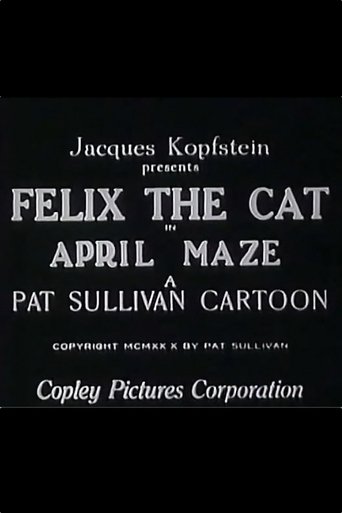
Pat Sullivan
Director
- Born
- February 22, 1887, Sandon, Queensland, Australia
- Died
- February 15, 1933
- Active
- 1910s-1930
- Birth name
- Patrick Sullivan
Films directed 1
About Pat Sullivan
Pat Sullivan was an Australian-born filmmaker and animation producer who became one of the foundational figures in early American cartoon history. Although he is often remembered primarily as the producer behind the comic-strip adaptation and animation studio associated with Felix the Cat, he was also credited as the director of the 1930 live-action short April Maze, which places him within the early sound era as well as the silent-cinema world that made his reputation. Sullivan built his career in animation during the 1910s and 1920s, when the medium was still developing its grammar, and he became especially important for helping to turn Felix the Cat into one of the first globally recognized animated stars. His studio work was shaped by the fast, gag-driven, visually inventive style of silent comedy cartoons, and his productions helped define what audiences expected from animated short subjects in the late silent period. In the 1930s his film output diminished as the industry changed rapidly with sound, competition from larger studios intensified, and legal and business complications affected his brand. Even so, his name remained attached to one of the most important characters in early animation history, and his role in the evolution of screen cartoons has made him a significant figure in classic cinema scholarship. Because of the prominence of his animation career and the relative rarity of his live-action directing credit, he is best understood as a producer-director whose contribution was central to the rise of American animated film rather than as a conventional live-action director.
More about Pat Sullivan
Behind the camera
Pat Sullivan is not generally discussed as a live-action stylist in the way of major feature directors; his reputation rests on animation production and studio supervision. His screen sensibility emphasized brisk pacing, broad comic situations, visual clarity, and the kind of rhythmic gag construction that characterized silent comedy cartoons. In his animation work, the style associated with his studio favored fluid movement, playful fantasy, and easily readable character business designed for immediate audience response. April Maze represents one of his few known directing credits outside animation, and it should be viewed in the context of a filmmaker whose strengths lay in concise comic presentation rather than elaborate dramatic direction.
In film history
Pat Sullivan’s cultural impact is immense when viewed through the history of animation, even though his name is less famous to the general public than the characters associated with his studio. The Felix the Cat cartoons became some of the earliest major examples of an animated star system, proving that cartoon characters could sustain audience interest over many releases and could be marketed as recognizable entertainment brands. His productions helped establish the theatrical animated short as a commercial form and contributed to the vocabulary of visual comedy that later studios would refine in the sound era. As an Australian-born filmmaker who made his mark in American cinema, he also represents the international character of early film culture, in which talent moved across borders to shape the young medium. His work continues to be studied for its place in the transition from improvisational cartoon experimentation to more standardized studio-era animation.
Later reputation
Pat Sullivan’s legacy lies primarily in the historical importance of Felix the Cat and the early studio system that helped define American animation. Even where authorship questions around specific cartoons have been debated by historians, Sullivan remains central to the industrial and cultural story of the character’s rise. April Maze adds a small but notable live-action directing credit to a career otherwise dominated by animation, showing that he was active at the moment when silent film traditions were giving way to sound. His name endures in film history as part of the foundation upon which later animated icons and studio systems were built. For historians of classic cinema, he is remembered less as a conventional director of feature films and more as a pioneering producer whose work helped create the commercial and artistic possibilities of animated entertainment.
Influence
Pat Sullivan influenced later animators, producers, and studio executives by demonstrating that an animated character could become a repeatable, marketable screen personality. The format of short, gag-based, visually expressive cartoons he helped popularize fed directly into the development of later classic animation at studios such as Disney, Warner Bros., and others. His studio’s emphasis on personality animation and comic timing showed future creators how a character could carry a film even without dialogue, a principle that remained important well into the sound era. The Felix model also influenced merchandising and cross-media branding, foreshadowing the way animated characters would later be exploited across print, film, and consumer products. Although many later artists surpassed him technically, his early industrial and creative model was foundational.
Off screen
Pat Sullivan was born in Queensland, Australia, and later established his career in the United States, where he became active in the early film industry. He worked in the emerging world of animation production, a field in which personal and business relationships often overlapped, and his career was affected by the unstable economics of independent cartoon making. Detailed information about his private domestic life is limited in the surviving historical record compared with his professional legacy. He is not widely documented as a figure with a heavily publicized family life, and most references to him focus on his studio activities, the Felix the Cat brand, and the legal and business history surrounding his cartoons. His death in 1933 came relatively early, before the full long-term recognition of his role in animation history had completely solidified.
Education
Specific formal education details are not well documented in readily available classic-film sources; his practical training appears to have come through early work in illustration, cartoon production, and film studio practice.
Credits
- Founded and operated a cartoon studio that became one of the most influential independent animation outfits of the silent era
- Helped bring Felix the Cat to the screen and establish him as an early animated celebrity
- Produced a long-running and highly popular series of theatrical cartoon shorts during the 1920s
- Expanded his screen work into the sound era with the live-action short April Maze (1930)
- Became a key figure in the development of character-based animation and comic timing in early cinema
Roles
- Producer of Felix the Cat cartoons
- Director of April Maze
Films
- April Maze (1930)
- Felix the Cat cartoons
- The Oily Bird (1919)
- Felix in Hollywood (1923)
- Felix Revolts (1923)
Honors
- Recognized as a pioneering figure in early American animation history
- Included in numerous historical discussions of the Felix the Cat franchise and silent-cartoon production
Collaborators
- Otto Messmer
- King Features Syndicate
- Early animation artists and animators associated with the Felix cartoons
Studios
- Pat Sullivan Studio
- Associated production companies connected with Felix the Cat cartoons
Notes
- Pat Sullivan was Australian-born, making him part of the international migration of talent that shaped early Hollywood.
- He is best remembered for his association with Felix the Cat, one of the first major animated stars in film history.
- April Maze (1930) is a notable live-action directing credit in a career otherwise dominated by animation production.
- His studio work belongs to the era when silent cartoons relied entirely on visual invention, pantomime, and rhythm.
- The authorship of some Felix cartoons has been the subject of long-standing historical debate, especially regarding the role of animator Otto Messmer.
- His career sits at the crossroads of silent comedy, early character merchandising, and the transition to sound.
- He died in 1933, before animated feature filmmaking became a major Hollywood practice.
- His work helped establish the idea that a cartoon character could have a sustained screen identity similar to a live-action star.
Questions
Who was Pat Sullivan?
Pat Sullivan was an Australian-born filmmaker and animation producer best known for his association with Felix the Cat, one of the first major animated screen stars. He was also credited as the director of the live-action short April Maze (1930), making him a notable figure in both early animation and early sound-era film history.
What films is Pat Sullivan best known for?
He is best known for April Maze (1930) and for producing the Felix the Cat cartoon series, including titles such as The Oily Bird, Felix in Hollywood, and Felix Revolts. His most enduring legacy comes from the overall Felix body of work rather than from a large live-action filmography.
When was Pat Sullivan born and when did he die?
Pat Sullivan was born on February 22, 1887, in Sandon, Queensland, Australia. He died on February 15, 1933, before the animation industry fully entered the feature-cartoon era.
What awards did Pat Sullivan win?
No major awards or formal Hollywood honors are widely documented for Pat Sullivan in surviving classic-film reference sources. His recognition is historical and cultural rather than tied to a large awards record.
What was Pat Sullivan's style as a filmmaker?
His work is associated with brisk comic timing, visual clarity, and gag-driven storytelling, especially in animation. In the context of early cartoons, his productions favored expressive movement and simple, memorable character business that audiences could instantly understand.
What is Pat Sullivan's legacy in film history?
Pat Sullivan is remembered as a pioneer of early American animation and a key figure in making Felix the Cat an international screen character. His work helped establish the animated short as a commercial and artistic form during the silent era and left a lasting imprint on cartoon studio practice.
Was Pat Sullivan mainly a live-action director?
No. He was primarily an animation producer and studio head, with his reputation tied to the Felix the Cat cartoons. April Maze is a notable live-action directing credit, but it is not the center of his career.