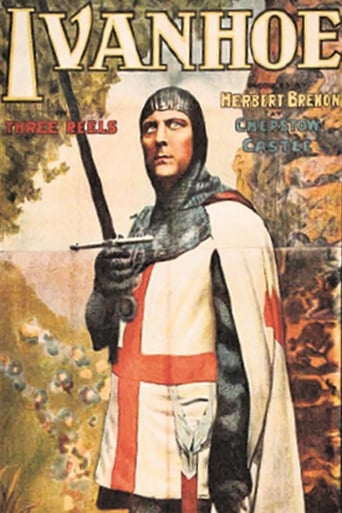

Films
1 film
About Wallace Bosco
Wallace Bosco worked on one surviving credit: Ivanhoe (1913). With his entire known film career consisting of a single year in 1913. His most notable work was in the 1913 adaptation of Sir Walter Scott's classic novel 'Ivanhoe,' which was one of the earliest film versions of this medieval tale. Like many actors of this era, Bosco's career was likely brief due to the embryonic state of the film industry and the transient nature of early film work. The 1913 'Ivanhoe' was produced by the American branch of the French company Éclair and was part of the wave of literary adaptations that characterized early American cinema. Unfortunately, like many performers from this period, detailed records of Bosco's life and career are scarce, reflecting the limited documentation and preservation of early film history. His appearance in 'Ivanhoe' represents his only known contribution to cinema, making him one of the many forgotten actors who helped establish the foundations of the film industry during its formative years.
The Craft
Milestones
- Appeared in the 1913 film adaptation of 'Ivanhoe'
Best Known For
Iconic Roles
Must-See Films
Working Relationships
Studios
Why They Matter
Impact on Culture
Wallace Bosco's cultural impact is minimal due to his extremely brief career in the very early days of cinema. His appearance in the 1913 'Ivanhoe' places him among the actors who helped establish the foundation of the American film industry during its transitional period from short subjects to feature-length narratives. Like many actors of his era, he represents the anonymous contributions of countless performers who participated in cinema's formative years but whose names have been lost to history due to poor record-keeping and the ephemeral nature of early film production.
Lasting Legacy
Wallace Bosco's legacy is primarily that of being among the early actors who participated in one of the first film adaptations of classic literature. His single known film credit in 'Ivanhoe' (1913) makes him part of the historical record of early American cinema, though his contribution was likely small and his role probably minor. He represents the vast number of early film actors whose careers were brief but who collectively helped establish the acting profession in motion pictures during cinema's decade.
Who They Inspired
Given his extremely limited filmography and the scarcity of information about his work, Wallace Bosco's influence on other actors or directors is unknown and likely negligible. His career was too brief and occurred too early in cinema history for him to have had a significant impact on subsequent generations of performers.
Off Screen
Very little is known about Wallace Bosco's personal life, which is typical for actors from the earliest days of silent cinema when detailed biographical records were rarely maintained.
Did You Know?
- Wallace Bosco's entire known film active years covered only one year (1913)
- He appeared in one of the earliest film adaptations of 'Ivanhoe'
- The 1913 'Ivanhoe' was produced by the American branch of French company Éclair
- Like many early silent film actors, virtually no biographical information about him survives
- His career coincided with the transitional period when American cinema was moving toward feature-length films
- The 1913 'Ivanhoe' is now considered a lost film, making his performance impossible to view today
- He represents the typical journeyman actor of early cinema who appeared in only one or two films before disappearing from historical records
Frequently Asked Questions
Who was Wallace Bosco?
Silent film with credits in this catalog.' His career was extremely brief, lasting only one year, and he represents one of the many anonymous actors from cinema's era.
What films is Wallace Bosco best known for?
Titles linked here include Ivanhoe (1913).
When was Wallace Bosco born and when did he die?
Unfortunately, no birth or death dates are available for Wallace Bosco, which is common for actors from the very early silent film period when detailed biographical records were not maintained.
What awards did Wallace Bosco win?
Wallace Bosco did not receive any known awards or nominations, which is typical for actors working in 1913, as the Academy Awards would not be established until 1929.
What was Wallace Bosco's acting style?
Due to the loss of the 1913 'Ivanhoe' film and the scarcity of documentation, Wallace Bosco's acting style cannot be determined. Like many actors of this period, he likely employed the exaggerated theatrical style common in early silent cinema.
Why is so little known about Wallace Bosco?
The scarcity of information about Wallace Bosco is typical for actors from the earliest days of cinema. Poor record-keeping, the loss of early films, and the transient nature of early film work have resulted in many such performers being largely forgotten to history.