
Ivanhoe
"Wilfred of Ivanhoe returns from the Crusades to win Lady Rowena."
Keys: Space play/pause · ←/→ 10s · F fullscreen · M mute · </> speed
About this film
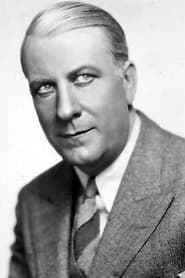
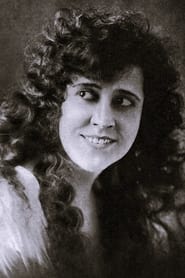
Crusader Wilfred of Ivanhoe (played by King Baggot), son of Sir Cedric (played by Wallace Bosco), returns to England from the Crusades in the Holy Land. As Ivanhoe, disguised, discovers that his beloved Lady Rowena (played by Evelyn Hope) has remained faithful, two weary travelers, Isaac of York (played by Herbert Brenon) and his pretty daughter Rebecca (played by Leah Baird), are admitted to Sir Cedric's castle, but after the knights learn that Isaac has money they abduct the visitors to the Norman stronghold of Torquilstone Castle.
Cast & crew
More films like this
More Adventure films
View all →

More from Herbert Brenon
View all →
More about this film
About the production
Release dateNovember 1913
ProductionIndependent Moving Pictures (IMP)
Filmed inFort Lee, New Jersey
This was one of the earliest feature-length adaptations of classic literature, filmed during the transition period when American cinema was moving from short films to longer narratives. The production utilized elaborate sets and costumes unusual for the period, reflecting the growing ambition of American filmmakers to compete with European epics.
Themes
Chivalry and honorReligious toleranceLove and loyaltyPolitical conflictCultural identity
Themes & topics
Historical background
Production circa 1913 situates Ivanhoe within the technical limits of its era—intertitles, fixed cameras, and studio-bound sets shaped every creative choice.
Why this film matters
For historians, Ivanhoe is less a blockbuster than a datapoint—showing what audiences in 1913 could see on a typical program.
Making of
The production of Ivanhoe in 1913 represented a major undertaking for the American film industry, which was still transitioning from short one-reel films to longer features. Director Herbert Brenon, who also acted in the film, was part of the new generation of filmmakers pushing the boundaries of what cinema could achieve. The production built elaborate medieval sets and created authentic-looking armor and costumes, which was unusual for American productions at the time. The tournament scenes required extensive choreography and coordination of numerous extras and horses. The film was part of IMP's strategy to produce prestigious literary adaptations to compete with imported European films and establish American cinema's cultural legitimacy.
What critics said
Trade papers near 1913 treated Ivanhoe as program material—noticed when exhibitors needed a reliable slot-filler, seldom debated as auteur cinema.
Did you know?
- Director Herbert Brenon not only directed but also played the role of Isaac of York, demonstrating the multi-talented nature of early filmmakers
- King Baggot, who played Ivanhoe, was one of the first true movie stars and was often called 'The King of the Movies' in the early 1910s
- This was one of the first American films to adapt a major British literary work, signaling the growing cultural ambitions of the American film industry
- The film was shot in Fort Lee, New Jersey, which was the center of American film production before the industry moved to Hollywood
- At 40 minutes, this was considered a feature-length film in 1913, when most films were still under 15 minutes
- The production used hundreds of extras for the tournament scenes, a significant undertaking for the time
- This adaptation predates the more famous 1952 MGM version by nearly 40 years
- The film's success helped establish the historical adventure genre as popular material for early feature films
Visual style
The cinematography by Arthur Martinelli utilized the static camera techniques typical of the period but incorporated more dynamic movement in the action sequences. The film made effective use of location shooting in New Jersey to create outdoor scenes that added authenticity to the medieval setting. The tournament sequences featured early examples of action cinematography, with the camera positioned to capture the full scope of the mounted combat. Interior scenes were lit using the natural light techniques common to the era, creating dramatic contrasts that emphasized the emotional content of key scenes.
Innovations
The film demonstrated several technical advances for its time, including the use of multiple camera setups for the tournament scenes and the creation of elaborate medieval sets that could withstand the rigors of action sequences. The production employed early special effects techniques for the castle scenes and battle sequences. The film's 40-minute runtime required careful pacing and editing techniques that were still being developed for feature-length narratives.
Music
As a silent film, Ivanhoe would have been accompanied by live musical performance during its theatrical run. Theaters typically employed pianists or small orchestras to play appropriate mood music, often using classical pieces or popular songs of the era. For a historical epic like Ivanhoe, the musical accompaniment would likely have included romantic and dramatic pieces to enhance the medieval setting and emotional content of the story.
Famous quotes
As a silent film, dialogue was conveyed through intertitles and visual performance rather than spoken dialogue
Memorable scenes
- The tournament scene where Ivanhoe, still in disguise, demonstrates his knightly prowess and defeats his Norman opponents
- The dramatic rescue sequence at Torquilstone Castle where Ivanhoe leads the assault to free Rebecca and Isaac
- The emotional reunion between Ivanhoe and his father Sir Cedric when his true identity is finally revealed
What audiences thought
The film was well-received by audiences of 1913, who were increasingly hungry for longer, more sophisticated films. The combination of romance, adventure, and historical spectacle appealed to the growing middle-class moviegoing audience. The film's success helped demonstrate that there was a market for feature-length films based on classic literature, encouraging other studios to undertake similar projects. Contemporary accounts suggest that audiences were particularly impressed by the tournament scenes and the elaborate production design, which represented a significant step forward in American film production values.
Film connections
Influenced by
- Sir Walter Scott's 1819 novel 'Ivanhoe'
- Earlier European historical epics
- Stage adaptations of Scott's work
This film influenced
- Later adaptations of Ivanhoe (1922, 1952, 1982)
- Other medieval adventure films of the silent era
- Historical literary adaptations
Film restoration
The film is considered lost, as is unfortunately the case with the majority of films from this early period. No complete copies of the 1913 Ivanhoe are known to survive in any film archive or private collection. This loss is representative of the broader tragedy of early cinema, where an estimated 75-90% of silent films have been lost due to the unstable nature of early film stock and inadequate preservation efforts.
Where to watch
- Unfortunately, this film is not available for viewing as it is considered lost. Film enthusiasts can only experience it through contemporary reviews, still photographs, and written descriptions of its content.