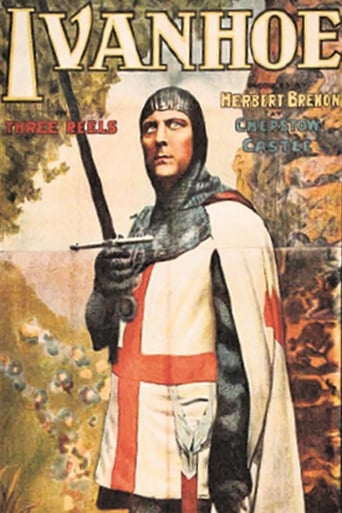
Films
1 film
About Evelyn Hope
American actress who worked briefly during the silent film era, making her mark in the early days of cinema. Her career, though extremely short, coincided with a pivotal moment in film history when the medium was transitioning from novelty to art form. Evelyn appears in the 1913 adaptation of Sir Walter Scott's classic novel 'Ivanhoe,' which was one of the earliest feature-length films produced in America. The film was directed by Herbert Brenon and was quite ambitious for its time, attempting to bring the medieval epic to life with the limited resources available to filmmakers in 1913. Hope's role in this production placed her among the pioneers of cinema, though her career appears to have been limited to this single notable appearance. Like many actors of this period, she may have been drawn from stage backgrounds or discovered by the burgeoning film industry's talent scouts. Her brief tenure in film reflects the transient nature of early cinema careers, where many performers appeared in only a handful of productions before fading from historical record.
The Craft
Milestones
- Appeared in the 1913 feature film adaptation of 'Ivanhoe'
Best Known For
Iconic Roles
Must-See Films
Working Relationships
Worked Often With
Why They Matter
Impact on Culture
Evelyn Hope represents the countless performers who participated in cinema's formative years but whose contributions have been largely lost to time. Her appearance in 'Ivanhoe' (1913) places her among the pioneers of feature filmmaking in America, during a period when the industry was establishing its artistic and commercial foundations. While her individual impact may seem minimal, she was part of a generation that helped prove that audiences would sit through longer, more complex narratives, paving the way for the feature films that would dominate cinema in subsequent decades. The film itself was significant as one of the earliest American attempts to adapt classic literature to the screen, and performers like Hope were essential in making these ambitious productions possible.
Lasting Legacy
Evelyn Hope's legacy is primarily as an example of the ephemeral nature of early cinema fame. Like many performers from the silent era's first decade, she serves as a reminder of the thousands of actors who contributed to cinema's development but whose names have faded from popular memory. Her work in 'Ivanhoe' (1913) survives as part of the historical record of early American feature filmmaking, and she represents the anonymous talent that filled the casts of these productions. While she may not have achieved lasting fame, her participation in this significant early film places her within the lineage of cinema history.
Who They Inspired
Due to the brevity of her career and limited documentation of her work, Evelyn Hope's direct influence on other performers or the evolution of acting techniques cannot be definitively traced. However, as an early film actress, she would have been part of the generation that helped establish the conventions of screen acting, transitioning from the theatrical styles of the 19th century to the more subtle techniques required by the camera medium.
Off Screen
Very little is known about Evelyn Hope's personal life, which is not uncommon for actors from the earliest days of cinema who often left minimal historical documentation.
Did You Know?
- Appeared in one of the earliest American feature films, 'Ivanhoe' (1913)
- Her entire known film career consists of a single year, 1913
- The film she appeared in was directed by Herbert Brenon, who would become a prominent director in the silent era
- 'Ivanhoe' (1913) was an ambitious production for its time, adapting a classic literary work
- Like many early film actors, her biographical details remain largely undocumented
- She represents the typical career pattern of early cinema performers who often had very brief screen appearances
- The film was produced during a transitional period when American cinema was moving toward feature-length productions
Frequently Asked Questions
Who was Evelyn Hope?
American actress who worked briefly during the silent film era in 1913, appearing in the feature film adaptation of 'Ivanhoe.' Her career was extremely short, consisting of only this single known film appearance during the early days of American cinema.
What films is Evelyn Hope best known for?
Titles linked here include Ivanhoe (1913).
When was Evelyn Hope born and when did she die?
Evelyn Hope's birth and death dates are not documented in historical records, which is common for many performers from the earliest days of cinema who left minimal biographical traces.
What awards did Evelyn Hope win?
Evelyn Hope did not receive any known awards or nominations, which was typical for actors during this very early period of cinema when formal award systems had not yet been established.
What was Evelyn Hope's acting style?
Specific details about Evelyn Hope's acting style are not documented, but as an actress in 1913, she would have likely employed the theatrical, exaggerated gestures common to early silent film acting before the development of more naturalistic screen techniques.