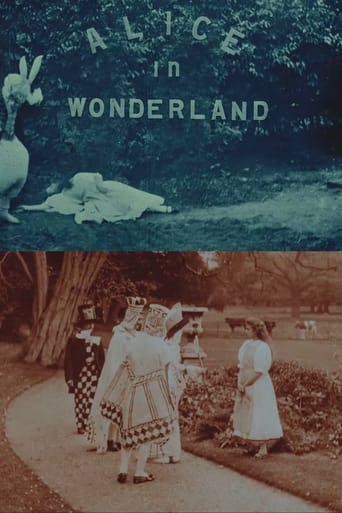
Films
1 film
About Norman Whitten
Norman Whitten is credited on a single production — Alice in Wonderland (1903). Specifically known for his role in the 1903 film 'Alice in Wonderland.' He worked during the era of British silent films when motion pictures were still a novelty and actors were often stage performers transitioning to the new medium. Whitten played the Fish Footman in what was one of the earliest film adaptations of Lewis Carroll's beloved novel, directed by Cecil Hepworth. His career appears to have been extremely brief, with documented work limited to this single production in 1903. Like many actors of this period, he was likely drawn from local theatrical talent in the Walton-on-Thames area where the Hepworth studio was based. The film itself was remarkable for its time, using special effects and multiple scenes to tell the story, though it ran only 12 minutes. Whitten's participation in this historic production places him among the very first actors to bring literary characters to life on screen.
The Craft
On Screen
As an actor in the earliest days of cinema, Norman Whitten's performance style would have been influenced by Victorian theatrical traditions, characterized by exaggerated gestures and pantomime techniques necessary to convey emotion and story without dialogue or close-ups. Early silent film actors had to project their performances to reach the back of theaters where films were often shown, resulting in more dramatic and demonstrative acting compared to later film techniques. The Fish Footman role would have required comic timing and physical comedy skills typical of British music hall and pantomime traditions that influenced early cinema.
Milestones
- Appeared in the first film adaptation of Alice in Wonderland (1903)
- Worked with director Cecil Hepworth
- Participated in early British cinema during its formative years
Best Known For
Iconic Roles
Must-See Films
Working Relationships
Worked Often With
Studios
Why They Matter
Impact on Culture
Norman Whitten's contribution to cinema history, while seemingly minor, represents an important part of the foundation of film acting. As one of the first actors to portray a character from classic literature on screen, he participated in establishing the tradition of literary adaptation that would become central to cinema. His role in the 1903 Alice in Wonderland places him among the pioneers who helped demonstrate that films could tell complex stories with multiple characters, paving the way for the narrative films that would follow. The film itself was groundbreaking for its use of special effects and editing techniques, and Whitten's performance was part of this early cinematic experiment that helped establish film as a legitimate storytelling medium.
Lasting Legacy
Norman Whitten's legacy is tied directly to the historic significance of the 1903 Alice in Wonderland film, which survives today as one of the earliest examples of narrative cinema and literary adaptation. While his individual contribution may seem small, he represents the countless early actors who helped establish the vocabulary of film performance. The film in which he appeared is studied by film historians and scholars as a crucial artifact from cinema's infancy, and his performance as the Fish Footman is preserved as part of this important cultural document. His work exemplifies the transition from stage to screen that characterized early cinema and helped establish acting techniques specific to the film medium.
Who They Inspired
As an actor from the very earliest days of cinema, Norman Whitten's direct influence on subsequent performers is difficult to trace, but his participation in film techniques contributed to the development of film acting as an art form. The 1903 Alice in Wonderland demonstrated that literary characters could be successfully adapted to the screen, influencing countless future adaptations. The acting style employed by Whitten and his fellow cast members, while theatrical by modern standards, helped establish early conventions for film performance that would evolve and refine over the following decades. His work represents the foundation upon which later film actors would build more naturalistic and camera-specific performance techniques.
Off Screen
Very little is documented about Norman Whitten's personal life, which was typical for many early film actors whose careers were brief and occurred before systematic record-keeping in the film industry. Like many performers of this era, he was likely a stage actor who was recruited for this groundbreaking film project. The fact that his film career appears to have been limited to 1903 suggests he may have returned to theatrical work or pursued other occupations after this single foray into cinema.
Did You Know?
- The 1903 Alice in Wonderland film was only 12 minutes long but was considered ambitious for its time
- Norman Whitten played the Fish Footman, one of the first characters from Alice to appear on film
- The film was made by Hepworth Studios in Walton-on-Thames, England
- Only one copy of the 1903 Alice in Wonderland survives today, though it's incomplete
- The film used innovative special effects for its time, including Alice shrinking and growing
- Norman Whitten appears to have had no other documented film roles
- The film was directed by Cecil Hepworth, a pioneer of British cinema
- The cast was likely drawn from local theatrical talent rather than professional film actors
- The Fish Footman and Frog Footman scene was one of the few sequences to survive in the existing print
- The film was originally released in Britain and later in the United States
Frequently Asked Questions
Who was Norman Whitten?
British with credits in this catalog.' His career appears to have been limited to this single film role, making him one of the many actors who participated in cinema's formative years.
What films is Norman Whitten best known for?
Titles linked here include Alice in Wonderland (1903).
When was Norman Whitten born and when did he die?
Unfortunately, specific birth and death dates for Norman Whitten are not documented, which was common for many early film actors whose careers were brief and occurred before systematic record-keeping in the film industry.
What awards did Norman Whitten win?
Norman Whitten did not receive any formal awards or recognition during his lifetime, as he worked in 1903, long before the establishment of film awards ceremonies like the Academy Awards, which began in 1929.
What was Norman Whitten's acting style?
Norman Whitten's acting style would have been typical of early cinema, influenced by Victorian theatrical traditions with exaggerated gestures and pantomime techniques necessary for silent film performance. His role as the Fish Footman would have required comic timing and physical comedy skills common in British theatrical traditions of the era.