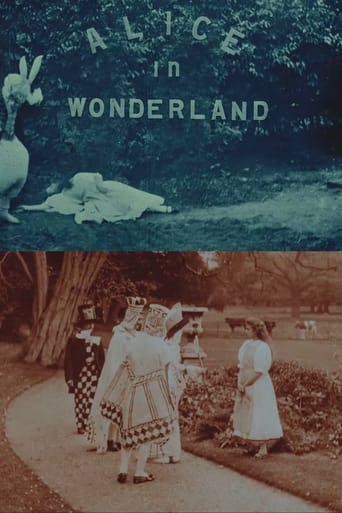
Films
1 film
About Stanley Faithfull
Actor in the earliest days of British cinema, appearing during the era of filmmaking at the turn of the 20th century. His known film work consists of a single appearance in the 1903 adaptation of 'Alice in Wonderland,' directed by Cecil Hepworth and Percy Stow. This film was one of the earliest cinematic adaptations of Lewis Carroll's beloved novel and represented a significant technical achievement for its time. Faithfull was part of the small cast that brought this fantastical story to life during cinema's infancy, when actors were often stage performers transitioning to the new medium of film. His career appears to have been brief, limited to this single documented film credit from 1903, which was typical of many early film actors who either returned to stage work or left the industry entirely after their initial foray into cinema. The film itself ran for approximately 12 minutes and was considered quite ambitious for its period, featuring elaborate costumes and special effects that were revolutionary for early 1900s filmmaking.
The Craft
Milestones
- Appeared in the 1903 film adaptation of 'Alice in Wonderland'
Best Known For
Must-See Films
Working Relationships
Worked Often With
Studios
Why They Matter
Impact on Culture
Stanley Faithfull's contribution to cinema, while limited to a single film appearance, represents the foundational era of filmmaking when actors were helping establish the language of cinema. His participation in the 1903 'Alice in Wonderland' places him among the pioneers who brought literary adaptations to the screen during cinema's first decade. This film was significant as one of the earliest narrative feature films made in Britain and demonstrated the potential of cinema as a storytelling medium. The actors in this production, including Faithfull, were among the first to face the unique challenges of screen acting versus stage performance, helping develop techniques that would influence generations of film actors to come.
Lasting Legacy
Stanley Faithfull's legacy is preserved through his participation in one of cinema's earliest surviving narrative films. The 1903 'Alice in Wonderland' remains an important historical artifact that showcases the birth of narrative cinema and the transition from stage to screen performance. While his individual contribution may seem modest, he was part of a groundbreaking production that demonstrated the artistic possibilities of film and helped establish the foundation for the British film industry. The film's survival allows modern audiences to witness the very early techniques of cinematic storytelling and the performances of actors like Faithfull who were among the first to work in this new medium.
Who They Inspired
As an actor from the very beginning of cinema's history, Stanley Faithfull's direct influence on later performers is difficult to trace, but he was part of the generation that established the basic principles of screen acting. The 1903 'Alice in Wonderland' served as an early example of how literary works could be adapted for the screen, influencing countless future adaptations. The techniques developed by actors in this period, including Faithfull, helped establish the fundamental differences between stage and screen performance that would be refined and expanded upon throughout cinema's development.
Off Screen
Very little is documented about Stanley Faithfull's personal life, which is typical of actors from the very early silent film era when detailed biographical records were not maintained. Like many performers from this period, he was likely a stage actor who transitioned briefly to the new medium of film during its experimental phase.
Did You Know?
- The 1903 'Alice in Wonderland' was only 12 minutes long but was considered a feature film in its time
- This was the first film adaptation of Lewis Carroll's famous novel
- The film was directed by Cecil Hepworth, one of British cinema's pioneers
- The film used innovative special effects for its time, including shrinking and growing effects
- Only one copy of the film is known to survive today
- The film was made by the Hepworth Manufacturing Company, one of Britain's early film studios
- Actors in this era were often stage performers who made brief forays into the new medium of film
- The film was shot in Walton-on-Thames, Surrey, England
- Cecil Hepworth himself played the Frog Footman in the film
- The film's special effects were achieved using multiple exposures and creative editing techniques
Frequently Asked Questions
Who was Stanley Faithfull?
British with credits in this catalog.' He was active during the era of filmmaking when the industry was still in its infancy.
What films is Stanley Faithfull best known for?
Titles linked here include Alice in Wonderland (1903).
When was Stanley Faithfull born and when did he die?
Specific birth and death dates for Stanley Faithfull are not documented, which is typical for actors from the very early silent film era when detailed biographical records were not maintained.
What awards did Stanley Faithfull win?
Stanley Faithfull did not receive any documented awards, as the film industry's award systems had not yet been established during his brief career in 1903.
What was Stanley Faithfull's acting style?
While specific details about Faithfull's acting style are not documented, actors from this era typically transitioned from stage acting and used exaggerated gestures and expressions suitable for the limitations of early film technology.