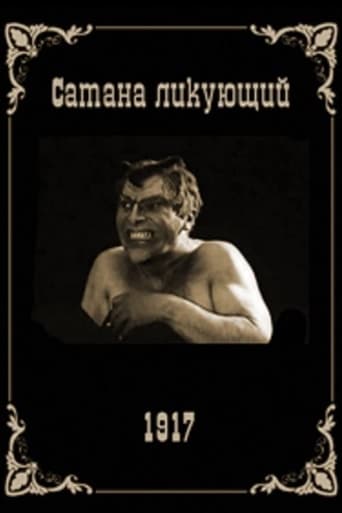
Films
1 film
About Aleksandr Chabrov
This archive lists one role for Aleksandr Chabrov: Satan Triumphant (1917). Most notably in Yakov Protazanov's 1917 film 'Satan Triumphant.' His career coincided with the dramatic transformation of Russian society and its film industry during the Bolshevik Revolution. Working during the golden age of Russian silent cinema, Chabrov was part of a generation of performers who witnessed the transition from imperial to Soviet filmmaking. His appearance in 'Satan Triumphant' places him among the actors who worked on some of the most ambitious and artistically significant Russian productions of the 1910s. The film itself was one of the last major productions before the revolution would dramatically alter the country's cinematic landscape. Unfortunately, like many actors of this era, detailed records of his career and personal life have been lost to time, with 'Satan Triumphant' serving as the primary surviving testament to his work. His brief filmography, limited to 1917, suggests he may have been either a casualty of the revolutionary upheaval or someone who chose not to continue in the transformed Soviet film industry.
The Craft
Milestones
- Appeared in Yakov Protazanov's 'Satan Triumphant' (1917)
- Participated in one of the last major pre-revolutionary Russian film productions
Best Known For
Iconic Roles
Must-See Films
Working Relationships
Worked Often With
Studios
Why They Matter
Impact on Culture
Aleksandr Chabrov represents the often-overlooked actors who worked during the tumultuous transition period of Russian cinema from imperial to Soviet times. His appearance in 'Satan Triumphant' places him within the context of a significant artistic movement in Russian film that was exploring complex themes of good, evil, and human nature just before the revolution would change everything. While his individual impact may be difficult to trace due to limited documentation, he contributed to the preservation of a particular moment in Russian cinematic history that bridged two dramatically different eras. The film itself stands as an important artifact of pre-revolutionary Russian artistic ambition, with Chabrov as one of its contributors.
Lasting Legacy
Aleksandr Chabrov's legacy is preserved primarily through his participation in 'Satan Triumphant,'. While his career was brief and largely undocumented, he represents the countless actors whose work helped establish the foundations of Russian film artistry. His contribution, though small in scope, is part of the broader tapestry of early 20th century cinema that would eventually influence generations of Russian and international filmmakers. The preservation of 'Satan Triumphant' ensures that Chabrov's work, however limited, remains accessible to film historians and enthusiasts studying this pivotal period in cinema history.
Who They Inspired
Due to the limited scope of his documented work and the lack of extensive records about his career and techniques, it's difficult to trace specific influences that Aleksandr Chabrov may have had on subsequent generations of actors. However, his participation in a major pre-revolutionary Russian production places him within the continuum of Russian theatrical and cinematic tradition that would later influence the great Soviet film directors and actors of the 1920s and beyond.
Off Screen
Very little is known about Aleksandr Chabrov's personal life, as is common with many actors from the early Russian silent film period whose records were lost during the revolutionary period and subsequent historical upheavals.
Did You Know?
- 'Satan Triumphant' was one of the last major films produced before the Russian Revolution completely transformed the country's film industry
- The film was directed by Yakov Protazanov, one of Russia's most important early film directors
- Chabrov's entire known filmography consists of work from a single year, 1917
- Many records of Russian actors from this period were lost during the revolutionary upheaval and subsequent political changes
- 'Satan Triumphant' was based on a novel by Anatoly France and was an ambitious production for its time
- The film featured elaborate sets and special effects that were advanced for Russian cinema of 1917
- Like many Russian actors of his generation, Chabrov's career was likely cut short by the dramatic political and social changes of 1917
- The film was produced by the Khanzhonkov Company, one of Russia's most important early film studios
Frequently Asked Questions
Who was Aleksandr Chabrov?
Russian with credits in this catalog.' His career appears to have been brief and coincided with the revolutionary period that dramatically transformed Russian cinema.
What films is Aleksandr Chabrov best known for?
Titles linked here include Satan Triumphant (1917).
When was Aleksandr Chabrov born and when did he die?
Unfortunately, specific birth and death dates for Aleksandr Chabrov are not known, as is common with many actors from early Russian cinema whose records were lost during the revolutionary period.
What awards did Aleksandr Chabrov win?
There are no known awards or nominations for Aleksandr Chabrov, which was typical for actors during the early Russian film period when formal award systems were not yet established.
What was Aleksandr Chabrov's acting style?
Due to the limited documentation of his work and the loss of many records from this period, specific details about Chabrov's acting style are not available. He worked during the transition from theatrical to cinematic acting styles common in early Russian silent films.