
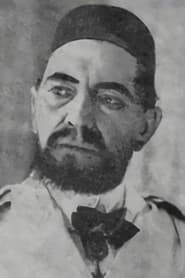
Satan Triumphant
"Pastor Talnoх furiously urges the flock to fight temptations"
Keys: Space play/pause · ←/→ 10s · F fullscreen · M mute · </> speed
About this film
Pastor Talnoх furiously urges the flock to fight temptations, but he himself becomes a victim of temptation. In his house appears Satan, pushing the hero to theft and spiritual fall.
Cast & crew
More films like this
More Drama films
View all →







More from Yakov Protazanov
View all →


More about this film
About the production
Release dateOctober 1917
ProductionKhanzhonkov Film Company
Filmed inMoscow, Russian Empire
Filmed during the tumultuous year of 1917, capturing the final months of the Russian Empire. The production faced significant challenges due to the political upheaval and social instability of the period. The film was one of the last major productions of the Khanzhonkov studio before the nationalization of the film industry following the Bolshevik Revolution. Special effects for Satan's appearances were considered innovative for the time, utilizing multiple exposure techniques and elaborate makeup to create supernatural elements.
Themes
Religious hypocrisyTemptation and moral corruptionThe battle between good and evilHuman weakness and vulnerabilitySpiritual downfall
Themes & topics
pastorSatantemptationtheftspiritual fallhypocrisysupernaturalmoral corruptionreligiouspsychological drama
Historical background
Silent-era production in 1917 relied on intertitles, live accompaniment, and studio systems that were rapidly consolidating into national industries.
Why this film matters
Early works like Satan Triumphant help map how filmmakers, exhibitors, and viewers developed the visual language of cinema during the medium's first decades. Later revivals, archive screenings, and digitization have kept such titles accessible to researchers and dedicated viewers long after their first commercial runs.
Making of
The production of 'Satan Triumphant' took place during among the leading turbulent periods in Russian history, with the February Revolution having already occurred and the October Revolution unfolding during filming. Director Yakov Protazanov worked under increasingly difficult conditions as the political situation deteriorated. The cast and crew witnessed the transformation of Moscow from imperial capital to revolutionary center. Ivan Mosjoukine's performance as the fallen pastor was particularly notable for its psychological depth, using subtle facial expressions and body language to convey the character's moral deterioration. The special effects team, led by cinematographer Vladimir Siversen, developed innovative techniques to create Satan's supernatural appearances, including the use of multiple exposure photography that was considered groundbreaking for Russian cinema at the time.
What critics said
Trade and newspaper reviews from the silent period for Satan Triumphant survive only in fragments, making precise reception history difficult to reconstruct. Modern assessment tends to emphasize historical value, craft, and cultural context rather than box-office performance.
Did you know?
- This was one of the final films made before the Russian Revolution completely transformed the country's film industry
- Ivan Mosjoukine, who plays Pastor Talnox, was considered one of the greatest actors of Russian silent cinema and later became a major star in France after emigrating
- The film's release coincided with the October Revolution, which likely limited its initial distribution and reception
- Director Yakov Protazanov was one of Russia's most prolific early filmmakers, directing over 80 films before emigrating in 1920
- The film was based on a story by writer Aleksei Apukhtin, adapting Russian literary themes of spiritual struggle
- Special effects for Satan's appearances were achieved using pioneering techniques for the time, including double exposure and mirror effects
- The film was shot on location in Moscow just months before the city became the center of the new Soviet government
- Only fragments of the original film are known to survive, with some scenes preserved in Russian film archives
- The film's themes of religious hypocrisy and moral corruption were particularly resonant during the revolutionary period
- Nathalie Lissenko, who appears in the film, later married Ivan Mosjoukine and worked with him in France
Visual style
The cinematography by Vladimir Siversen employed innovative techniques for visualizing supernatural elements and psychological states. The film used dramatic lighting contrasts to represent the moral conflict between good and evil, with Satan's appearances accompanied by shadowy, atmospheric effects. Multiple exposure photography was used to create ghostly apparitions and supernatural occurrences, representing some of the most advanced special effects work in Russian cinema of the period. The camera work emphasized close-ups of characters' faces to capture subtle emotional reactions, particularly in Ivan Mosjoukine's performance as the pastor. The visual style combined realistic interior shots with expressionistic lighting effects to create a sense of psychological realism within a supernatural narrative framework.
Innovations
The film was notable for its pioneering use of special effects to create supernatural elements, particularly in depicting Satan's appearances. The production team employed multiple exposure techniques, mirror effects, and sophisticated makeup to achieve otherworldly visual effects that were considered advanced for Russian cinema in 1917. The film also demonstrated advanced understanding of psychological editing techniques, using cross-cutting and montage to build dramatic tension and contrast the pastor's public and private personas. The lighting design was particularly innovative, using chiaroscuro effects to represent moral ambiguity and the presence of evil forces. These technical achievements contributed to the film's reputation as among the leading sophisticated productions of pre-revolutionary Russian cinema.
Music
As a silent film, 'Satan Triumphant' would have been accompanied by live musical performance during its original theatrical run. The score would likely have been compiled from classical pieces and original compositions performed by theater orchestras. Music would have been particularly important for creating atmosphere during Satan's appearances and heightening the emotional impact of key dramatic moments. Specific details about the original musical accompaniment have not survived, but it would have followed the common practice of Russian theaters of the period, which employed full orchestras for major film presentations. The musical direction would have emphasized dramatic contrasts between the pastoral scenes and the supernatural sequences.
Famous quotes
The devil's greatest victory is convincing us he doesn't exist
Even the most righteous soul has its cracks where darkness can seep in
When you preach against temptation, you must first conquer it within yourself
Memorable scenes
- The dramatic first appearance of Satan in Pastor Talnox's study, materializing from shadows with supernatural effects
- The pastor's psychological breakdown as he confronts his own hypocrisy in the mirror
- The climactic scene where Talnox completely succumbs to temptation, abandoning his religious faith
- The powerful sermon sequence where Talnox preaches against the very sins he is committing
What audiences thought
The film's release during the October Revolution severely limited its audience reach and commercial success. The political chaos and social disruption meant that many cinemas were closed or repurposed for revolutionary meetings. Those who did see the film reportedly responded strongly to Mosjoukine's performance and the film's dramatic exploration of moral corruption. The themes of religious hypocrisy resonated with audiences who were increasingly critical of the Orthodox Church's role in supporting the old regime. Despite the challenging circumstances of its release, the film developed a reputation among cinema enthusiasts as one of the last great achievements of pre-revolutionary Russian filmmaking.
Film connections
Influenced by
- Russian literary tradition of spiritual struggle
- Dostoevsky's psychological novels
- Gogol's supernatural tales
- Orthodox religious iconography
- German Expressionist cinema techniques
This film influenced
- Later Soviet films dealing with religious themes
- Psychological dramas in Russian cinema
- Films exploring supernatural corruption
Film restoration
The film is considered partially lost, with only fragments surviving in Russian film archives. Some key scenes have been preserved, but the complete version no longer exists in its entirety. The surviving footage has been restored by Russian film preservationists and is occasionally shown in specialized cinema retrospectives. The fragmented state of the film makes it a significant example of the challenges in preserving early Russian cinema from the revolutionary period.
Where to watch
- Available in specialized film archives and museums
- Occasionally screened at classic film festivals
- Some fragments may be accessible through Russian film institute collections
- Available through specialized classic cinema streaming platforms that feature rare silent films