Films
4 films
About Vera Orlova
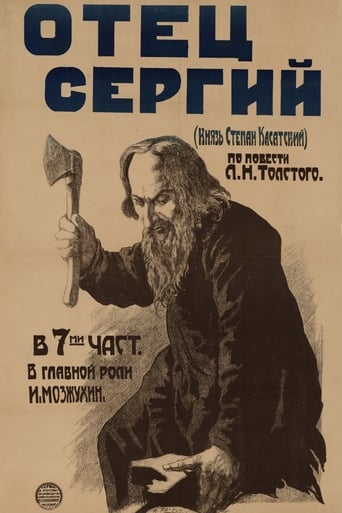
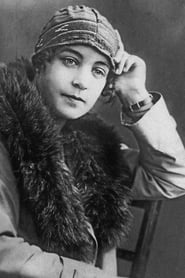
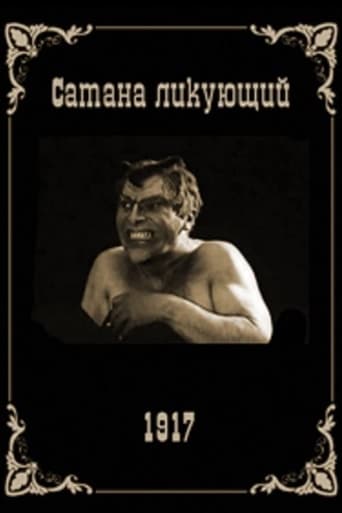
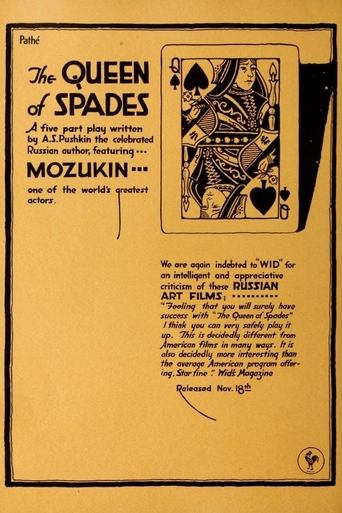
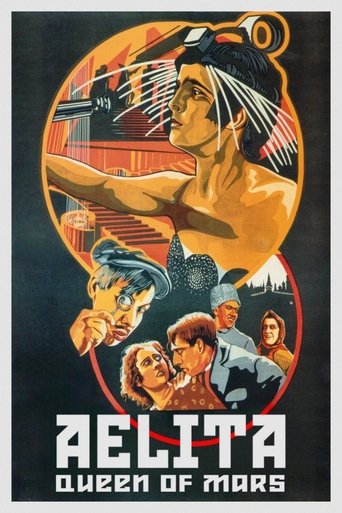
Prominent Russian actress during the silent film era, beginning her career in the final years of the Russian Empire and continuing into the early Soviet period. She worked with some of the most important directors of early Russian cinema, including Yakov Protazanov. Her most famous role was as Queen Aelita in the 1924 science fiction film 'Aelita: Queen of Mars,' which became early Soviet films internationally. She demonstrated remarkable versatility, appearing in adaptations of literary works like Pushkin's 'The Queen of Spades' and Tolstoy's 'Father Sergius,' as well as more experimental productions like 'Satan Triumphant.' Her career coincided with a revolutionary period in Russian cinema, as the industry transitioned from imperial to Soviet control. While her film career was relatively brief, spanning roughly from 1916 to 1924, she made significant contributions to the development of Russian silent cinema during this transformative era.
The Craft
On Screen
Orlova embodied the dramatic, theatrical style characteristic of silent film actors, using exaggerated gestures and facial expressions to convey complex emotions without dialogue. Her performances were marked by a certain ethereal quality, particularly evident in her role as the Martian queen, where she combined otherworldly grace with human vulnerability. She excelled at portraying both aristocratic elegance and psychological complexity, adapting her style to fit the revolutionary themes emerging in early Soviet cinema.
Milestones
- Starred in the Soviet science fiction film 'Aelita: Queen of Mars' (1924)
- Worked with director Yakov Protazanov on multiple films
- Appeared in adaptations of classic Russian literature
- Transitioned from Imperial Russian cinema to Soviet film industry
- Participated in the revolutionary transformation of Russian cinema
Best Known For
Iconic Roles
Must-See Films
Accolades
Special Recognition
- Recognized as a pioneer of Soviet cinema
- Honored in Russian film history archives
Working Relationships
Worked Often With
Studios
Why They Matter
Impact on Culture
Vera Orlova's portrayal of Queen Aelita became an iconic image in early science fiction cinema, representing the Soviet Union's entry into the genre and influencing countless future depictions of extraterrestrial royalty. Her work helped establish visual and thematic conventions for science fiction that would persist for decades. The film's revolutionary themes and constructivist sets, combined with her ethereal performance, created a unique aesthetic that blended Soviet ideology with futuristic imagination. Her presence in these early Soviet films contributed to the international recognition of Russian cinema as a serious artistic force during the 1920s.
Lasting Legacy
Vera Orlova is remembered as one of the actresses of Soviet cinema, particularly significant for her role in 'Aelita: Queen of Mars,' which remains. Her career bridged two distinct eras of Russian filmmaking, from the aristocratic productions of the imperial period to the revolutionary cinema of the early Soviet Union. While her filmography was brief, her impact on the development of Russian cinema and the science fiction genre has been enduring. Film historians continue to study her performances as examples of the transition from theatrical acting styles to the more naturalistic approaches that would later dominate cinema.
Who They Inspired
Orlova's portrayal of Queen Aelita influenced subsequent depictions of female alien characters in science fiction, establishing a template for combining otherworldly beauty with human emotions. Her work demonstrated how science fiction could be used to explore contemporary social and political themes, a technique that would become fundamental to the genre. Her performances in adaptations of Russian literature helped establish the tradition of bringing classic literary works to the screen, a practice that would continue throughout Soviet cinema history. Early Soviet actors who followed in her footsteps looked to her ability to navigate the changing political and artistic landscape of post-revolutionary Russia.
Off Screen
Vera Orlova lived through. Her active years covered this dramatic transition, allowing her to witness firsthand the transformation of Russian cinema from imperial entertainment to Soviet propaganda and artistic experimentation. Details about her personal life remain relatively scarce, as was common for many early film actors whose private lives were not extensively documented.
Did You Know?
- 'Aelita: Queen of Mars' was one of the first major science fiction films produced in the Soviet Union
- The film's constructivist sets were designed by Aleksandra Ekster and Isaac Rabinovich
- Orlova's character Aelita became a cultural phenomenon in the 1920s Soviet Union
- The film was partially shot on location in Moscow and partially in Germany
- Despite its Soviet origins, the film was distributed internationally and influenced global science fiction
- Orlova worked during the transition from Tsarist to Soviet cinema, adapting to new political requirements
- The character of Aelita inspired fashion trends and artistic movements in 1920s Russia
- Orlova's performance style evolved from the more theatrical pre-revolutionary approach to the new Soviet cinematic language
- Her films often featured revolutionary themes and social commentary typical of early Soviet cinema
- Orlova was part of a generation of actors who helped establish Russian cinema as an international artistic force
In Their Own Words
(No documented quotes from Vera Orlova are available in historical records, which was common for silent film actors whose performances were conveyed through visual rather than verbal expression)
Frequently Asked Questions
Who was Vera Orlova?
Russian actress who worked during the silent film era, appearing in notable Russian and Soviet films between 1916 and 1924. She is best remembered for her role as Queen Aelita in the 1924 science fiction film 'Aelita: Queen of Mars.'
What films is Vera Orlova best known for?
Titles linked here include Aelita: Queen of Mars (1924), The Queen of Spades (1916).
When was Vera Orlova born and when did she die?
Born 1886; died 1966.
What awards did Vera Orlova win?
While Vera Orlova did not receive formal awards during her lifetime, she is recognized in film history as a pioneer of Soviet cinema and is honored for her contributions to the development of Russian film, particularly in the science fiction genre.
What was Vera Orlova's acting style?
Orlova employed the dramatic, expressive style typical of silent film actors, using exaggerated gestures and facial expressions to convey emotions. She was particularly noted for her ethereal quality and ability to portray both aristocratic elegance and psychological complexity in her roles.