



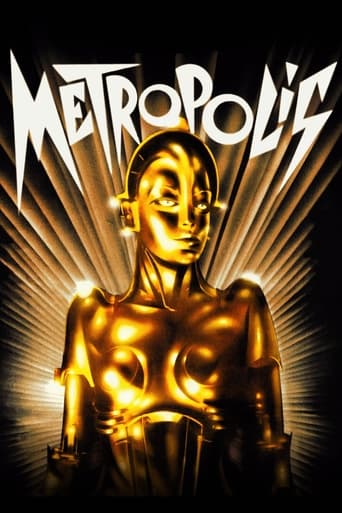
Aelita: Queen of Mars
"A young man travels to Mars in a rocket ship, where he leads a popular…"
Keys: Space play/pause · ←/→ 10s · F fullscreen · M mute · </> speed
About this film
A young man travels to Mars in a rocket ship, where he leads a popular uprising against the ruling group with the support of Queen Aelita, who has fallen in love with him after watching him through a telescope.
Cast & crew
More films like this

More Science Fiction films
View all →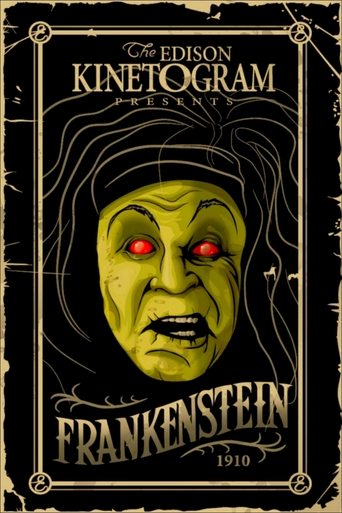
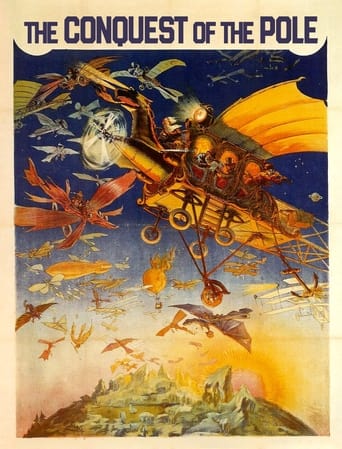
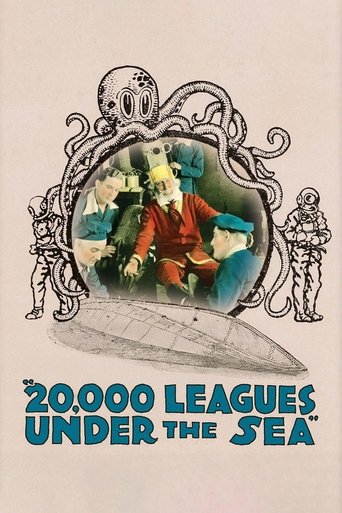

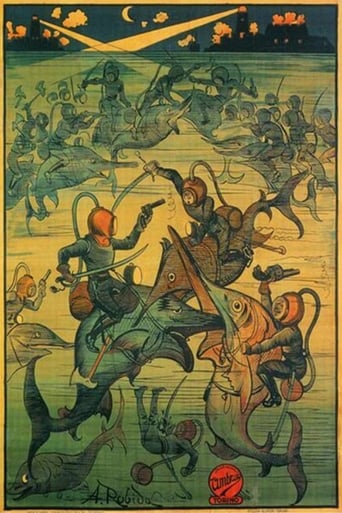
More from Yakov Protazanov
View all →


More about this film
About the production
Release dateSeptember 25, 1924
Box officeUnknown (Soviet box office records from 1924 are incomplete)
ProductionMezhrabpom-Rus
Filmed inMoscow, Soviet Union
The film was shot during the NEP (New Economic Policy) period, allowing for greater artistic experimentation. The Martian sets were designed by prominent constructivist artists including Aleksandra Ekster, Isaac Rabinovich, and Sergei Kozlovsky. The production faced significant technical challenges creating the spaceship effects and Martian landscapes using available 1920s technology. The film's dual narrative structure, showing parallel events on Earth and Mars, was innovative for its time and required complex editing techniques.
Themes
Revolution and social changeClass struggleThe dangers of powerScience and technologyLove and obsession
Themes & topics
MarsSpace travelRevolutionQueenTelescopeSpaceshipClass struggleUprisingScience fictionSilent filmSoviet cinemaConstructivismLove trianglePolitical allegory
Historical background
Released in 1924 during the late silent period, Aelita: Queen of Mars reached audiences when exhibitors were still defining programming conventions. The narrative hook—A young man travels to Mars in a rocket ship, where he leads a popular…—reflects what contemporary producers thought would draw viewers.
Why this film matters
Aelita: Queen of Mars remains discussed by archivists tracing how screen stories of its period represented work, desire, conflict, and social order. Its central situation—A young man travels to Mars in a rocket ship, where he leads a popular…—still prompts questions about genre conventions and audience expectations.
Making of
Director Yakov Protazanov had recently returned from exile in Berlin when he made this film, bringing Western cinematic techniques to Soviet cinema. The production involved some of the most prominent avant-garde artists of the Soviet avant-garde movement. Constructivist artist Aleksandra Ekster designed the revolutionary Martian costumes and sets, which featured sharp geometric patterns and metallic fabrics. The spaceship scenes were created using miniatures and clever camera work, with the actors suspended by wires. The film's dual narrative structure was revolutionary for its time, requiring complex editing to maintain parallel storylines. The production team built elaborate Martian sets in Moscow studios, using painted backdrops and forced perspective to create the illusion of an alien world. The film's controversial reception led to multiple cuts and revisions before its final release.
What critics said
Trade and newspaper notices for Aelita: Queen of Mars generally emphasized casting, spectacle, and program fit rather than extended aesthetic argument. Retrospective screenings and archival notes continue to shape how viewers evaluate Aelita: Queen of Mars today.
Did you know?
- This was one of the first full-length science fiction films ever made, predating Metropolis by three years
- The film was based on a novel by Alexei Tolstoy (distant relative of Leo Tolstoy) published just one year before filming
- Queen Aelita's iconic geometric headdress became a symbol of constructivist fashion in the 1920s
- The Martian language was created specifically for the film, though it was mostly conveyed through gestures and intertitles
- The spaceship design was influenced by early rocketry concepts of Konstantin Tsiolkovsky, the father of Soviet rocket science
- Despite being a Soviet film, it was briefly banned for its 'bourgeois' elements and escapist themes
- The film was one of the first Soviet productions to be exported internationally, showing in Europe and the United States
- Yuliya Solntseva, who played Aelita, later became a prominent film director herself
- The film's Martian society was an allegory for contemporary Soviet class struggles
- Original prints were tinted in various colors to distinguish between Earth (sepia) and Mars (blue-green) scenes
Awards & recognition
- No major awards were given to Soviet films in 1924, as the Soviet film award system was not yet established
Visual style
The cinematography, handled by Yuri Zhelyabuzhsky, was revolutionary for its time. The film employed innovative techniques to distinguish between Earth and Mars sequences, using different lighting styles and camera angles. Earth scenes were shot in a more conventional style with naturalistic lighting, while Martian sequences featured dramatic, angular lighting and unusual camera placements. The film made extensive use of superimposition and multiple exposure techniques to create the spaceship effects and otherworldly atmosphere. The cinematography emphasized the constructivist design elements through carefully composed shots that highlighted geometric patterns and spatial relationships. The film also featured some of the earliest uses of subjective camera work, particularly in scenes showing Aelita watching Earth through her telescope.
Innovations
Aelita featured several groundbreaking technical achievements for 1924. The film pioneered the use of elaborate miniatures and forced perspective to create its Martian landscapes. The spaceship sequences utilized innovative special effects techniques including multiple exposures and matte paintings. The production team developed new methods for creating the distinctive Martian atmosphere through lighting filters and chemical processes. The film's dual narrative structure required advanced editing techniques to maintain parallel storylines, influencing later Soviet montage theory. The constructivist sets incorporated moving elements and mechanical devices, making them some of the most technically advanced film sets of their time. The film also experimented with color tinting, using different tints to distinguish between Earth (sepia) and Mars (blue-green) scenes.
Music
As a silent film, Aelita originally had no recorded soundtrack but was accompanied by live musical performances in theaters. The recommended score was composed by Vladimir Deshevov, a prominent Soviet composer known for his avant-garde works. The music featured dissonant harmonies and rhythmic complexity to match the film's futuristic themes. Different theaters often used their own arrangements, with some incorporating popular songs of the era while others used more classical selections. Modern restorations have been accompanied by newly composed scores, including works by contemporary composers specializing in silent film music. The original score emphasized the contrast between Earth and Mars through different musical themes and instrumentation.
Famous quotes
I see you! I see you through my telescope! You are building something... something that will fly to me!
On Earth, there is a revolution. On Mars, there must be a revolution too!
The revolution is not a garden party!
We have watched you for so long, we have learned your ways, your dreams, your revolutions.
To build a new world, we must first destroy the old!
Memorable scenes
- The opening sequence showing Aelita watching Earth through her massive telescope, with the revolutionary imagery reflected in her eye
- The construction and launch of the spaceship, featuring innovative special effects and miniature work
- The Martian uprising sequence with thousands of extras in constructivist costumes storming the palace
- The final revelation that Aelita has betrayed the revolution, with her dramatic transformation from revolutionary to tyrant
- The parallel montage showing simultaneous revolutionary activities on Earth and Mars
What audiences thought
Initial Soviet audience reception was mixed, with many viewers confused by the film's complex dual narrative and allegorical elements. However, the film was popular enough to achieve international distribution, unusual for Soviet productions of the time. Audiences were particularly impressed by the spectacular Martian sets and the novelty of seeing a full-length science fiction story. The romantic subplot between Los and Aelita resonated with viewers, despite the film's revolutionary themes. In later years, as the film gained cult status among science fiction enthusiasts, audience appreciation grew significantly. Modern audiences at revival screenings and film festivals have responded enthusiastically to the film's visual creativity and historical significance.
Film connections
Influenced by
- Alexei Tolstoy's novel 'Aelita' (1923)
- Early Soviet revolutionary cinema
- Constructivist art movement
- Fritz Lang's German expressionist films
- Konstantin Tsiolkovsky's rocketry theories
- Soviet montage theory
- Georges Méliès's early fantasy films
This film influenced
- Metropolis (1927)
- The Woman in the Moon (1929)
- Things to Come (1936)
- Flash Gordon serials
- Solaris (1972)
- Stalker (1979)
- Blade Runner (1982)
- The Fifth Element (1997)
Film restoration
The film has been preserved and restored by the Gosfilmofond of Russia. Several versions exist, including the original 1924 cut and later re-edited versions. The most complete restoration was completed in the 1990s, incorporating surviving footage from various archives. Some scenes remain lost or incomplete, particularly from the Earth sequences. The restored version features reconstructed intertitles based on original scripts and production documents. The film has been released on DVD and Blu-ray by several specialty distributors, including Criterion and Kino Lorber.
Where to watch
- Available on The Criterion Channel
- Streaming on MUBI
- DVD/Blu-ray from The Criterion Collection
- Available on Amazon Prime Video
- Streaming on Kanopy (with library access)
- YouTube (some public domain versions)
- Available on Fandor
- Included in various Soviet cinema box sets