
Yuri Zavadsky
Actor
Born: June 30, 1894 in Moscow, Russian Empire Died: April 5, 1977 Active: 1911-1977 Birth Name: Yuri Vasilievich Zavadsky
Films
2 films
About Yuri Zavadsky
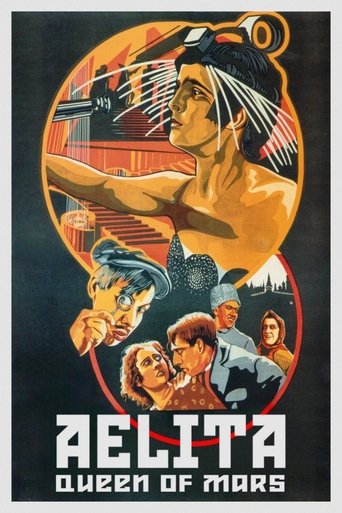
Yuri Vasilievich Zavadsky — prominent Soviet actor and theater director who made a significant mark in Russian performing arts during the 20th century. While he appeared in the silent film 'Aelita: Queen of Mars' in 1924, his primary legacy lies in his revolutionary work in theater direction. Zavadsky began his career as an actor in the early 1910s, studying under the Vsevolod Meyerhold, which profoundly influenced his artistic vision. He transitioned to directing in the 1920s and became known for his innovative staging techniques and psychological depth in productions. Throughout his career, he led several prestigious theaters including the Moscow Art Theatre and the Maly Theatre, where he staged numerous classic Russian and international plays. His productions were characterized by their intellectual rigor, visual sophistication, and deep understanding of human psychology. Despite his brief film career, Zavadsky's contribution to Soviet theater earned him numerous honors and established him as theater directors of his era.
The Craft
On Screen
Zavadsky's acting style was influenced by Meyerhold's biomechanics system, emphasizing physical expressiveness and psychological depth. His performances in the silent era were characterized by precise, controlled movements and intense emotional expression suitable for the medium. He brought a theatrical gravitas to his film roles, using his stage training to create memorable characterizations.
Milestones
- Studied under Vsevolod Meyerhold
- Appeared in 'Aelita: Queen of Mars' (1924)
- Became director at Moscow Art Theatre (1940)
- Led the Maly Theatre (1944-1949)
- Received People's Artist of the USSR honor (1948)
- Directed over 100 theatrical productions
- Mentored generations of Soviet actors
- Revolutionized Soviet theater staging techniques
Best Known For
Iconic Roles
Must-See Films
Accolades
Won
- People's Artist of the USSR (1948)
- Stalin Prize (1946, 1951)
- Order of Lenin (1964)
- Order of the Red Banner of Labour (1939)
- Hero of Socialist Labour (1974)
Special Recognition
- Lenin Prize (1965)
- State Prize of the RSFSR (1970)
- Honored Artist of the RSFSR (1933)
Working Relationships
Worked Often With
Studios
Why They Matter
Impact on Culture
Yuri Zavadsky fundamentally shaped Soviet theater through his innovative directing methods and educational influence. His productions helped maintain high artistic standards during challenging political periods, preserving classical traditions while embracing contemporary theatrical innovations. He played a crucial role in training several generations of Soviet actors and directors, ensuring the continuity of Russian theatrical excellence through the Soviet era. His work demonstrated how theater could serve both artistic and social purposes without compromising artistic integrity.
Lasting Legacy
Zavadsky's legacy endures through the countless actors and directors he mentored who went on to shape Russian theater. His productions of classic plays remain reference points for contemporary directors, and his writings on theater theory continue to be studied. The Zavadsky Theater in Moscow (now the Moscow Drama Theatre named after M.N. Yermolova) stands as proof of his enduring influence on Russian performing arts. His ability to navigate the complex political landscape of Soviet culture while maintaining artistic standards made him a model for future generations of theater artists.
Who They Inspired
Zavadsky influenced Soviet theater by bridging the gap between the experimental approaches of the 1920s and the more conservative socialist realism of later decades. His psychological approach to character development and his emphasis on ensemble work became standard practices in Russian theater. Many of his students became leading figures in Soviet and post-Soviet theater, spreading his methodologies throughout the Russian-speaking world. His productions of Chekhov, Shakespeare, and contemporary Soviet plays helped define how these works would be interpreted for decades.
Off Screen
Zavadsky was deeply immersed in the Soviet cultural elite, maintaining relationships with many prominent artists and intellectuals of his time. He survived the Stalinist purges of the 1930s, a period when many of his colleagues were arrested or executed. His personal life was relatively private, with most of his energy devoted to his artistic work and teaching. He was known as a demanding but fair director who inspired loyalty among his actors and students.
Education
Moscow Art Theatre School (graduated 1915), studied under Vsevolod Meyerhold and Konstantin Stanislavski
Family
- Vera Popova (1916-1925)
- Nadezhda Kozyreva (1927-1977)
Did You Know?
- Despite appearing in
- He was one of the few directors to successfully work at both the Moscow Art Theatre and the Maly Theatre
- His production of 'The Days of the Turbins' was one of Stalin's favorite plays
- He survived the Great Purge partly because his productions were politically acceptable
- Zavadsky was known for his photographic memory and could recall entire plays from decades earlier
- He taught at the Moscow Art Theatre School for over 30 years
- His directing style evolved from avant-garde experimentation to more classical interpretations
- He was fluent in multiple languages and directed several foreign plays in Russian
- During WWII, he organized theater performances for Soviet troops
- His final production was 'The Lower Depths' in 1976, a year before his death
In Their Own Words
Theater is not entertainment, it is a moral responsibility to society
An actor must first understand the soul of the character before attempting to portray it
The director's job is not to impose his vision, but to reveal the truth inherent in the text
In theater, as in life, authenticity is the highest virtue
We must preserve the classics not as museum pieces, but as living, breathing works that speak to our time
Frequently Asked Questions
Who was Yuri Zavadsky?
Prominent Soviet actor and theater on YTB.my. While he appeared in the silent film 'Aelita: Queen of Mars' (1924), his primary legacy comes from his revolutionary directing methods and his role in training generations of Soviet theater artists.
What films is Yuri Zavadsky best known for?
Titles linked here include Aelita: Queen of Mars (1924).
When was Yuri Zavadsky born and when did he die?
Born June 30, 1894; died April 5, 1977.
What awards did Yuri Zavadsky win?
Zavadsky received the highest honors available in the Soviet Union, including the title People's Artist of the USSR (1948), two Stalin Prizes (1946, 1951), the Lenin Prize (1965), and the title Hero of Socialist Labour (1974). These awards reflected his status as one of the Soviet Union's most respected theater artists.
What was Yuri Zavadsky's directing style?
Zavadsky's directing style combined classical Russian theatrical traditions with modern innovations, emphasizing psychological depth and intellectual rigor. His productions were known for their sophisticated staging, ensemble work, and ability to reveal deeper philosophical themes in both classical and contemporary plays. He evolved from avant-garde experimentation to more classical interpretations while maintaining artistic integrity throughout his career.
Did Yuri Zavadsky have any famous students?
Yes, Zavadsky mentored many of the most influential Soviet theater directors, including Yuri Lyubimov (founder of Taganka Theatre), Oleg Yefremov (director at Moscow Art Theatre), and Anatoly Efros. His students went on to shape post-Stalinist Soviet theater and continued his methods into the post-Soviet era.
How did Zavadsky survive the Stalinist purges?
Zavadsky survived the Great Purge of the 1930s partly because his theatrical productions were politically acceptable to the regime. Unlike many of his contemporaries, he managed to navigate the dangerous political landscape by choosing repertoire and staging methods that satisfied Soviet cultural authorities while maintaining artistic standards. His production of 'The Days of the Turbins' was reportedly one of Stalin's favorite plays.