Otto Kreisler
Director
- Active
- 1921-1921
Films directed 1
About Otto Kreisler
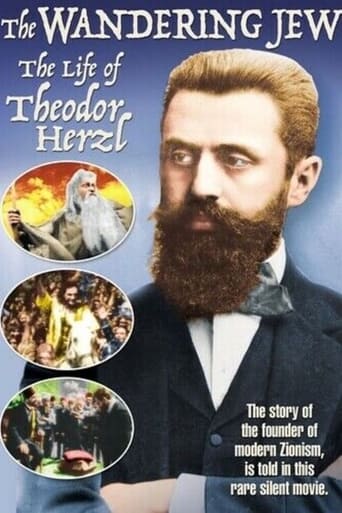
Otto Kreisler was a little-documented Austrian filmmaker of the silent era, best known for directing the 1921 film Theodor Herzl, Standard-Bearer of the Jewish People. His surviving filmography is extremely small, and available reference sources suggest that he worked during the early 1920s, a period when Austrian and German-language cinema was developing ambitious historical and literary productions after World War I. Because his career is represented in modern databases by only a single known directing credit, much of his life remains obscure and has not been widely preserved in standard film histories. The subject of his best-known film, Theodor Herzl, indicates an interest in Jewish history, Zionism, and cultural identity at a time when such topics carried strong political and ideological significance. There is no widely verified record of a long Hollywood career, major studio affiliation, or later work in talkies, which suggests that he was likely a minor or short-lived figure in early European cinema. As a result, Otto Kreisler is remembered primarily as the director attached to an important historically themed silent film rather than as a broadly documented auteur. His obscurity itself is representative of many early film practitioners whose contributions survive only in sparse archival references and filmographies.
More about Otto Kreisler
Behind the camera
Based on the surviving record, Otto Kreisler appears to have worked in the silent-era historical/biographical mode rather than in overtly experimental or commercial genres. His one documented film suggests a serious, didactic, and historically oriented approach suited to dramatizing an important political and cultural figure. Because his films are not widely extant or well described in the historical record, any more specific characterization of his mise-en-scène, pacing, or visual style would be speculative. He is best understood as a director of early prestige subject matter, likely working with the conventions of silent dramatization, intertitles, and stage-like historical presentation common in the period.
In film history
Otto Kreisler's cultural importance lies less in a large body of work than in the subject matter of his known film. By directing a film about Theodor Herzl, he participated in the early cinematic representation of Zionist history and Jewish political identity, topics that were still emerging in public culture during the postwar silent era. Such productions contributed to the way film could serve not only entertainment but also historical memory and communal self-definition. Even though the details of his career are sparse, the existence of his 1921 film points to the broader role of Central European cinema in engaging with modern Jewish history and nationalist thought.
Later reputation
Kreisler's legacy is that of a near-forgotten early director whose name survives through one historically significant credit. In film history, such figures are important because they help map the cultural and industrial landscape of silent-era European production, especially in regions where archival losses have been severe. His work on a Herzl biopic places him within the lineage of films that preserved and interpreted Jewish historical figures for screen audiences. For researchers, he is a reminder that early cinema included many short-lived careers that nonetheless contributed to the representation of identity, politics, and memory on film.
Influence
There is no strong evidence that Otto Kreisler directly mentored major later filmmakers or established a visible stylistic school. His influence is therefore best understood indirectly, through the example of his historical subject matter rather than through a documented body of work. The 1921 Herzl film may have helped demonstrate the viability of serious Jewish-themed historical cinema in Central Europe. Beyond that, his influence remains difficult to measure because of the limited survival of records and the apparent absence of a larger surviving filmography.
Off screen
No reliable, widely published biographical information about Otto Kreisler's personal life has been located in standard film-reference sources. His birth family, marriages, children, education, and later years are not well documented in the surviving public record. Like many early European film workers, he appears to have left a very light archival footprint, making it difficult to reconstruct his private life with confidence. Any claims beyond his identified directing credit would risk conflating him with other individuals or inventing details not supported by sources.
Credits
- Directed the silent historical film Theodor Herzl, Standard-Bearer of the Jewish People (1921)
- Worked in the early Austrian silent-film period, when national cinema was defining its identity after World War I
- Is associated with one of the earliest screen dramatizations centered on Theodor Herzl and Jewish historical consciousness
- Represents the kind of lesser-known European filmmaker whose work survives mainly through filmography records rather than extensive biographies
Films
Notes
- Otto Kreisler is chiefly remembered today for one surviving directing credit.
- His best-known film focuses on Theodor Herzl, a foundational figure in modern Zionism.
- His career appears to have been confined to the silent era.
- There is very little verified biographical information about him in standard film references.
- He is an example of a film professional whose name survives more clearly than the details of his life.
- His only known film points to the importance of historical and political subjects in early Austrian cinema.
- The scarcity of records about him makes him difficult to distinguish from similarly named individuals without careful filmographic confirmation.
Questions
Who was Otto Kreisler?
Otto Kreisler was an Austrian silent-era film director best known for directing Theodor Herzl, Standard-Bearer of the Jewish People (1921). He is a little-documented figure in early cinema, and most of what survives about him comes from filmography records rather than detailed biographies.
What films is Otto Kreisler best known for?
He is primarily known for Theodor Herzl, Standard-Bearer of the Jewish People (1921), which is the only widely cited film in his surviving filmography. No other confirmed major titles are commonly associated with him in standard reference sources.
When was Otto Kreisler born and when did he die?
His birth and death dates are not reliably documented in the available public film record. Standard reference materials that list his directing credit do not provide verified personal life details, so both dates remain unknown.
What awards did Otto Kreisler win?
No awards or nominations are currently documented for Otto Kreisler. Given the limited surviving record of his career, there is no verified evidence of major honors attached to his name.
What was Otto Kreisler's directing style?
His only known film suggests a historical, serious, and likely prestige-oriented silent-era approach. Beyond that, specific stylistic traits are difficult to confirm because his surviving film record is extremely small and not well described in detailed criticism.
Why is Otto Kreisler historically important?
He is historically notable because he directed a film about Theodor Herzl, placing him within the early cinematic treatment of Jewish history and Zionist identity. Even though his career is obscure, that film makes him part of the broader story of how silent cinema engaged with political and cultural memory.