Also available on: Archive.org
Theodor Herzl, Standard-Bearer of the Jewish People

Theodor Herzl, Standard-Bearer of the Jewish People

1921 Austria
Jewish persecution and historical memoryPolitical ZionismNational identityAntisemitismHistorical destiny

Plot

The film follows a young Theodor Herzl as he gradually becomes aware of the long history of Jewish persecution across Europe and the broader Jewish diaspora. As he confronts repeated examples of discrimination, violence, and exclusion, Herzl comes to believe that assimilation cannot solve the Jewish question and that only a political homeland can offer lasting safety and dignity. The drama presents his intellectual and emotional awakening as the decisive turning point that leads him to formulate political Zionism. Framed as a biographical and ideological work rather than a conventional character study, the film depicts Herzl as a visionary whose personal development is inseparable from the fate of his people.

About the Production

Release Date 1921
Production Sascha-Film
Filmed In Vienna, Austria

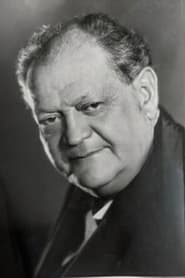
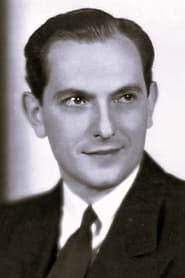
This was a silent-era Austrian historical drama made in the early years after World War I, at a time when the film industry in Central Europe was trying to rebuild both commercially and artistically. The production is closely associated with Sascha-Film, one of the major Austrian studios of the period, and it was staged as a serious prestige picture with national and ideological significance rather than as a commercial entertainment vehicle. Because the film dates from 1921, surviving documentation is limited and some production details are not consistently recorded in modern databases. The casting of prominent Jewish actors, including Rudolph Schildkraut and Joseph Schildkraut, gave the production additional cultural weight and helped align the film with its subject's political and historical importance.

Historical Background

The film was produced in 1921, in the aftermath of World War I and during a period of political upheaval across Europe, including the collapse of empires, the redrawing of borders, and intensified debates about nationalism, ethnicity, and minority rights. For Jewish communities, the postwar years brought both new hopes and continued insecurity, as antisemitism remained widespread even as Zionism gained broader visibility. A film centered on Herzl in this period would have carried strong contemporary resonance, because political Zionism had moved from a controversial idea to an internationally discussed movement after the Balfour Declaration and the wartime diplomatic shifts surrounding Palestine. In Austria, a film like this also reflected the cultural role of cinema in addressing questions of identity and historical destiny at a moment when the country itself was redefining its place in Europe. The work matters historically because it is an early example of cinema engaging directly with Zionist ideology and with the memorialization of a modern Jewish political leader.

Why This Film Matters

This film is significant as an early cinematic representation of Theodor Herzl and as a rare silent-era attempt to dramatize the origins of political Zionism. It demonstrates how cinema was being used not only to entertain but also to shape collective memory, especially around politically charged subjects involving Jewish identity and modern nationalism. For historians of Jewish film culture, it is important as a marker of the visibility of Zionist ideas in early twentieth-century European popular media. Even if not widely preserved or widely seen today, the film occupies a noteworthy place in the history of biographical cinema and in the broader cultural history of how modern Jewish political thought entered the screen imagination. Its existence also underscores the role of Austrian filmmaking in producing serious historical dramas that engaged with urgent social and ideological issues.

Making Of

Very little detailed behind-the-scenes documentation survives in widely accessible sources, which is common for early 1920s Austrian silent films. What can be established is that the production drew on the prestige resources of Sascha-Film and cast major actors associated with serious dramatic performance, suggesting an intention to create a dignified, historically resonant work. The presence of the Schildkraut actors is especially notable, since their reputations would have helped lend authority to a subject tied to Jewish history and political aspiration. Like many silent historical dramas of the era, the film likely relied heavily on tableau-style staging, intertitles, and emblematic scenes to convey ideological argument as much as narrative action. Its making should be understood in the context of postwar Central European cinema, where filmmakers frequently explored identity, history, and social conflict through prestige productions.

Visual Style

No detailed shot-by-shot cinematographic analysis is widely documented, but as an Austrian silent historical drama from the early 1920s, it would have been shaped by the visual conventions of the period: static or gently moving camera setups, carefully composed tableaux, expressive lighting, and emphatic staging of actors within symbolic interiors and historical settings. The emphasis would likely have been on legibility and rhetorical clarity, using costume, gesture, and composition to communicate Herzl's ideological development. Early Austrian cinema often combined theatrical acting with visually polished production design, so the film probably aimed for a dignified, museum-like reconstruction of historical atmosphere. If surviving prints or materials exist, they would be especially valuable for understanding how early Zionist biography was visually coded on screen.

Innovations

The film does not appear to be associated with a single famous technical innovation, but its significance lies in the ambitious use of silent historical dramatization to present a political biography with ideological clarity. For its time, the challenge would have been to render an intellectual and historical argument visually, without dialogue, through staging, intertitles, and performance. The production likely depended on careful costume and set design to establish different historical periods and social environments. In that sense, its achievement was rhetorical and representational rather than technological.

Music

As a 1921 silent film, it originally had no synchronized recorded soundtrack. Like most films of its era, it would have been accompanied in theaters by live music, which may have ranged from a pianist to a small ensemble depending on the venue and the prestige of the screening. No original cue sheet, composer credit, or surviving score is widely documented in standard public references. Any modern presentation would typically use a reconstructed or newly composed accompaniment.

Memorable Scenes

  • Herzl's awakening to the accumulated reality of Jewish persecution, which functions as the film's central turning-point scene.
  • The dramatized sequence in which Herzl develops his political theory of Zionism as the only viable response to antisemitism.
  • Scenes that present historical oppression as a sequence of visual episodes, underscoring the continuity of Jewish suffering across eras.
  • The climactic framing of Herzl as a leader and symbolic 'standard-bearer' of Jewish national renewal.

Did You Know?

  • The film is one of the earliest screen portrayals of Theodor Herzl, the Austrian journalist and political thinker who became the central founder of modern political Zionism.
  • It was made only a few years after Herzl's death in 1904, so contemporary audiences would still have regarded him as a recent historical figure rather than a distant one.
  • The picture belongs to the tradition of biographical and ideological silent cinema that sought to educate viewers as well as dramatize history.
  • Rudolph Schildkraut and Joseph Schildkraut were both members of the famous Schildkraut acting family, which was known for significant stage and screen work in European and American cinema.
  • The film's title identifies Herzl as a 'Standard-Bearer of the Jewish People,' making its political and cultural purpose explicit from the outset.
  • Because of the scarcity of surviving records from early Austrian silent cinema, some details such as precise runtime, release schedule, and original promotional materials are difficult to verify with certainty.
  • The film is of special interest to historians because it links cinema with the early public memory of Zionism and with postwar Jewish cultural self-representation in Europe.
  • As a 1921 Austrian production, it belongs to a period in which historical dramas were often used to engage with national identity, minority questions, and political ideals.

What Critics Said

Contemporary critical response is not well documented in the surviving sources readily available today, and detailed reviews from the period are difficult to reconstruct with certainty. As a prestige silent drama on a major historical-political figure, it was likely evaluated in terms of seriousness, performances, and its usefulness as a patriotic or cultural statement rather than as a lightweight entertainment. Modern scholars and film historians tend to regard it primarily as an important historical artifact rather than as a canonical masterpiece of silent cinema. Its value today lies in its subject matter, rarity, and the insight it offers into early filmic treatments of Zionism and Jewish history. Because the film is obscure and early records are limited, critical reception is best described as poorly documented rather than clearly favorable or unfavorable.

What Audiences Thought

Specific audience figures and box office data are not known, so broad public response cannot be quantified. Given the film's subject and prestige casting, it likely appealed most to educated urban audiences and viewers interested in historical, Jewish, or political themes. In the context of 1921 Austria, audiences would have encountered it amid a vibrant but unstable postwar exhibition culture, where serious dramas could attract attention through topical relevance and public discussion. Its audience reception today is largely indirect, expressed through archival interest, scholarly attention, and the film's status as a rare early Herzl depiction rather than through documented mass popularity.

Film Connections

Influenced By

  • Jewish historical biography and commemorative writing about Theodor Herzl
  • Early silent-era historical and prestige dramas
  • The public discourse surrounding Zionism in the years after Herzl's death
  • Theatrical biographical staging common in European cinema of the 1910s and early 1920s

This Film Influenced

  • Later cinematic and television portrayals of Theodor Herzl
  • Subsequent Zionist and Jewish historical dramas
  • Documentary and dramatic treatments of modern Jewish political history

Film Restoration

Preservation status is unclear in widely available public sources. The film appears to be extremely rare, and detailed modern records do not consistently confirm whether a complete print survives, whether only fragments remain, or whether the film is preserved in archive holdings not widely cataloged online. It should therefore be treated as a scarce early silent film with uncertain survival status unless a specific archive listing confirms otherwise.

Themes & Topics