Josefa Gettke
Actor
- Active
- 1921-1921
Films 1
About Josefa Gettke
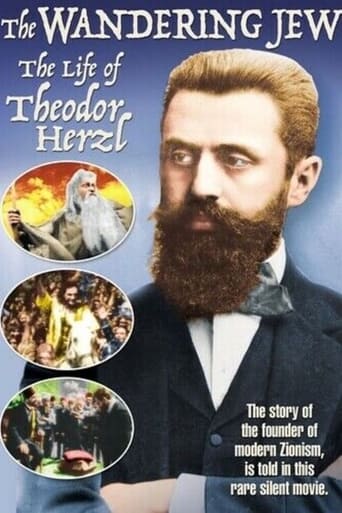
Josefa Gettke appears to have been a very obscure performer from the silent-film era, known to surviving film records primarily for a credited appearance in the 1921 production Theodor Herzl, Standard-Bearer of the Jewish People. Beyond that single screen credit, no reliable biographical profile has been preserved in the standard international reference sources commonly used for early cinema research, which suggests either a very limited film career, an uncredited or poorly documented stage background, or the loss of archival records over time. Because of the scarcity of surviving documentation, details such as her birth and death dates, place of origin, education, and personal life cannot be stated with confidence. Her presence in a historically significant film about Theodor Herzl indicates that she was part of the early German-language or Central European screen culture that helped shape biographical and cultural filmmaking after World War I. Like many performers of the silent era whose careers were not extensively promoted in trade papers or later film histories, she survives mainly as a name in cast records rather than as a fully documented celebrity. Her filmography as currently known is extremely short, but that does not diminish the historical value of her participation in a period production connected to Jewish historical memory and early political biography on screen.
More about Josefa Gettke
In film history
Josefa Gettke's cultural impact is best understood as archival and historical rather than celebrity-driven. Her credit in a film about Theodor Herzl places her within the early development of Jewish historical representation on screen, a subject of major importance in European silent cinema. Even where an individual performer is sparsely documented, their participation helps reconstruct production networks, casting practices, and the broader cultural milieu of the early 1920s. For scholars of silent film, names like hers are important because they point to the many artists whose work supported significant productions but who were not preserved by later publicity systems. In that sense, her surviving credit contributes to the collective memory of early Jewish-themed cinema and the broader history of Central European film culture.
Later reputation
Her legacy lies mainly in her documented presence within a historically meaningful silent film rather than in a body of work that can be fully reconstructed. Because only one role is currently known, Josefa Gettke exemplifies the many early screen performers whose careers have faded from mainstream memory while remaining embedded in archival cast lists. That makes her important to film historians, since such names can become clues for deeper research into regional cinema, theater-to-film transitions, and the participation of women in early biographical filmmaking. Her surviving record also underscores how fragile the historical record of silent cinema can be, especially for supporting players outside the major star system. In modern film databases, preserving her name helps ensure that the cast of significant early films is not reduced only to the best-known figures.
Influence
There is no evidence that Josefa Gettke exerted a documented direct influence on later actors or filmmakers, and no mentoring relationships are known. Her influence is therefore indirect: she stands as part of the early generation of performers who helped define silent-era screen acting through participation in culturally significant productions. The preservation of her name in film history can also influence modern archival work by encouraging researchers to look beyond headline stars and recover neglected contributors to early cinema. In that broader sense, her importance is historiographic rather than stylistic, reminding later generations of the many invisible laborers behind foundational films.
Off screen
No dependable public record has been located that documents Josefa Gettke's personal life, including family background, marriages, children, or residence. For many early cinema performers, especially those with only one known screen credit, personal details were never widely published or have since been lost. As a result, any attempt to describe her domestic life would be speculative and is best avoided in a database intended for accuracy.
Credits
- Credited appearance in the 1921 silent film Theodor Herzl, Standard-Bearer of the Jewish People
- Participation in an early biographical film centered on Theodor Herzl, a major figure in modern Jewish history
- Representation of the often under-documented supporting performers who contributed to silent-era Central European cinema
- Association with a historically significant title from the immediate post-World War I period
- Survival in film history primarily through cast documentation for a single known screen appearance
Roles
- Role in Theodor Herzl, Standard-Bearer of the Jewish People (1921)
Films
Notes
- She is currently known to film history primarily through a single surviving screen credit.
- Her known film, Theodor Herzl, Standard-Bearer of the Jewish People, is a biographical work about the founder of modern political Zionism.
- Because she is so lightly documented, she is a good example of how many silent-era performers remain partially anonymous in modern databases.
- No standardized biographical record has been widely established for her in mainstream reference sources.
- Her known career falls entirely within the silent-film period.
- The title in which she appeared is historically significant for Jewish cultural and political cinema.
- Her filmography suggests either a brief acting career or a career that has not yet been fully recovered by researchers.
- She is the kind of performer often encountered in archival cast lists rather than in studio publicity or magazine profiles.
Questions
Who was Josefa Gettke?
Josefa Gettke was a silent-era actor known from surviving film records for appearing in Theodor Herzl, Standard-Bearer of the Jewish People (1921). Very little biographical information has survived, so she is best understood today as an obscure but documented participant in early Central European cinema.
What films is Josefa Gettke best known for?
She is best known for Theodor Herzl, Standard-Bearer of the Jewish People (1921), which is the only currently known screen credit associated with her. No additional reliably documented films are available in the surviving record used for this profile.
When was Josefa Gettke born and when did she die?
Her birth and death dates are not currently documented in reliable public sources. The surviving historical record does not provide enough verified information to state where or when she was born or whether she is known to be deceased.
What awards did Josefa Gettke win?
No awards or nominations are currently documented for Josefa Gettke. Given the limited surviving information about her career, there is no reliable evidence of formal industry honors.
What was Josefa Gettke's acting style?
Her acting style is not described in surviving records, and no reviews or performance analyses have been securely preserved for her specifically. Since she worked in silent film, any acting would have relied on expressive gesture, facial emphasis, and physical presence, but her individual technique cannot be verified.
What is Josefa Gettke's legacy in film history?
Her legacy is primarily archival: she represents the many early film performers whose work is remembered only through cast lists and surviving production records. Her name remains important because it helps preserve the full historical footprint of early Jewish-themed and Central European cinema.